The Honorable Joni Ernst
The Honorable Charles Grassley
United States Senate
Washington, D.C. 20510
Dear Senators Ernst and Grassley:
I am writing to urge you to vote against the proposal in the current House of Representatives tax bill that would tax tuition waivers for graduate students.
As the Director of Graduate Education for Iowa State University’s Graduate Programs in Architecture, I work with two dozen student Teaching Assistants who receive 1/4 tuition waivers in exchange for ten hours of work per week. Their work is vital to our department, and their enthusiasm and dedication enable us to continue offering a full range of courses to undergraduate students. Tuition waivers are also a vital recruiting aid. As prices for public education increase, we must offset tuition costs if we are to compete for top international students, especially. In many cases, they choose to come to America, and to Iowa State, even when they can attend graduate school for far less—or even fully subsidized—in their home countries.
Today’s Des Moines Register notes that the current House proposal would effectively add $1,100 to a typical graduate assistant’s tax bill. My experience with recruitment and working with our graduate students tells me that this would gravely damage our ability to recruit good students, to retain students who rely on assistantships to ease rising tuition costs, and to keep our department running smoothly after more than a decade of budget cuts. The damage to our program and to Iowa State would be profound, all, according to the Register, for about $3.68 million dollars of new federal tax revenue per year. This is, interestingly, less than the amount our State has just decided to pay a head football coach—yet this provision would gravely damage public universities and the billions of dollars of revenue and economic activity they generate.
Please do not sell out institutions that have been important contributors to the economy and life of Iowa for over 150 years. I urge you to vote against any provision that discourages graduate student enrollment, and particularly the penny-wise, dollar-foolish suggestion that we tax some of the hardest working, most promising young scientists, entrepreneurs, designers, and engineers on our University campuses.
Sincerely,
Thomas Leslie, AIA
Morrill Professor and Pickard Chilton Professor in Architecture
Iowa State University
Ames, IA
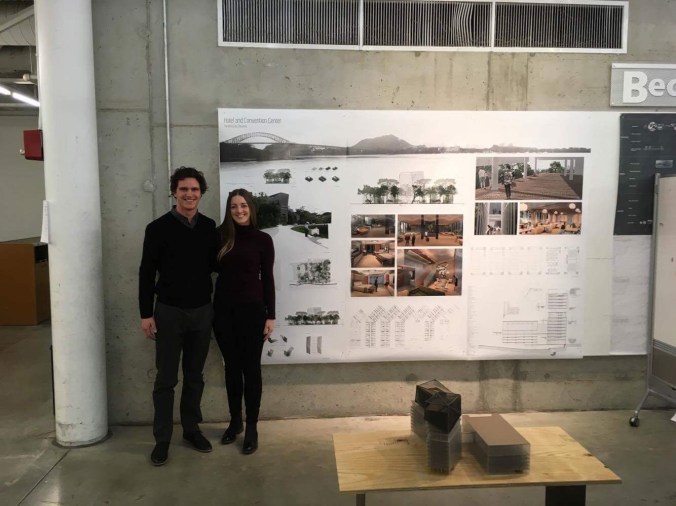
 Very happy to report that, after four years (!), my ‘interim’ position as Director of Graduate Education for Iowa State’s Department of Architecture is coming to a happy conclusion–we’ve just posted a listing for a new DoGE, and I expect to pass the baton this coming August. I’ll be staying on as Pickard Chilton and Morrill Professor, and I’m looking forward to handing off a program in excellent shape and getting back to full-time teaching and research.
 Oh, this is fun.
  Des Moines has a long history of hiring international-caliber architects and getting superb work out of them–there’s a standard tour of outstanding buildings by both Saarinen’s, I.M.Pei, Gordon Bunshaft, Mies van der Rohe, and David Chipperfield that never fails to impress. And that’s alongside great work by homegrown talent, too.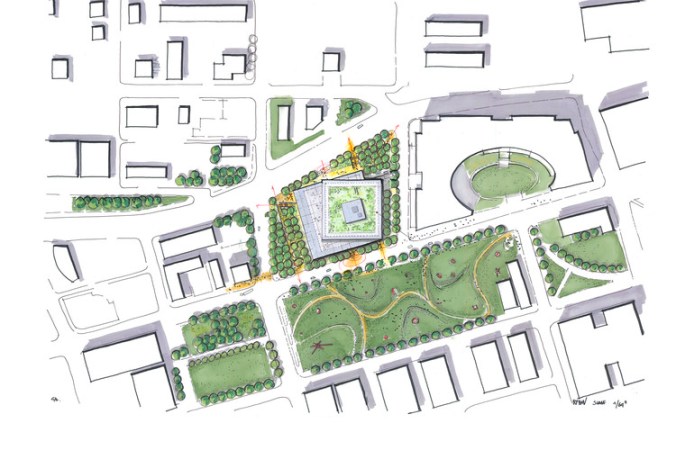
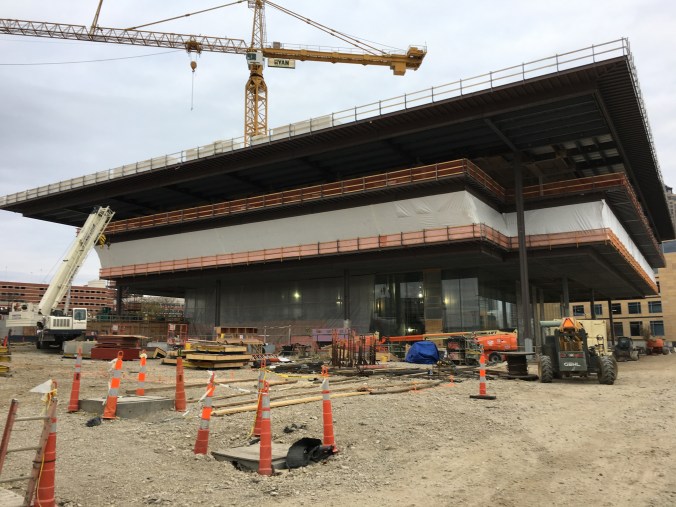
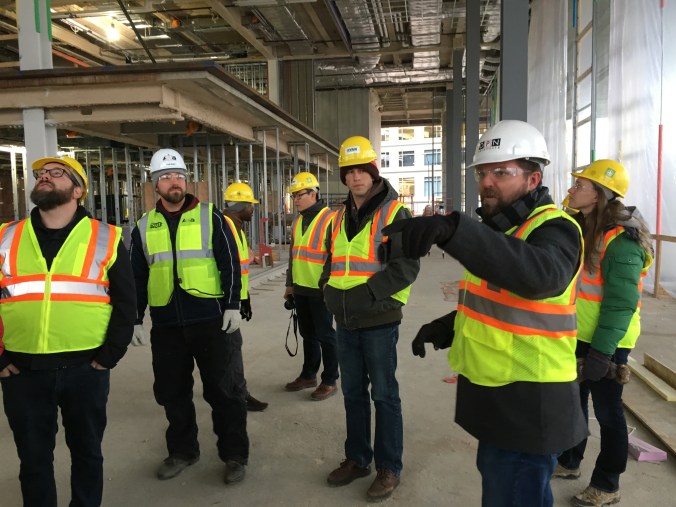 Piano’s design will connect to the Pappajohn Sculpture Park, which has become not only a gateway to downtown but also a symbolic open space. The massing of the Krause Center is going to be oriented toward that space, with a ground level plaza and public interior that will be complimented by terraces on upper levels that will offer raised outdoor space for employees, and views over the Raccoon River’s valley, south of downtown. To emphasize these connections, most of the building is glass in the north-south direction, and Piano’s office has gone to extraordinary lengths to minimize the number of columns and walls that will support these upper floors–some of the lower floors’ corners are actually suspended from above to maximize the building’s transparency. The top floor is skewed, reflecting the change in grid from the city’s general E-W axis to one that’s perpendicular to the Des Moines River, a few blocks east. Here, too, the structure has been packed into long-span girders and a few dense columns to open up views along both axes. The result, even in the jumble of a busy construction site, is remarkably airy and open.
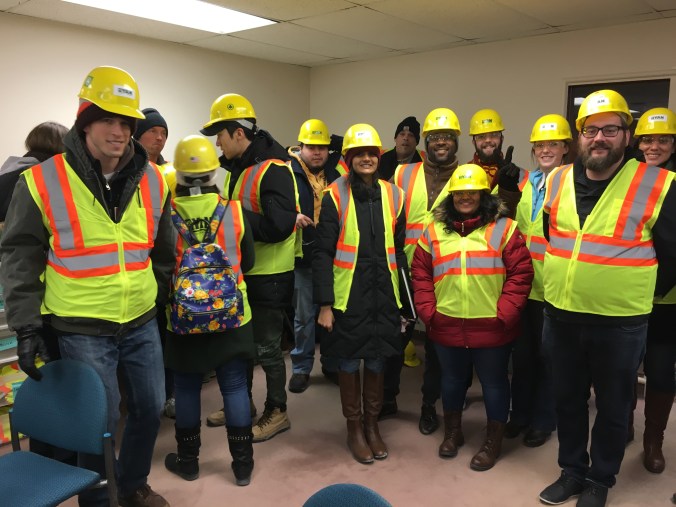
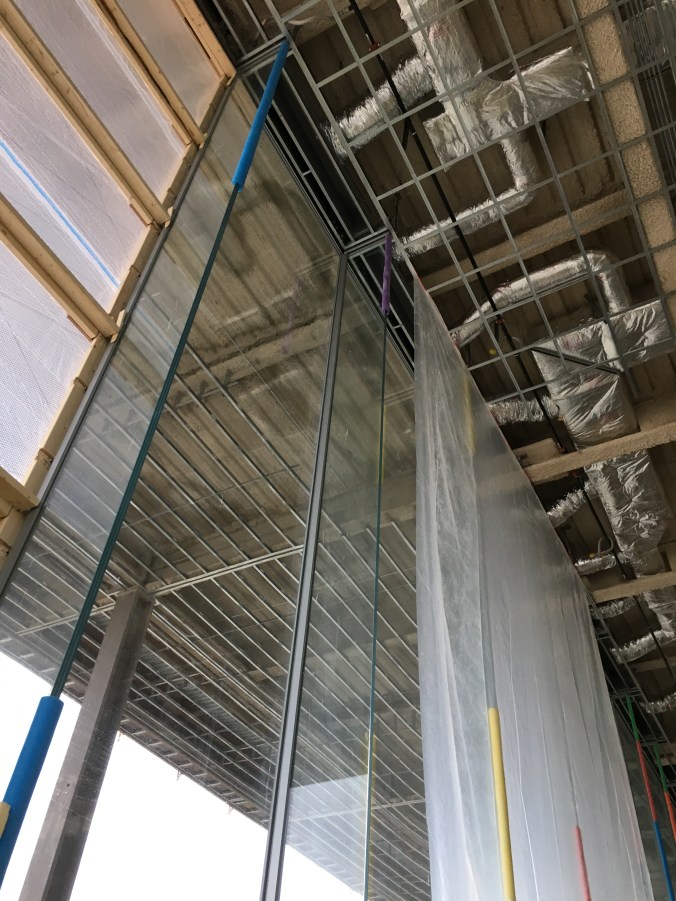 That glass is being set in place by local cladding company Architectural Wall Systems, sort of an MVP of a business here. A few weeks ago I ran into ISU grad Ryan Smart, who’s working for AWS on the project, and he suggested that we organize a field trip of the job site for our grad students. Which we did, and I think the afternoon was as inspiring as it was cold. Two other ISU alums–Ryan Larson and Joe Feldman, who work for the contractor, Ryan Companies, and the local architect, OPN–joined the tour, and treated us to an in-depth look at some of the structural gymnastics it’s taking to realize the airiness of Piano’s vision. The rigor and discipline is evident, too, and they described the challenges of realizing 28-foot tall insulated glass panels without intermediate supports, packing steel and mechanical systems into a vanishingly thin floor sandwich, and finding precasting companies who could pour monolithic corner pieces up to 6′ x 6′. (Hint: you have to go to Canada).
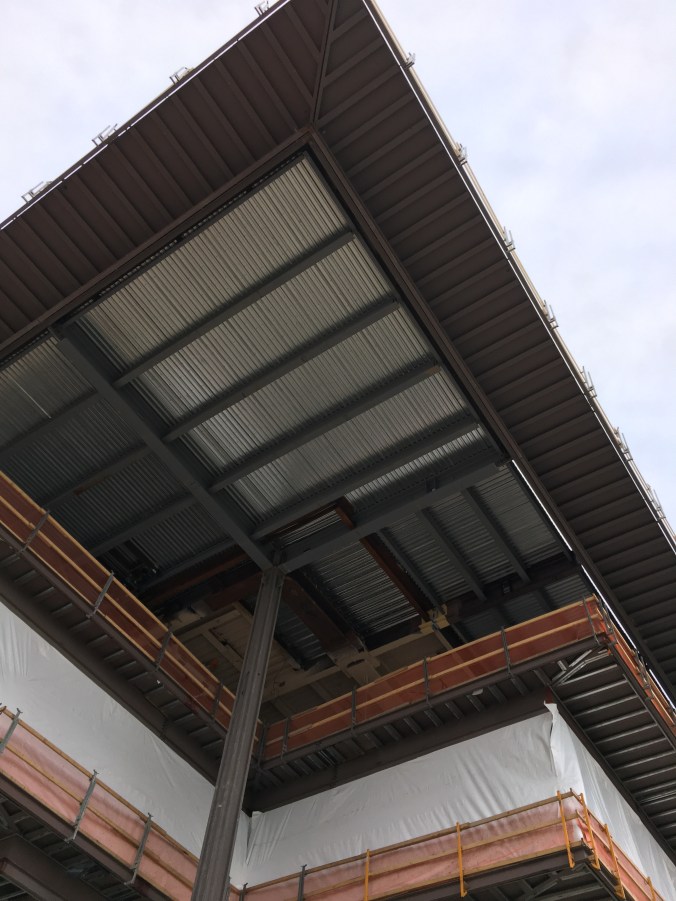 Whenever a small city like Des Moines gets an opportunity like this, the questions are always whether they’ll get the superstar architect’s best work and whether the local team can keep up with the expectations of that architect. We saw ample evidence–both in the construction so far and in the warehouse full of interior mockups–that Krause Center is going to be an extraordinary building–“the job of a lifetime,” as one of our alums told me, grinning wildly. What’s interesting is that it’s definitely going to be a Piano building, but it looks to be unusual in that rather than the details and materials driving the design, it really appears to be the sense of the wide open spaces that will connect to the city around it that have driven it. And that means that the structural discipline that we’re used to seeing in Piano’s work has been replaced by some truly breathtaking spans and spaces–something pretty new in his oeuvre, and exciting to see in its nascent form.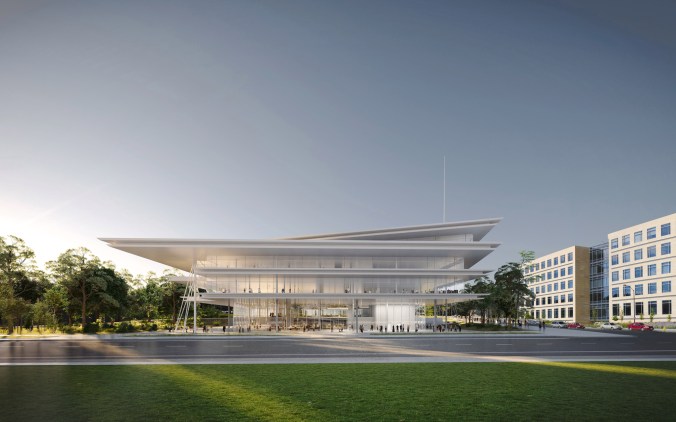
 architecturefarm