Des Moines Register
This semester’s studio is sticking close to home–we have 20 architects, landscape architects, and interior designers taking on one of the bigger urban and architectural questions facing Des Moines today.
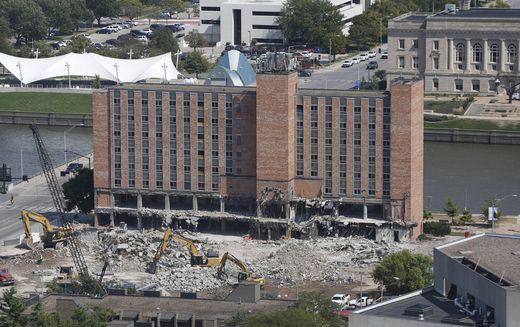
Ordinarily, demolishing a 60-year old landmark of postwar modernism would be controversial enough–the city tore down the Wetherell and Harrison designed structure in October, 2015. But a recent tussle involving the location of a new federal courthouse has added to the (still Iowa-polite) discussion ever since. The GSA and the courts would like to build a replacement for their outdated 1928 building on the site. It’s generous, it’s visible, and it relates well to Des Moines’ City Hall across the river, and to the Civic Center, diagonally to the southwest. The city–equally understandably–wants commercial and residential development on the site, since it’s squarely between two very lively districts that have been crucial to the city’s renaissance. The city has won so far, and the GSA is looking at a site about four blocks south, across the river in a formerly industrial area that is ripe for redevelopment but fairly far off the beaten path. But even that’s not a final decision, at least not yet.
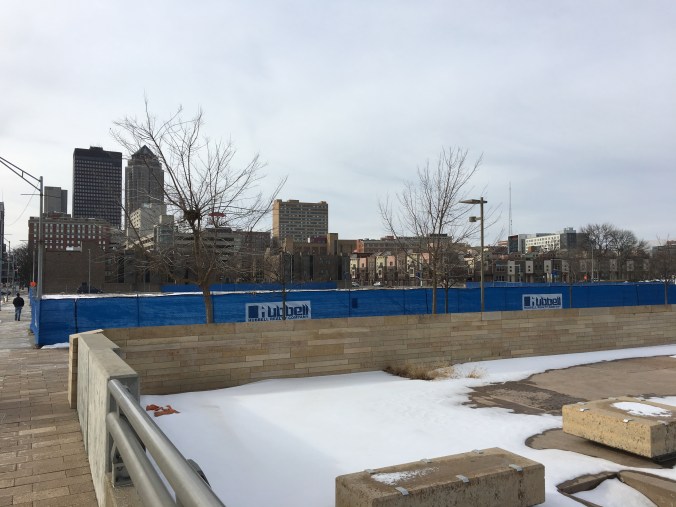
Last fall I found myself talking about the controversy with a prominent DSM architect (admittedly at a social event with an open bar) and wondering what would happen if you mashed-up the expectations that the city and the feds had–in other words, if you wedged a courthouse in between commercial and residential programs. You’d have a pretty solid Integrated Studio program that presented some serious circulation and structural issues on an important civic site. I’ve constantly looked for situations like this for our ARCH 403/603 studio, and it seemed worth trying out for an option studio this semester.
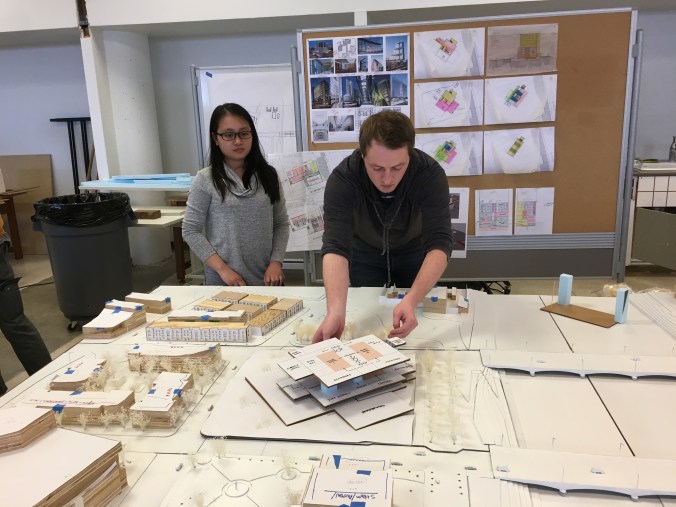
Van Ly, Nate McKewon
We’re three weeks in, now, and we’ve done a site visit, toured the existing courthouse with the help of their project architect and the Deputy U.S. Marshal for Des Moines, and heard from architects at Neumann Monson, the firm that will serve as the local architect for the new courthouse along with Atlanta firm Mack Scogin Merrill Elam about the precedents they’ve looked at, and the issues they’re facing in the new design. Security is, as you’d guess, the biggest worry, and it’s the reason that the current generation of courts buildings have a reputation for fortress-like, anti-urban appearances.
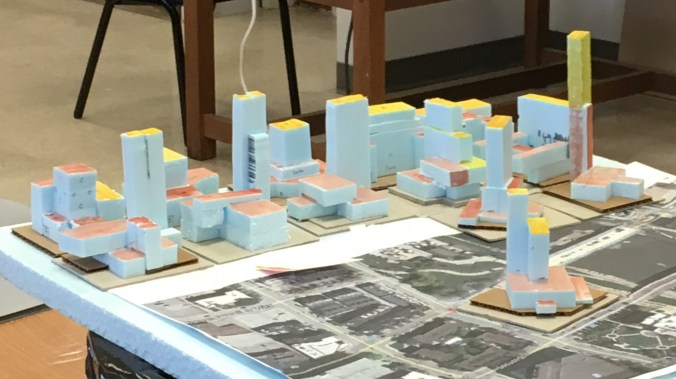
“So,” one student asked after our courthouse tour, “the program is basically impossible, isn’t it?” Yes and no. It’s difficult, for sure, but even in this early stage we’re finding that there may be really interesting synergies between the urban programs of commercial and residential space, and the civic programs of the courts themselves. Teams have settled into a couple of basic approaches–either wrapping the courthouse, geode-like, in a security blanket of apartments and shops that, we think, would present a less desirable target; or pulling the whole program in from the surrounding streets and building up instead of out.
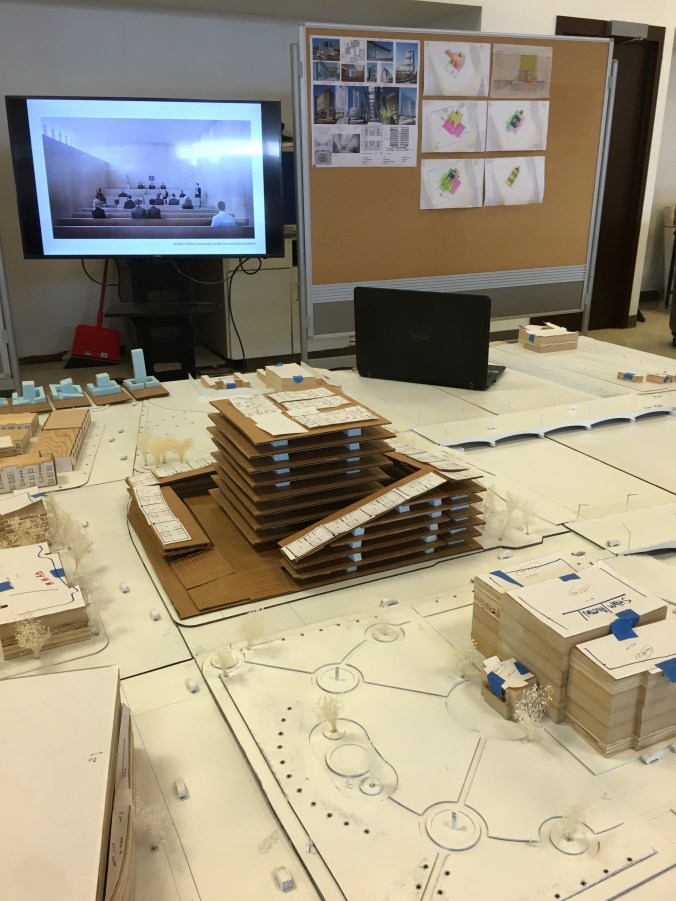
Jen Hakala, Shawn Barron, and Kyla Peterson
I’m always impressed and slightly humbled at how diligently and seriously students take public projects like this, and yesterday’s pinup had plenty of animated discussion about not only the mechanics of getting judges, juries, defendants, and the public around safely and securely, but also what it means to build on so prominent a site, what the Des Moines River and the accompanying River Walk have done for downtown, and how best to relate to a collection of neighboring buildings ranging in scale and style from Beaux-Arts city beautiful structures (the old Public Library to the south, now the World Food Prize headquarters, or the aforementioned City Hall) to what I think of as the warm brutalism of Chick Herbert’s Civic Center, to two blocks of frankly suburban scale townhouses across the street. We may, in fact, find that there are good reasons to segregate urban and civic programs, but I’m guessing that as teams get more and more fluent with their programming and circulation planning we’ll see some genuinely provocative schemes emerge. And, we hope, some of this will leak out, and maybe help to influence the final decision about where to put the courthouse, and how to articulate it to the rest of the city…
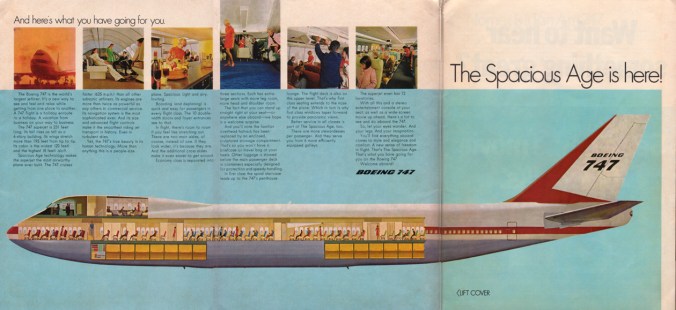 My contribution to the new
 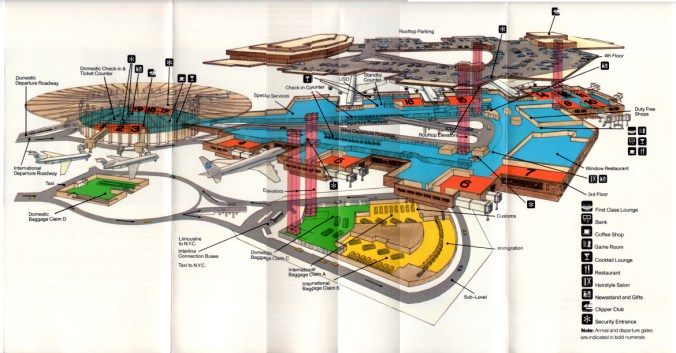 The most striking example of this was the transformation of the glassy, parasoled canopy of
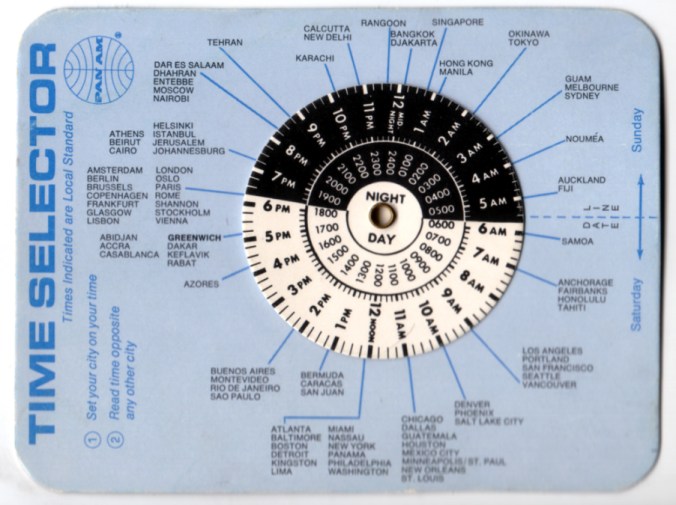 But Worldport was just one piece of a continuum of spatial and temporal experiences that, for the first time, got beyond easy human comprehension. The asensory nature of the aircraft cabins themselves, helped along by generous doses of sedating alcohol and movies, insulated passengers from any visceral sense that they were actually flying. And the trans-oceanic nature of Jumbo travel meant that time itself was no longer a fixed, comprehensible element of the flying experience. Pan Am’s “Time Selector” attests to the confusion involved in crossing so many time zones in one jump, and to the desire to somehow transcend the jet-lagged fogginess that came on arrival.
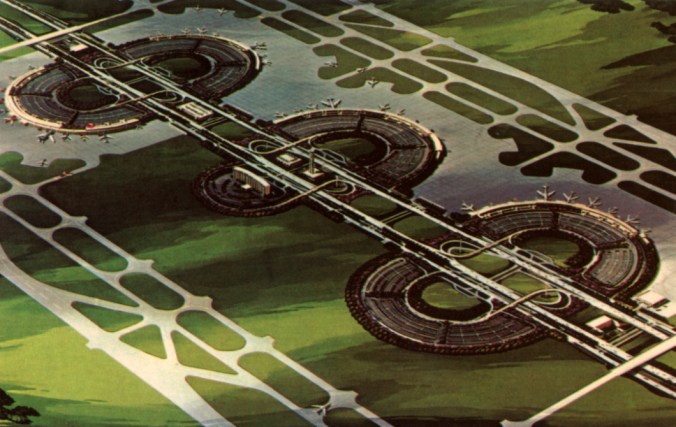 At the other end of the spectrum, building for the Jumbo Jets changed previously accepted truths about urbanism. What to make, for example, of the Manhattan-sized Dallas-Fort Worth airport, designed not around monumental terminals, but instead around a looping, counterintuitive set of freeway offramps and thin, membrane like terminals? Or terminals like Tampa’s, where monorails took the place of promenades? The 747 eviscerated not only conventional architectural norms, it also quickly made the jet-age elegance of terminals like the original Pan Am building at JFK obsolete.
 Poignant stuff, I think, especially with the news this week that Delta is retiring the last 747 to see commercial passenger service in the U.S. The trend has been to smaller, twin-engined planes that are more agile and fuel efficient, thought the ultra-jumbo Airbus A380 has taken the place of the 747 on long haul flights. And, needless to say, the disorienting and disquieting effects of air travel have hardly diminished as a result.
 Passing of an icon, sort of.
 architecturefarm