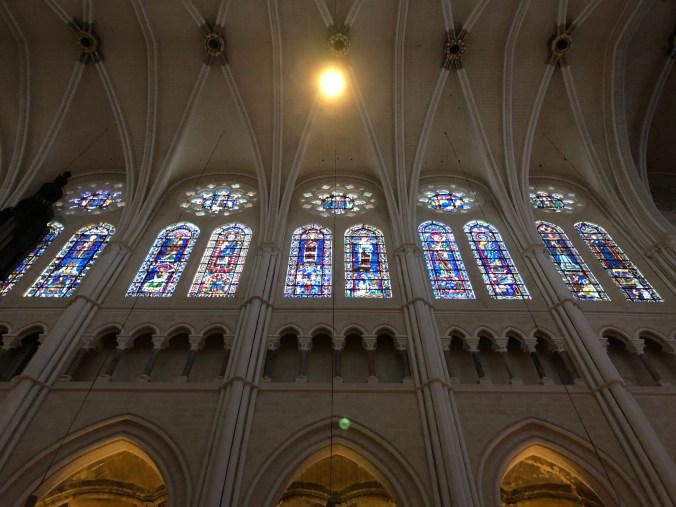
 OK, a decidedly smaller group that decided to take the day and go to Chartres…I’ll chalk that up to the 90 minute train ride and associated ticket price rather than any lack of interest in what Eero Saarinen called, when asked, his favorite interior. The Cathedral is just over halfway through a hugely controversial restoration project that involves cleaning and re-plastering the entire interior, and the effect is striking–the space feels even more weightless and bright than it did when it was covered in seven centuries of grime. I understand missing the “gothic” character that went with that, but there’s something to be said for seeing the space as it was–probably?–originally intended.
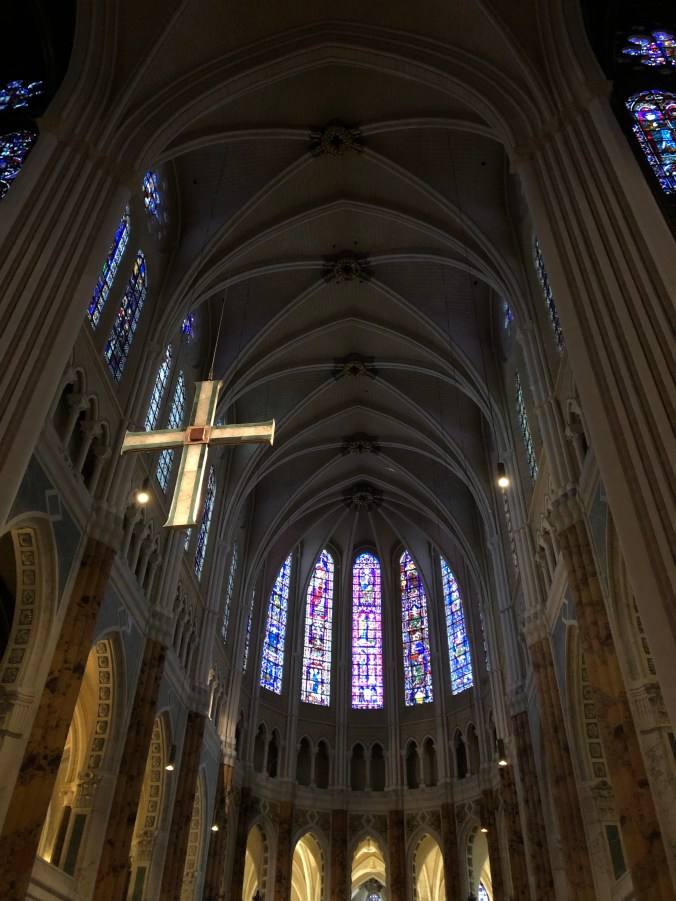 As I’ve taught Big and Tall and the Three Renaissances courses, Chartres’ position in history has seemed more and more important to me, since it’s so pivotal in taking Gothic structure from a technique to a style. We use that term perjoratively all the time, but I’ve come to see it as more and more vital, in the sense that Violet-le-Duc used it to describe the sense we get when a set of competing systems and elements are integrated into something that makes cognitive sense as a unified whole, which is arguably what we as architects strive for all the time. “Style is the manifestation of an ideal based on a principle,” he wrote, and the so-called High Gothic, from Chartres through Beauvais, was for him the ultimate example of this. The subtle changes that the builders here made to the formula that underlay early Gothic structures like Notre Dame were critical to how the spaces are perceived. The changed to simpler vault structures that are matched one-to-one with the side bays (four-part vaults instead of flower-like six-part vaults) means that the roofs and the walls feel like they spring from one idea. Consolidating the traditional four layers of openings along the side walls into three makes for taller arcades, more light, and a more pronounced vertical emphasis. And, finally, moving the round windows from lower in the side walls to the top and pairing them with two lancet windows makes the entire top story feel like its genuinely tracery–no longer a wall, per se.
 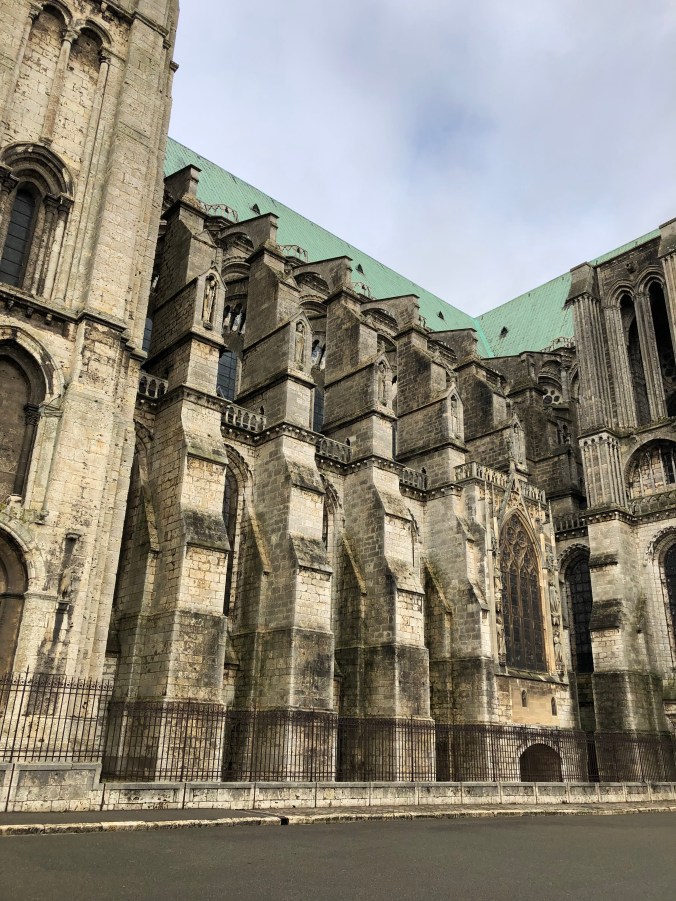 Later builders would push these ideas further, and they’d extend their naves higher than here. They would also correct some elements of Chartres’ design that proved not to make much sense (those circular flying buttresses!). But knowing this you can–almost–sense the striving of the builders here to realize something that wasn’t merely impressive, but that was also somehow more satisfying than any of the earlier structures. Amiens and Reims are more impressive, and in terms of Violet-le-Duc’s criteria they’re certainly more refined, but there’s some drama in the flaws here that makes Chartres that much more intriguing.
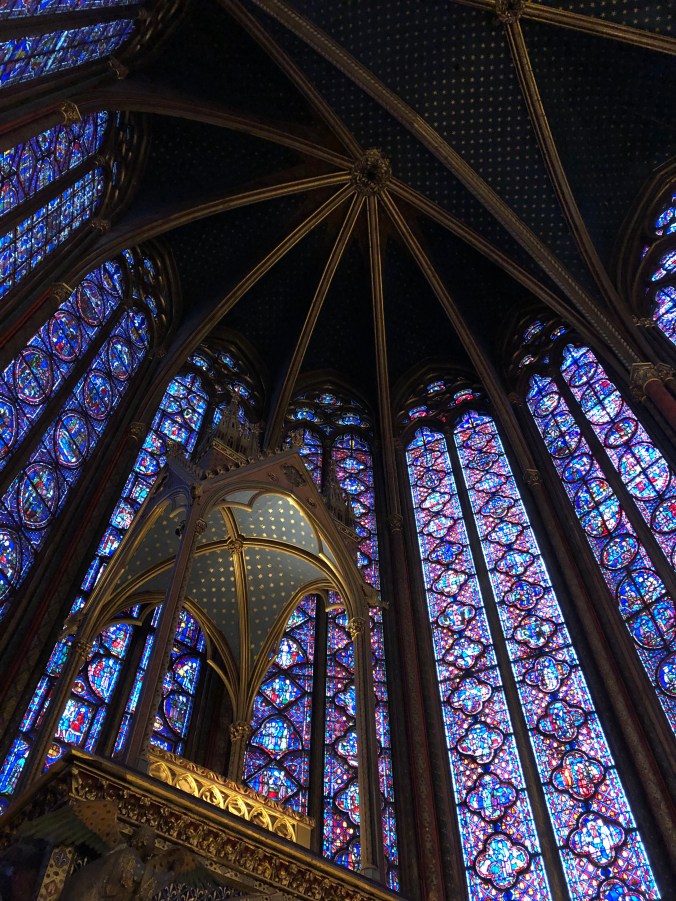
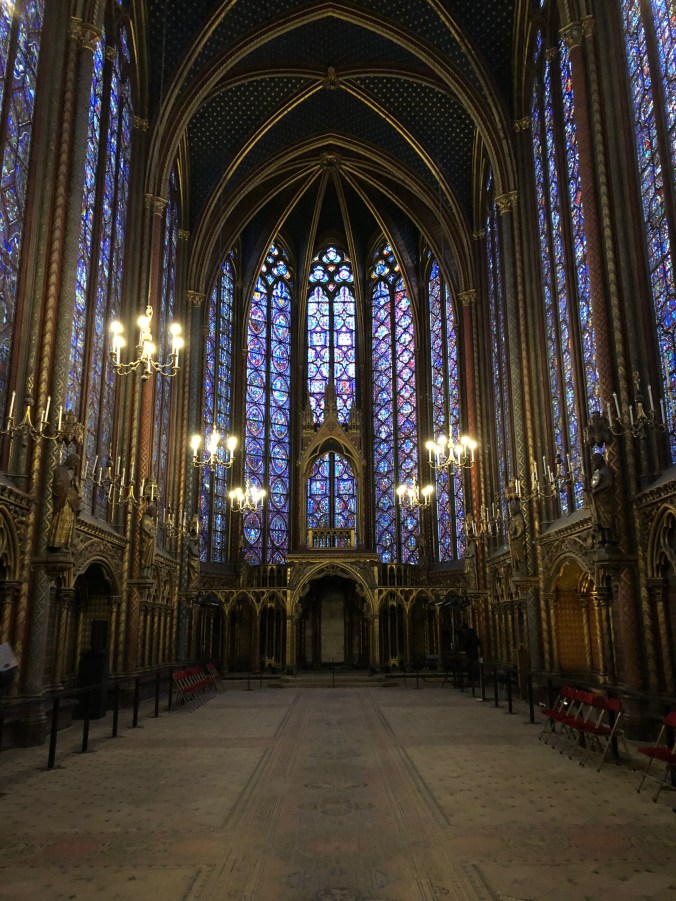
The RER back drops you off in the labyrinth of Gare Montparnasse, where the one brave student who joined me for the day finally split–headed to the Pantheon for an 18th century take. It’s just a quick ride on the #4 to St. Michel-Notre Dame, though, and from there you can take a shorter chronological leap to the Rayonnant Gothic of Ste. Chappelle, which makes for a good conclusion to any cathedral trip–nothing but light, tracery, vaults, and piping. If Chartres feels like it’s just barely supported by its buttresses, Ste. Chappelle feels like it must be held up from above–a dramatic and satisfying an integration of light and structure and maybe, pace Eero, a candidate for my favorite interior on the planet. If you get there right at 4:30 and have a Museum Pass, they’ll let you be the last person in, and then if you wait patiently, you can get 30 seconds alone in the space before the security guard gently tells you, for the fourth time, that they close at 5 and you really, really need to head for the exits.
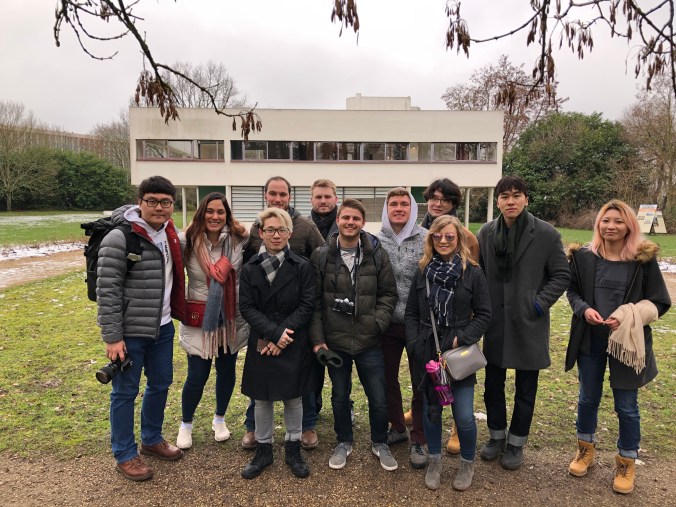 So, that’s about half of our intrepid band of DSN 546 students on a shortened but still lengthy Corb Death March, stop number 3. Rainy week, and cold, but this bunch has been enthusiastic, and they’ve taken advantage of small crowds and five-day Metro passes to get way out.
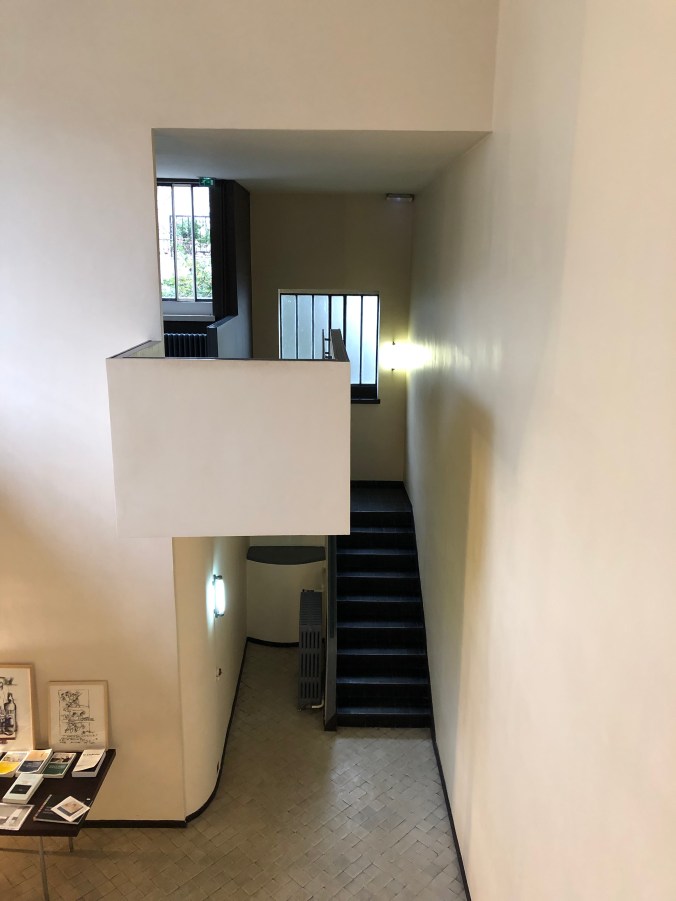 I keep a light touch for these things–I think it’s important for students to see things that they’ve seen in history classes first hand and to make up their own minds, so I try to give a little background to start, turn them loose, and then collect them after each stop to hear what they think. Particularly interesting to have one brave interior design student who chose this over the greatest fabric archive on the planet. She was able to talk about the Maison LaRoche on a different level, in particular the color palette that Corbusier developed here and elsewhere that, in her words, makes no sense from a color theory point of view. (FWIW, we agreed that theory doesn’t always translate to practice…)
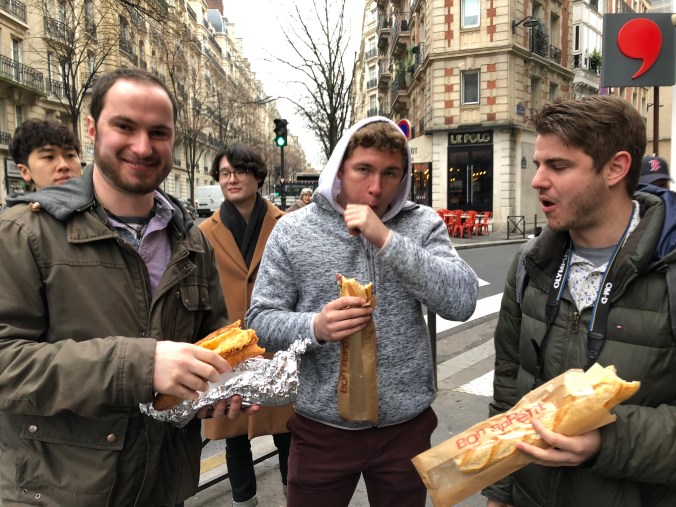
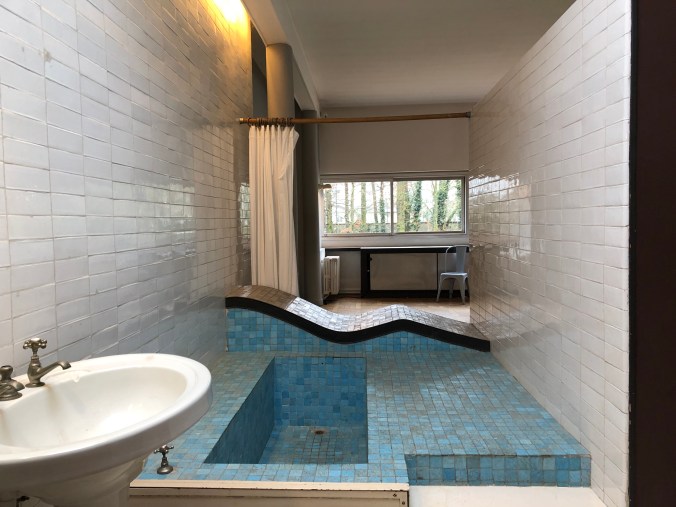 To everyone’s credit, the whole group made it to Cite Universitaire, fueled by railway station sandwiches and sharing umbrellas. The contrast there to the early villas is fascinating–we talked a lot about how Villa Savoye is actually a brick and concrete building, with the brick completely hidden by stucco, as if Corbusier was embarrassed by such a 19th century material. But at the Pavilion Suisse, the materials are all expressed–stone, rough concrete, timber, and glass. One student noted that seems like the kind of confidence you gain after a good couple of decades building, and I think that’s probably right.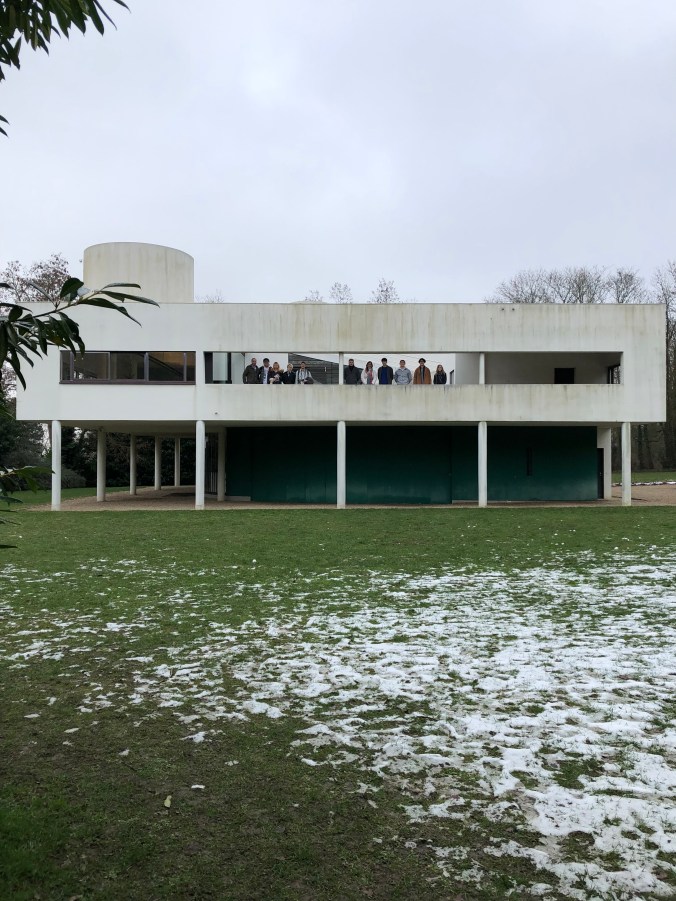
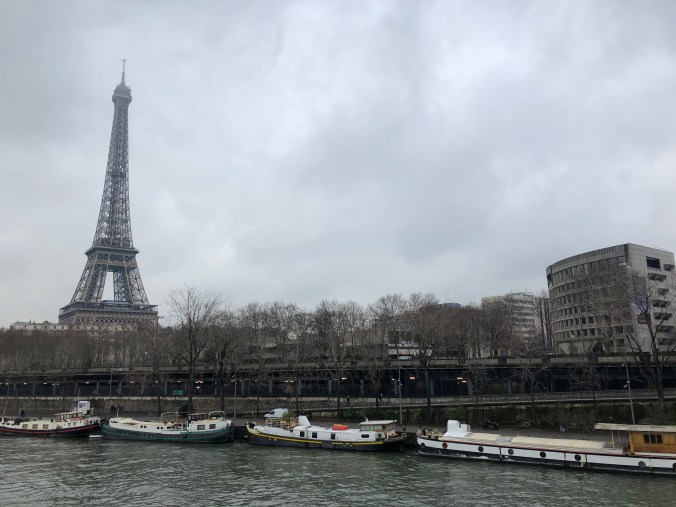 25 intrepid studenti have joined my colleague Lee Cagley and me for a frigid week of studio research and general architectural tourism. We’ve adapted our now-standard hotel program for interior design, architecture, and landscape architecture students to a site just south of the Eiffel Tower, on Quai Branly, where the views are as inspirational as the logistics will be tricky. The site now is a sports center, with a low brutalist building on the south end and an athletics field to the north–but the surrounding neighborhood has grown into a mix of hotel and office buildings that suggest other uses. (Yes, that’s Seidler’s Australian Embassy to the right, complete with fan pier “by” Pier Luigi Nervi…)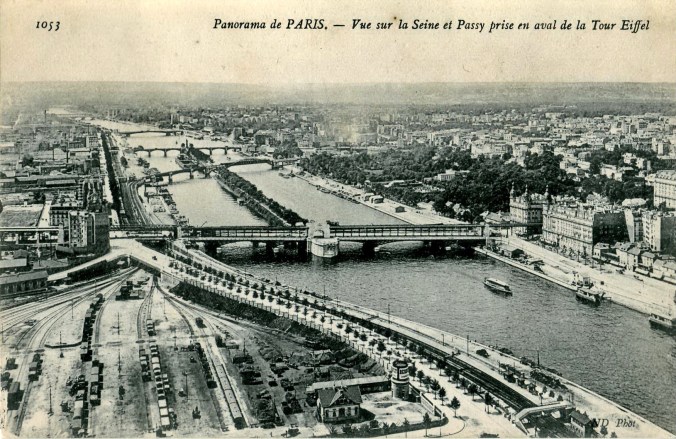
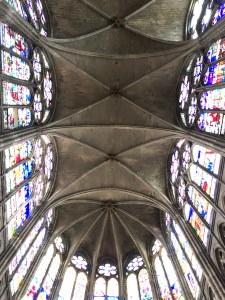 But really, it’s work. Studio field trip, after two years of barrelling around Panama City in minivans, armed military police and lack of traffic signs be damned, my Interior Design colleague Lee Cagley and I have re-set our hotel studio in a city slightly more conducive to mass transit, walking, and with some serious climate issues. We’re at the annual Maison Object show today with an advance crew, ogling Italian stone, German cutlery, and all manner of furniture, with site visits and a few side trips planned for the week. I’ve been scouting, by which I mean hitting old favorites to make sure I remember how to get around. St. Denis, where a market-driven expansion of a pilgrimage in the 12th century almost single-handedly launched the Gothic style, has become a regular visit—that’s the 13th (corrected, h/t to R.S.D. for pointing this out) century Rayonnant upgrade to the choir, above, which sits on the original arcade, below:
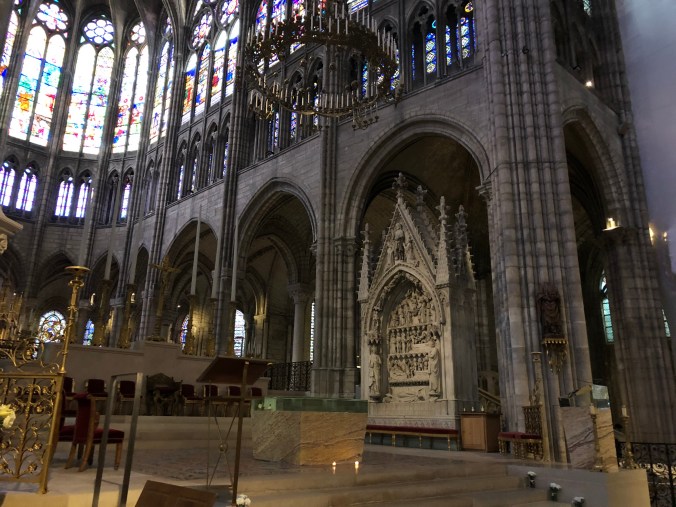 In one shot, you get 300 years of development. In addition to dozens of French kings, lying in state, and in the aisles.
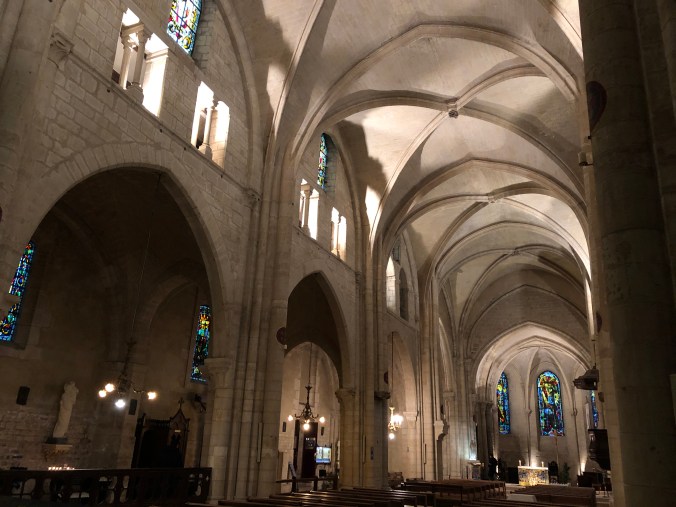 And, just to make the point, on the way out I hit one of the many proto-gothic churches in the city. St.-Pierre-du-Montmartre’s walls were built at about the same time as the St. Denis choir (the clean vaults, like the upper stories of St. Denis, came later), but it’s essentially a Romanesque structure, just with pointed arches that were a new import, via the Normans, from the Arab world. You can tell that they were struggling to figure out what they had—nothing quite hangs together, and the original vaulting wasn’t supported by any buttressing outside, meaning it was quickly demolished and replaced with a timber roof—only with a couple centuries of know-how did its builders try to vault the space again.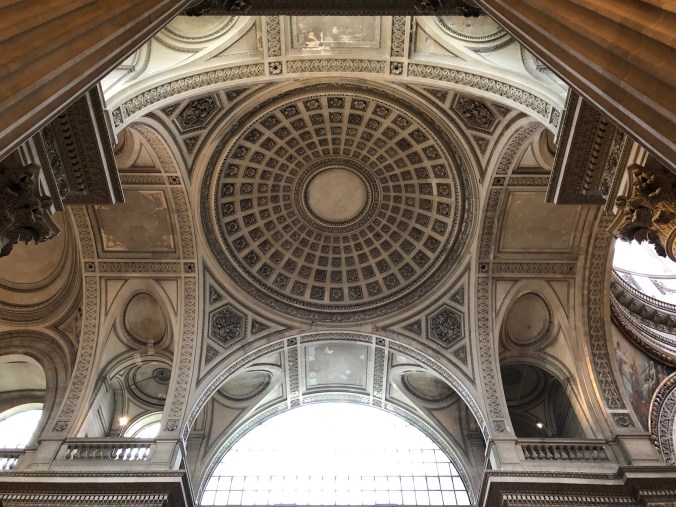
 architecturefarm