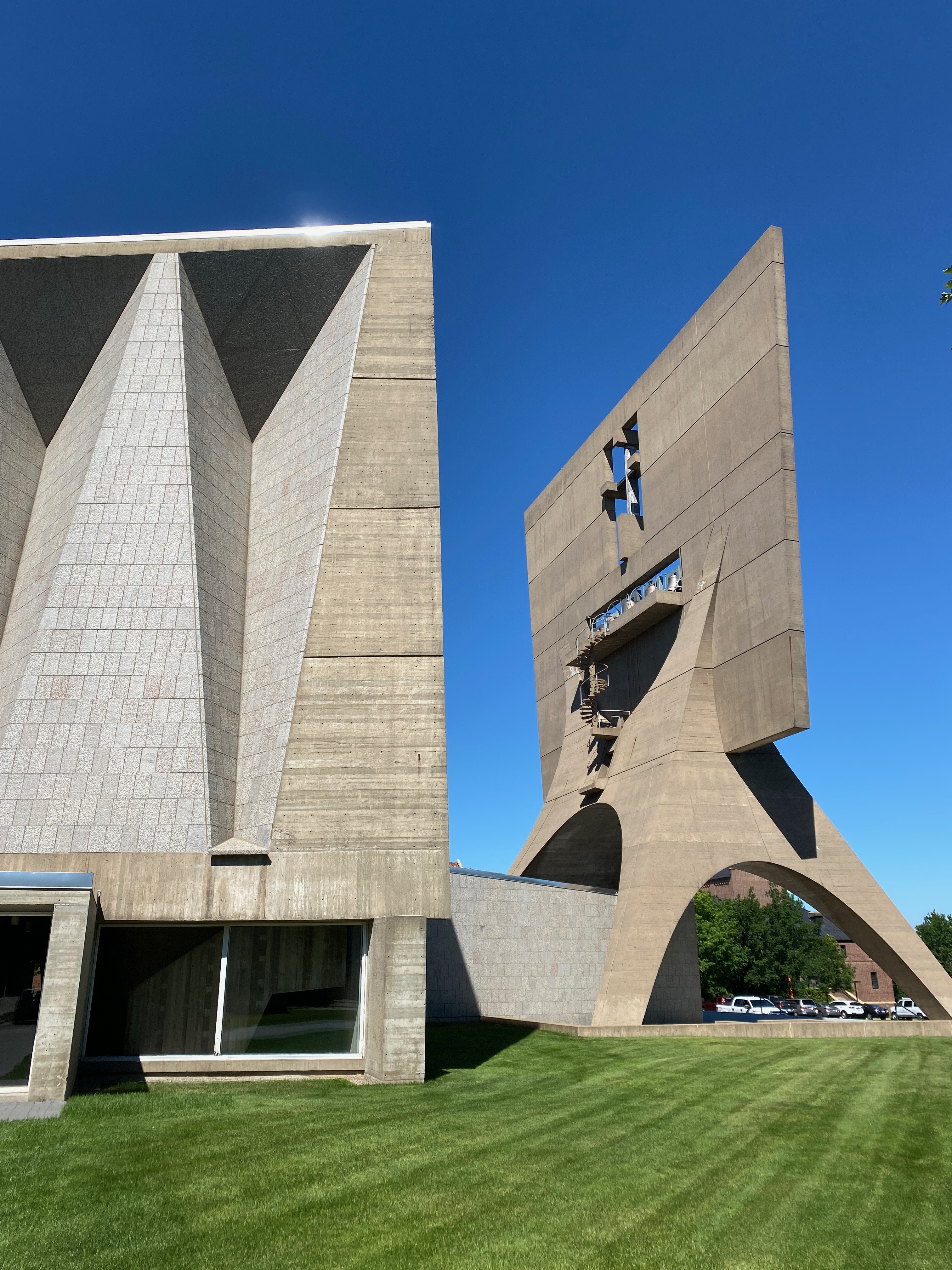
It’s been a great irony that, with all the traveling to see Nervi buildings I had not–yet–been to the one closest to my home base. St. John’s University in Collegeville, MN hired Marcel Breuer to masterplan their campus in 1953 and the central church, with its iconic bell tower, was the centerpiece of Breuer’s extensive work on the campus. Its design and construction paralleled that of the UNESCO conference hall, which Breuer designed with Nervi and Bernard Zehrfuss from 1955-58. (The best design history of the structure is Victoria Young’s Saint John’s Abbey Church: Marcel Breuer and the Creation of a Modern Sacred Space (U of Minnesota Press, 2014).
The two projects have immediate similarities–but also key differences that are interesting as insights into two very distinct but related careers. UNESCO has always seemed important to me as a moment where two really thoughtful approaches–Breuer the International Style modernist and Nervi the process- and pattern-oriented structural engineer–merged for a very brief moment and profoundly influenced one another. Breuer emerged from the projects as a confirmed brutalist, interested in the expressive power of exposed concrete and robustly displayed structure, while Nervi’s work expanded into more sculptural (if far more restrained) territory.
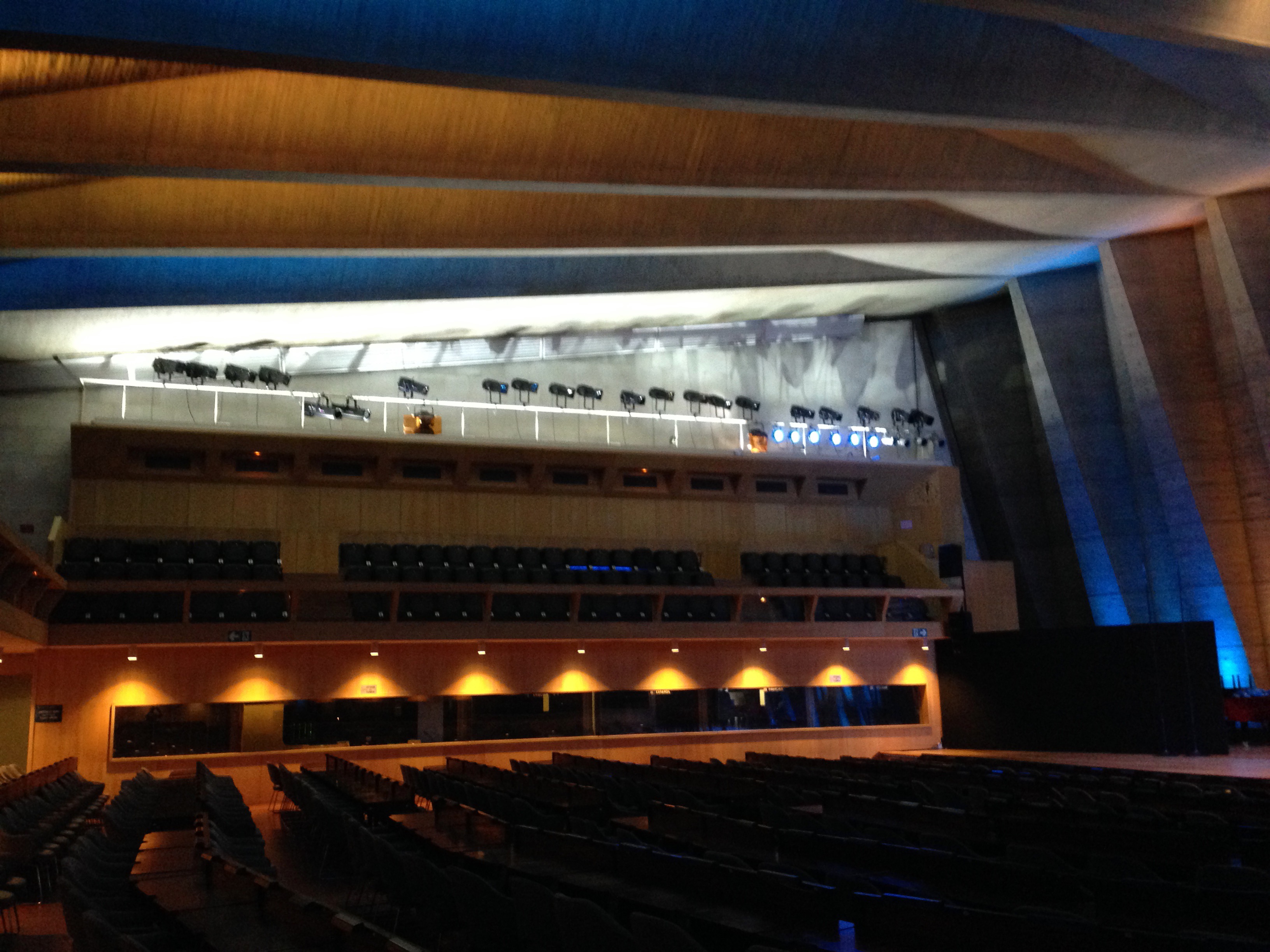
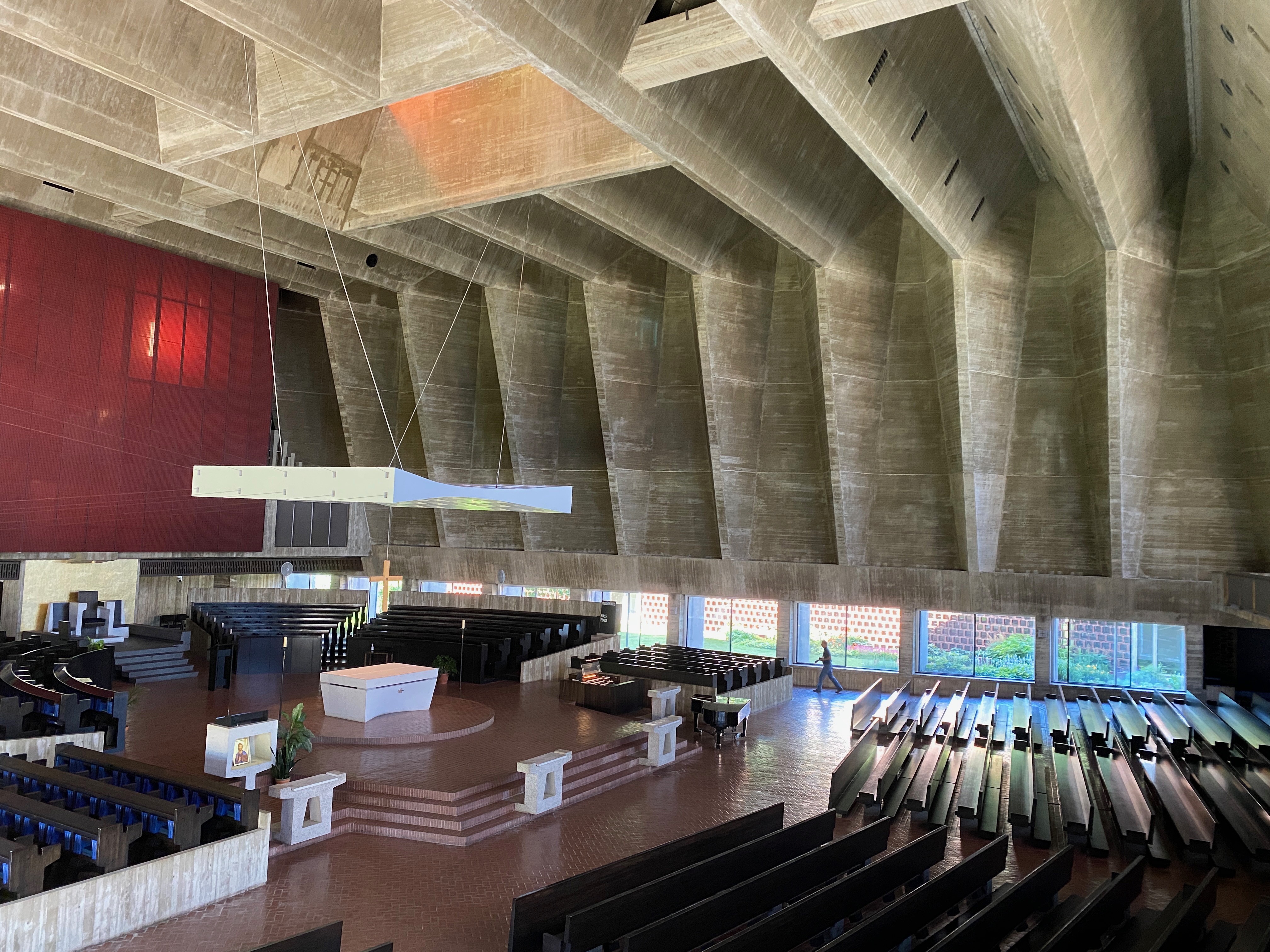
UNESCO on the left, St. John’s on the right. Both house a large assembly space under a folded concrete plate roof–the corrugations give thin concrete planes the depth necessary to act as beams, and you can see that both structures rely on deep, stiff connections between vertical and horizontal members to become portal frames. Breuer clearly appreciated the architectural impact of the folded plates–their deep recesses create a strong pattern of light and dark that gives both spaces rhythm and scale. Crucially, though, the folds run the long direction of the UNESCO space while they run the short direction of St. John’s–perpendicular to the liturgical axis:
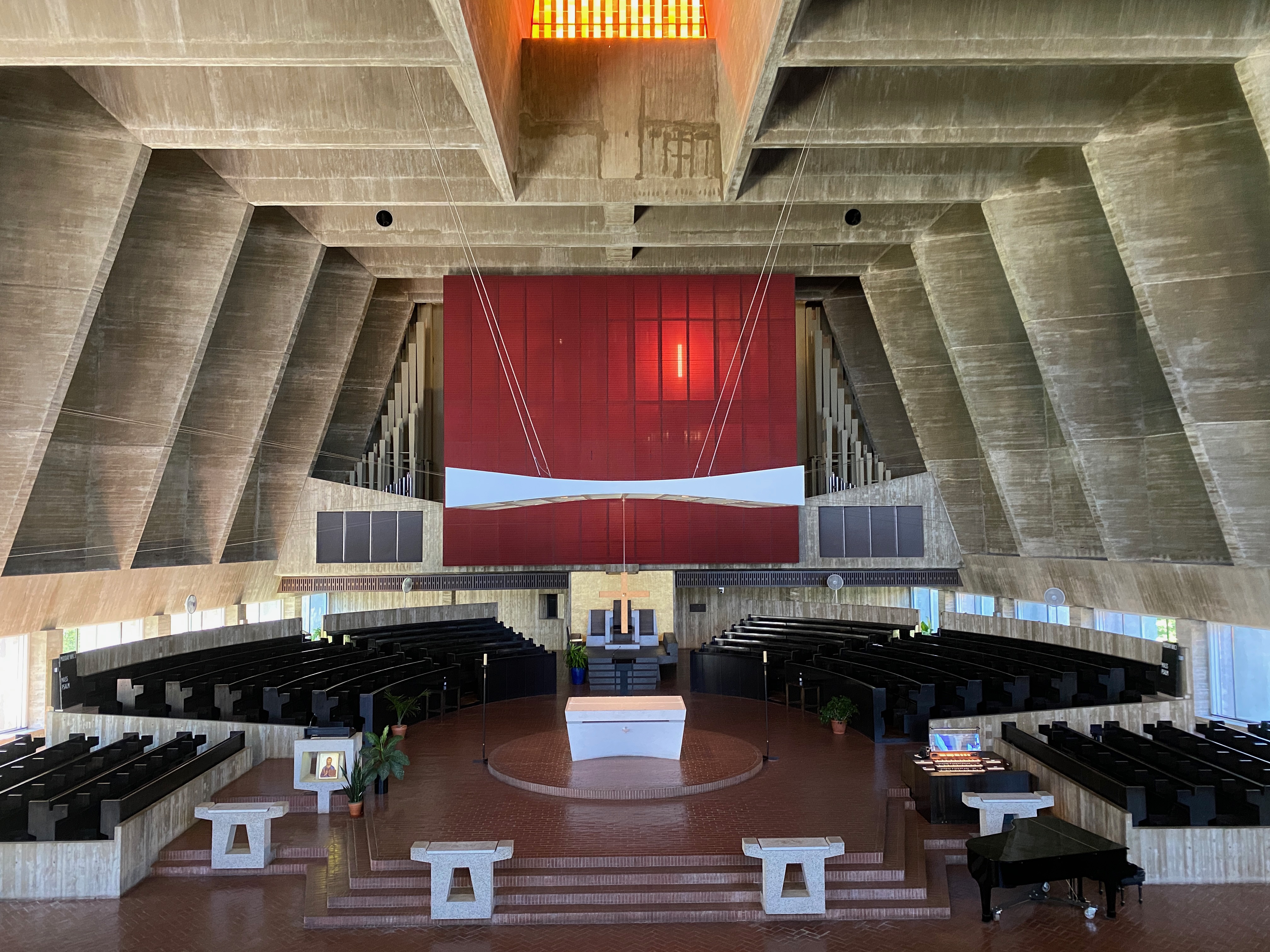
The effect is recognizably gothic–the structure emphasizes the march down the aisle to the altar, which is notably open and pushed forward into the congregation as an early experiment in what would become standard design in post-Vatican II churches. So far, so good. Nervi thought that gothic churches represented a high point in structural and architectural integration, and would have been entirely on board with Breuer’s sensibilities here.
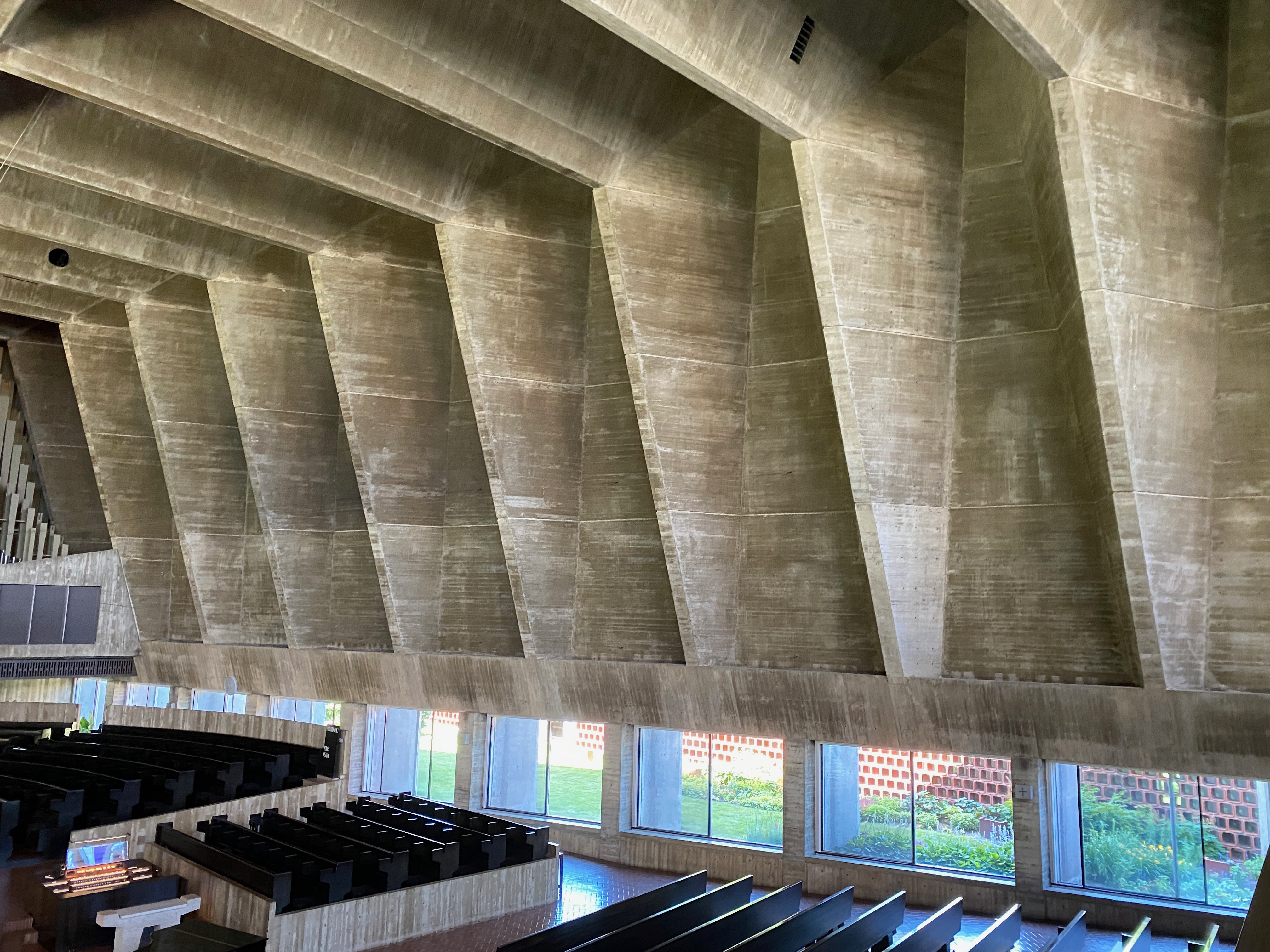
How those corrugations landed, though, was a matter of contention. Breuer wanted the heavy roof to sit above strips of windows that would illuminate the sanctuary from ground level–making the concrete appear to float. Again, not unlike gothic structure, but look at where the folded plate/portal frames land. Their loads are collected by a deep concrete girder that carries them over apertures to the bearing piers. That’s a bit of structural gymnastics of the sort that Nervi criticized heavily. A good gothic builder (or, for that matter, Roman or Greek) would have “put solid above solid,” both a recipe for structural efficiency and for visual satiety. Syncopating the structural rhythm of the plates and windows does make for a striking visual–but for Nervi this was a distraction from the otherwise holistic conception of the structure and space. While he wrote–extensively–about UNESCO, Nervi rarely mentioned St. John’s, and from correspondence it’s clear that he considered this a less successful manifestation of the folded plate idea than the conference center in Paris.
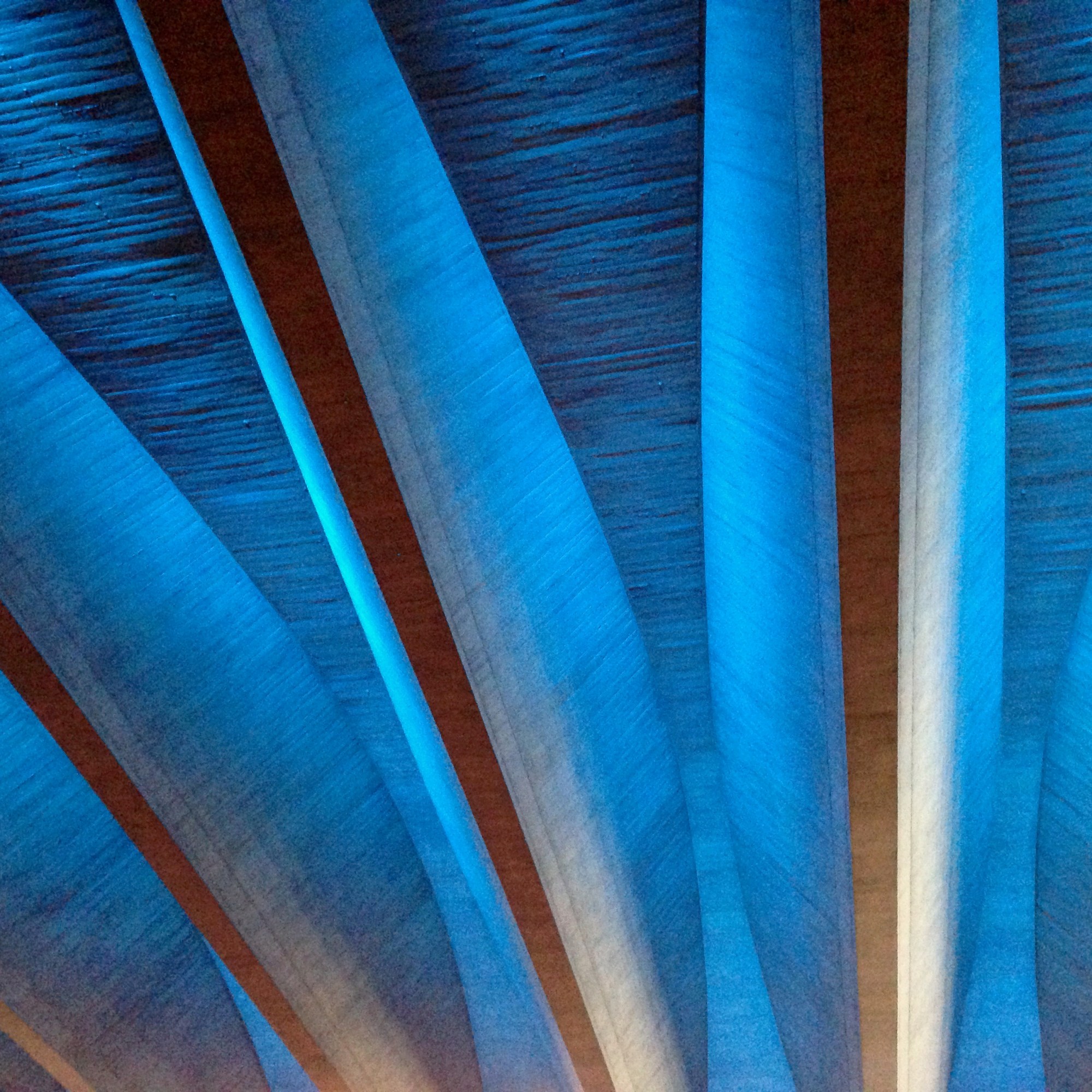
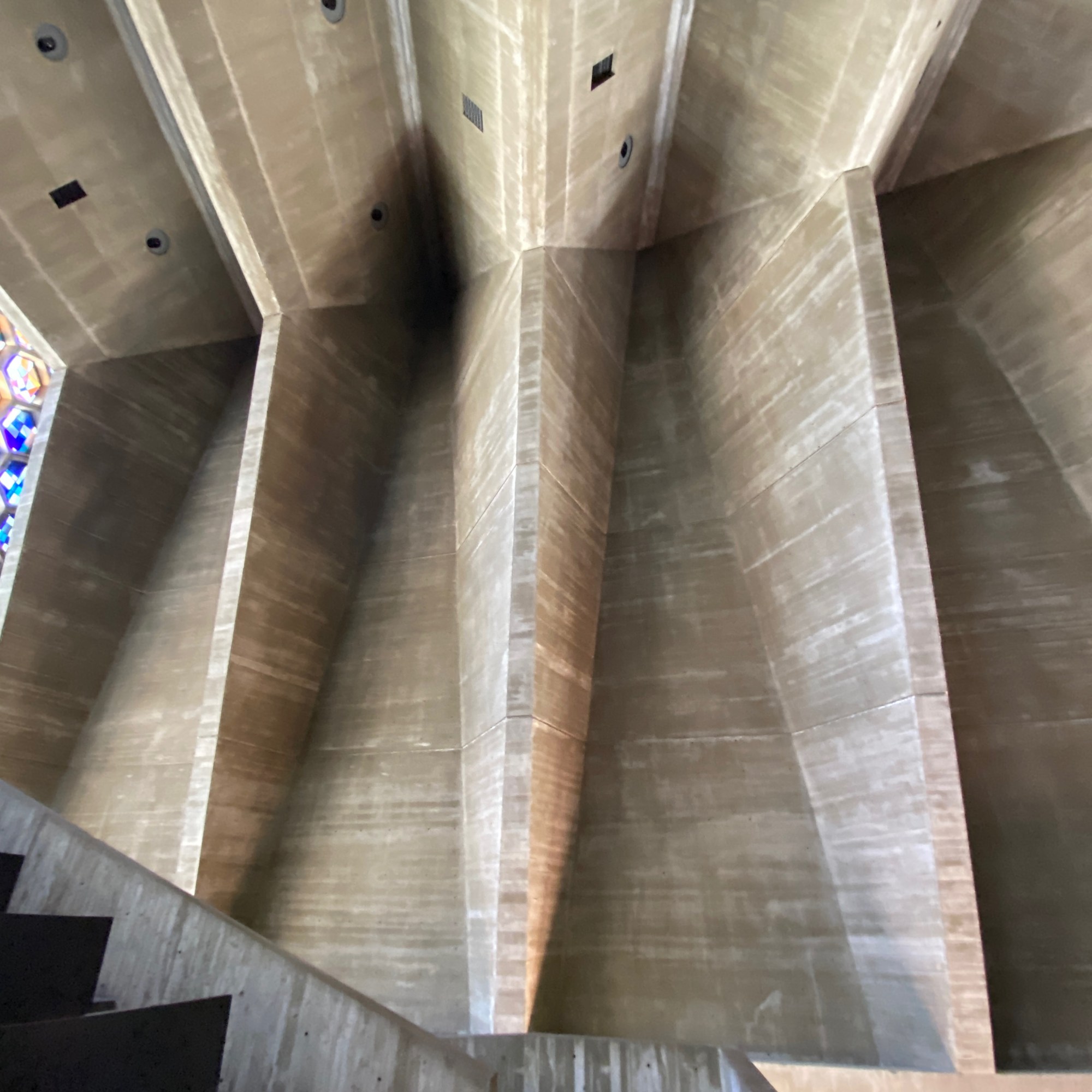
Nervi was farther from Collegeville than Paris, of course, and that shows (perhaps) in the quality of concrete. As a contractor, Nervi’s knowledge of formwork and mixes was extraordinary and the craft that went into the surfaces of his poured-in-place work is rarely given the credit it deserves. UNESCO’s concrete shows the level of fine detail that would have come from having that knowledge going into design, specs, and site supervision. St. John’s concrete is far rougher, and Breuer was happy to have the random color differences and rough surfaces that would come to typify brutalism on display. Both approaches work, and Breuer’s late career would take this acceptance of concrete ‘as-stripped’ much farther.
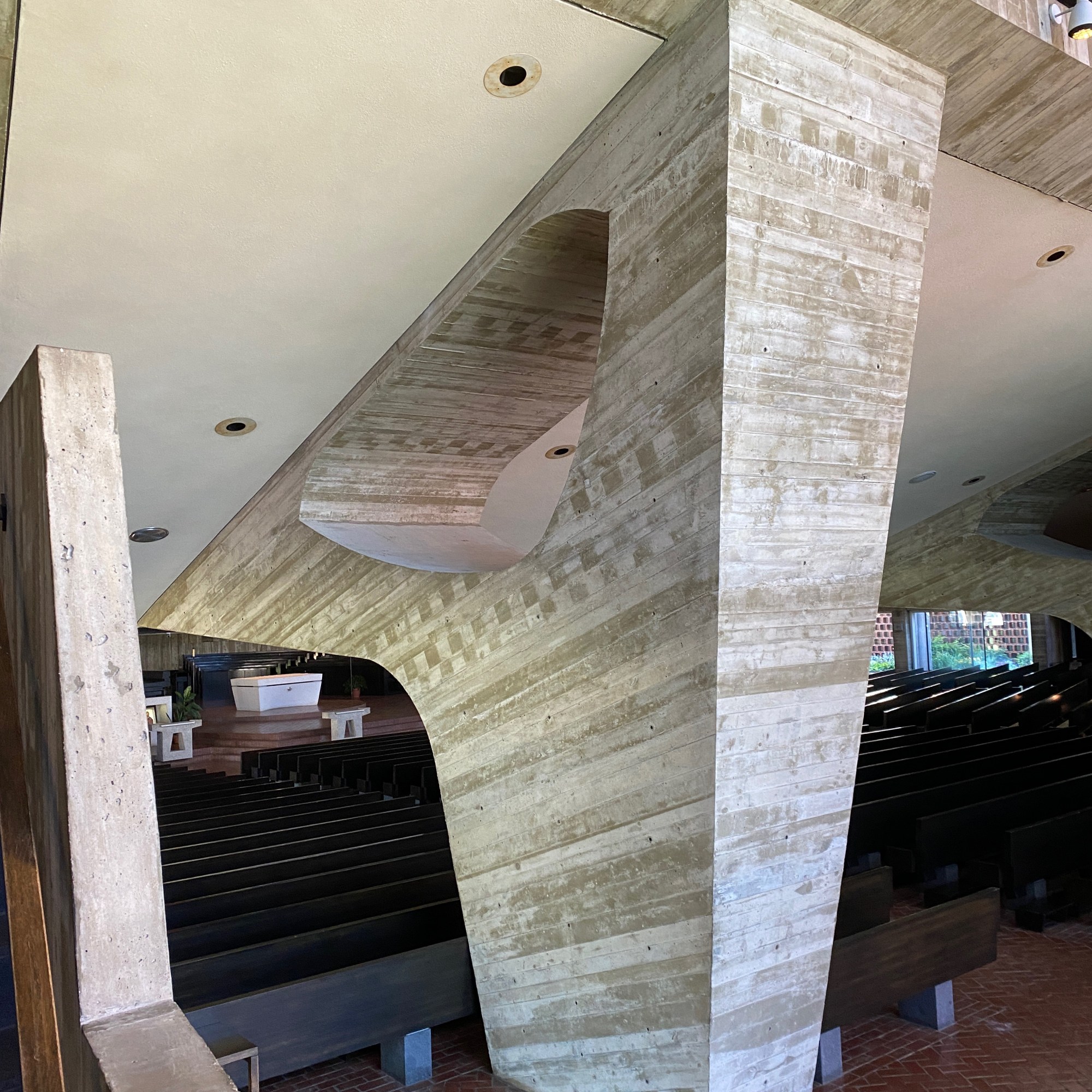
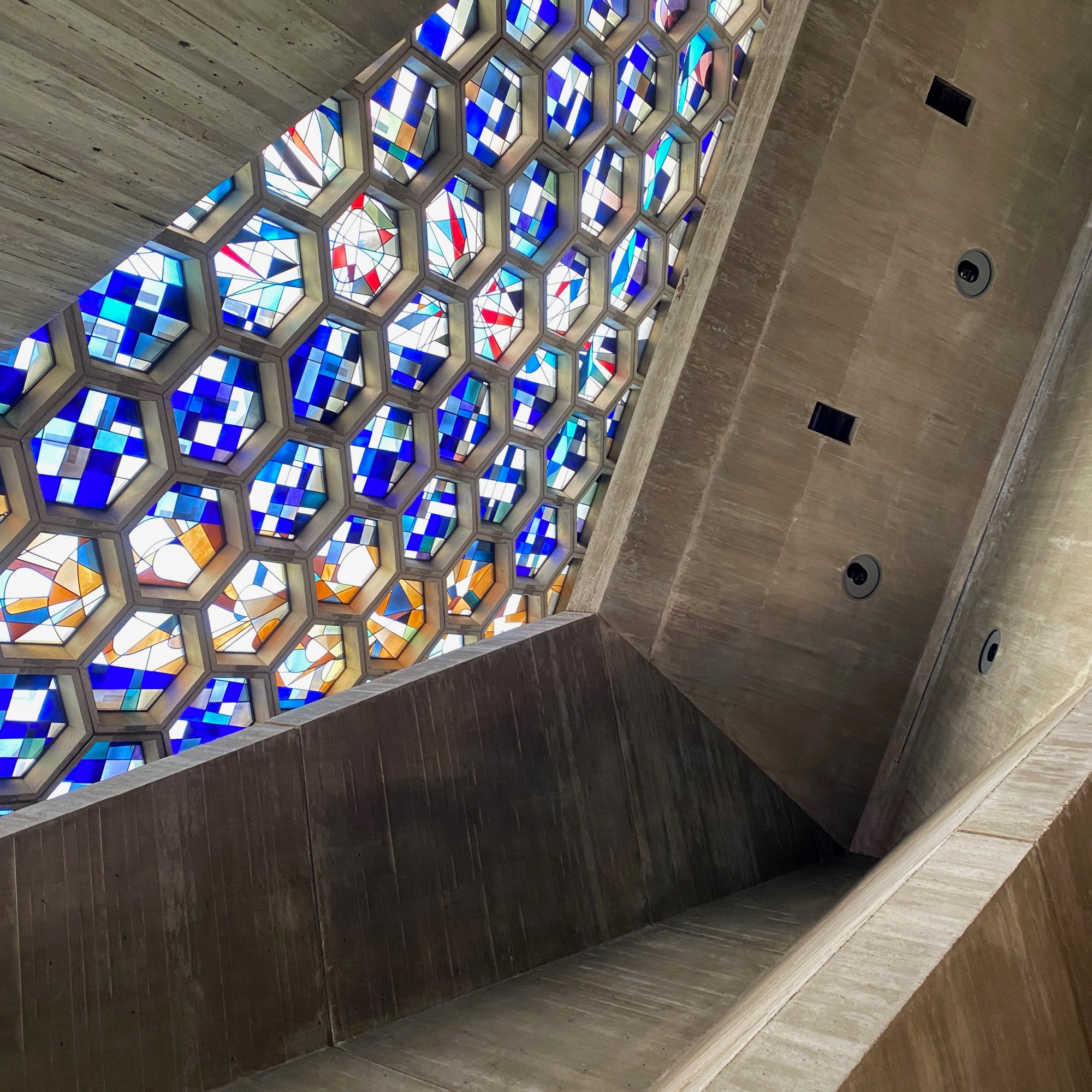
So, a far less “pure” Nervi work and one that relied more on his calculation than design instinct. That doesn’t take away from the sheer architectural power of the Abbey, though–Breuer on a good day could produce genuinely awe-inspiring spaces with the best of them, and you can see him starting to stretch his sculptural and spatial instincts as well, beyond the relatively straightforward efforts in his houses to that point. In particular, the balcony, set up on cantilevered piers and grazing but not touching the back wall of the sanctuary, is a tour de force, or, really, a tour de forces, that is almost Wrightian in the way it compresses and explodes as you move under it:
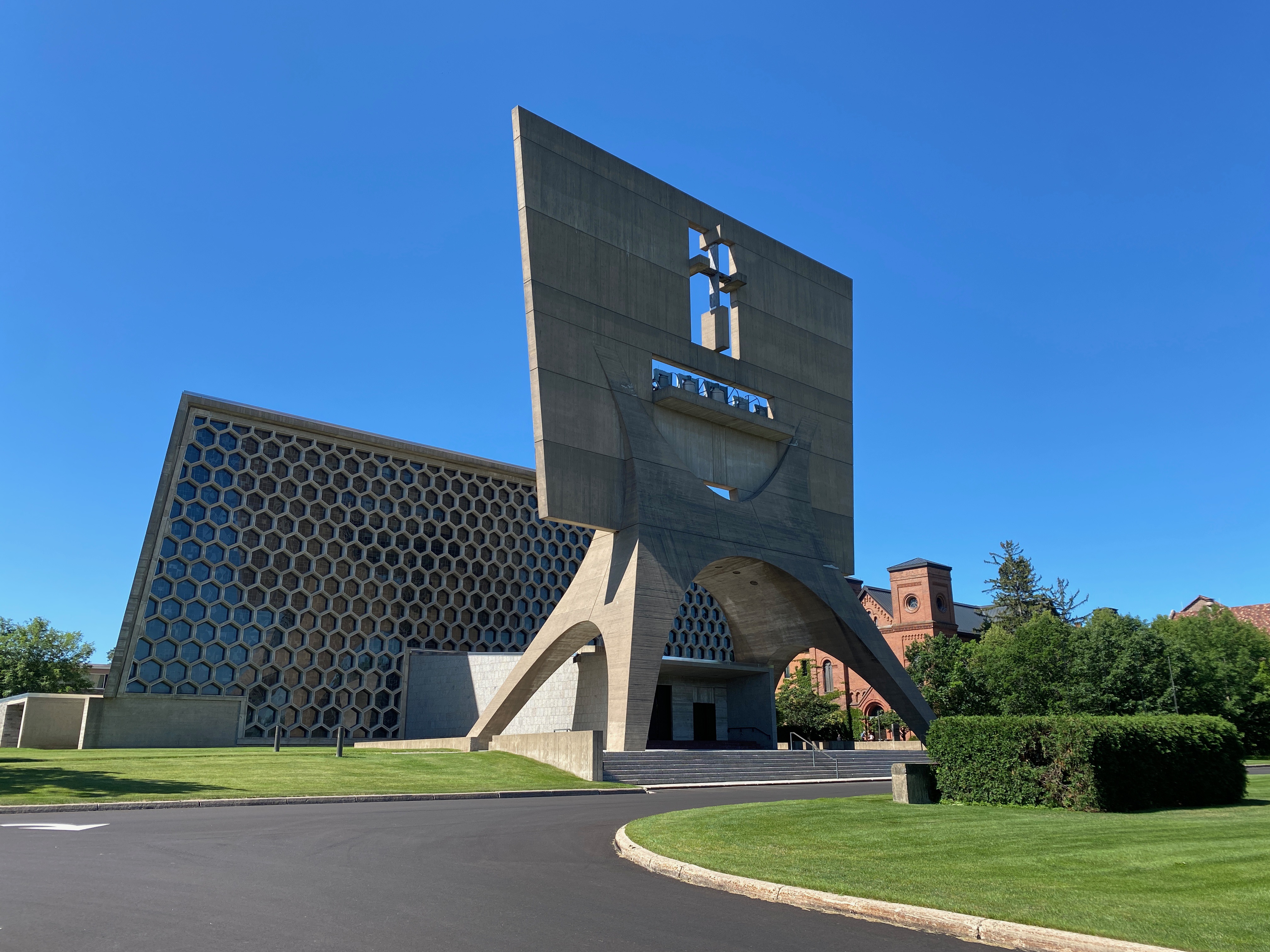
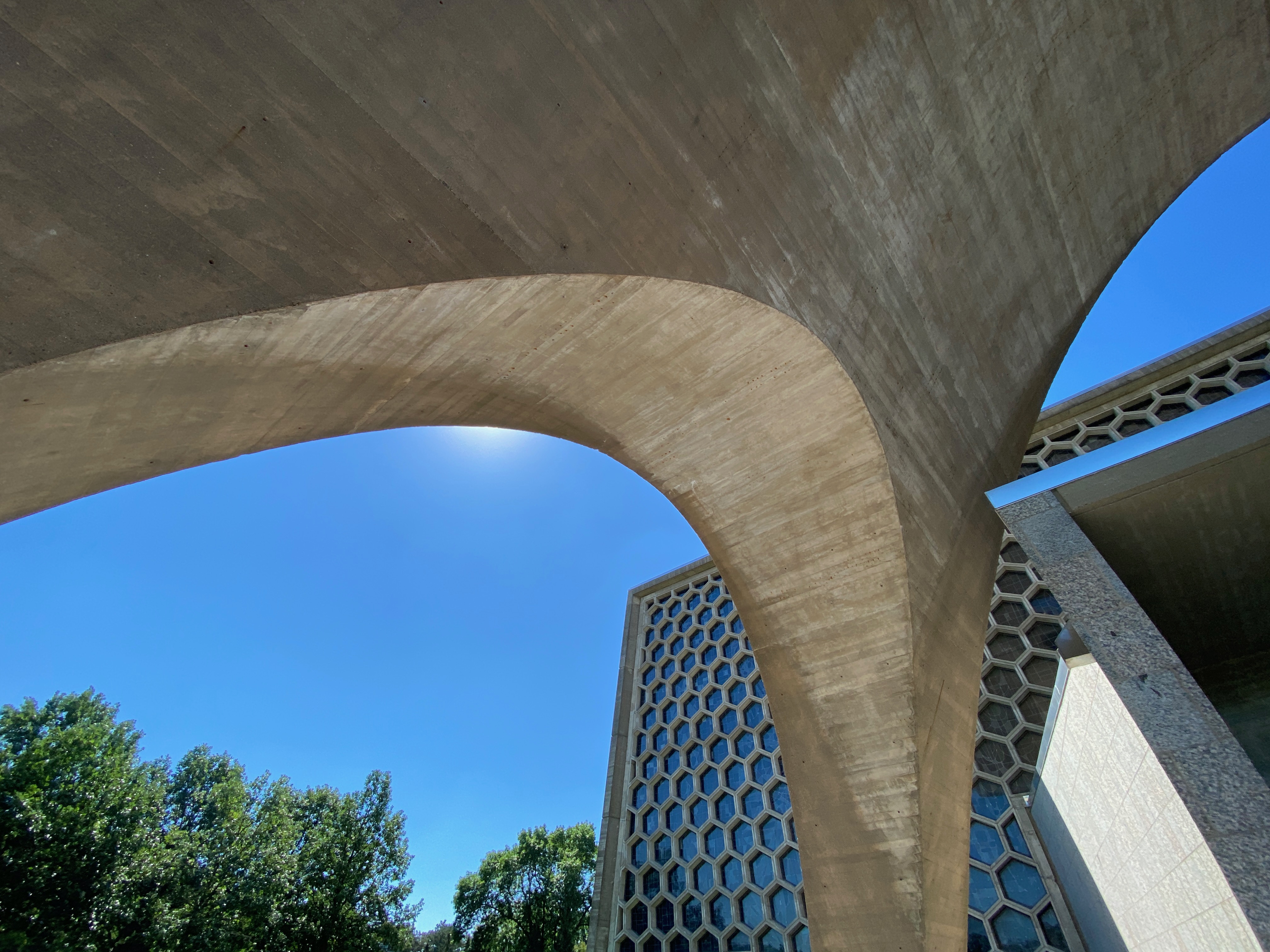
The bell tower–easily the best-known piece of the composition–contains something of a tribute to Breuer’s collaboration with Nervi. Its base is recognizably splayed, reflecting the shape of the Eiffel Tower, which sits at the opposite end of the Champ de Mars from the UNESCO building.
Collegeville is about a 70-minute drive northwest on I-94 from Minneapolis and well worth the trip, especially if your traveling companion knows to recommend the bear claws at Nelson Brothers Bakery in Clearwater. If you can throw in a Twins or St. Paul Saints game or two, so much the better.
 architecturefarm