Pleased to report that the eighth meeting of the Construction History Society of America is in the books. My UIUC colleague, Marci S. Uihlein, and I volunteered last year to co-chair and host it–somewhat selfishly, as this is always a favorite moment on the calendar and a good chance to catch up with a few dozen close friends and collaborators. We had twelve paper sessions, with topics ranging from thin-shell concrete construction to the evolution of masonry ties in historic facades, and settings throughout the Americas–Oaxaca, Chicago, Guatemala, and Seattle were just a few of the locations covered by presenters.
We also had four outstanding keynote lectures. Prof. Uihlein introduced the discipline to N. Clifford Ricker, the first architectural graduate in the U.S. who went on to teach at his alma mater (Illinois since you asked!) and to write an early (but unpublished) textbook on construction and structures that is among the best examples of the state of the art ca. 1890 that I’ve seen. Marci has been leading the effort to publish Ricker’s text, along with a handful of framing essays, and this was the perfect venue to publicize the project. Deborah Slaton, from WJE, gave an overview of Chicago’s history of concrete construction, and UIUC landscape architecture professor Stephen Sears talked about Illinois as a site–both poetically and as a region transformed by industrial agriculture. Finally, our closing keynote by Chicago Sun-Times architecture critic Lee Bey was an insightful look into four major preservation projects that Chicago’s new mayor could–should–take on as the city transforms itself once again.
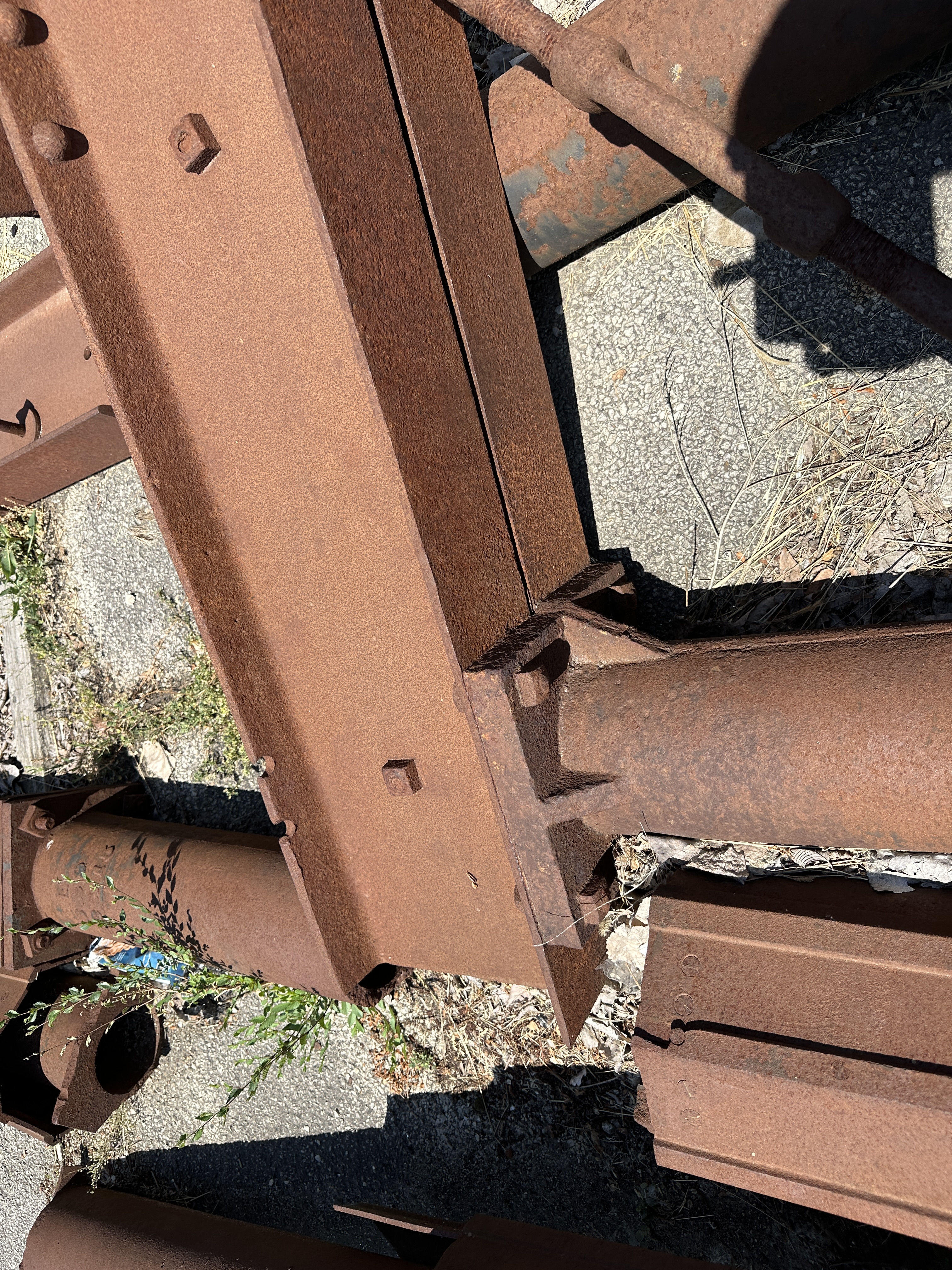
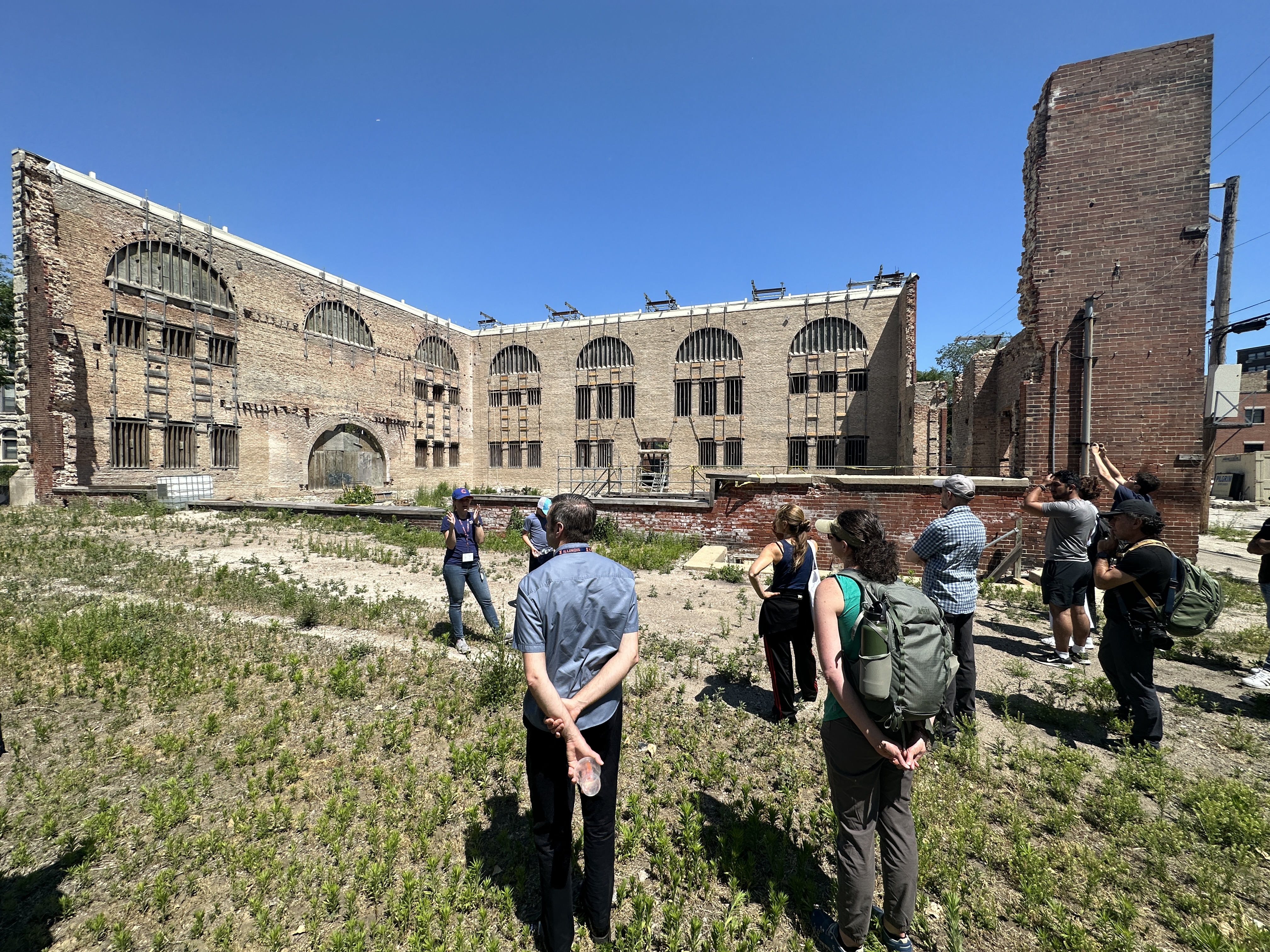
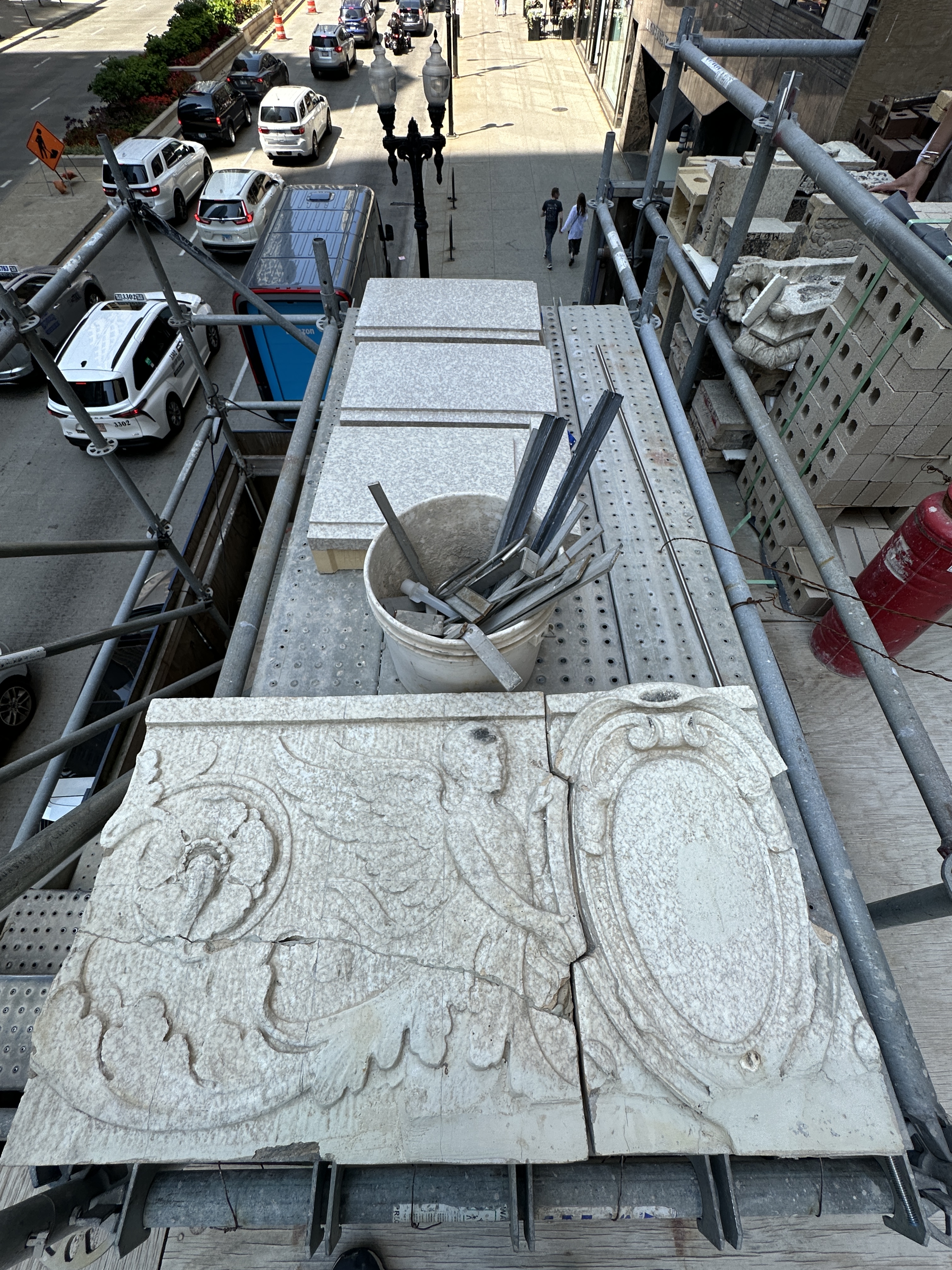
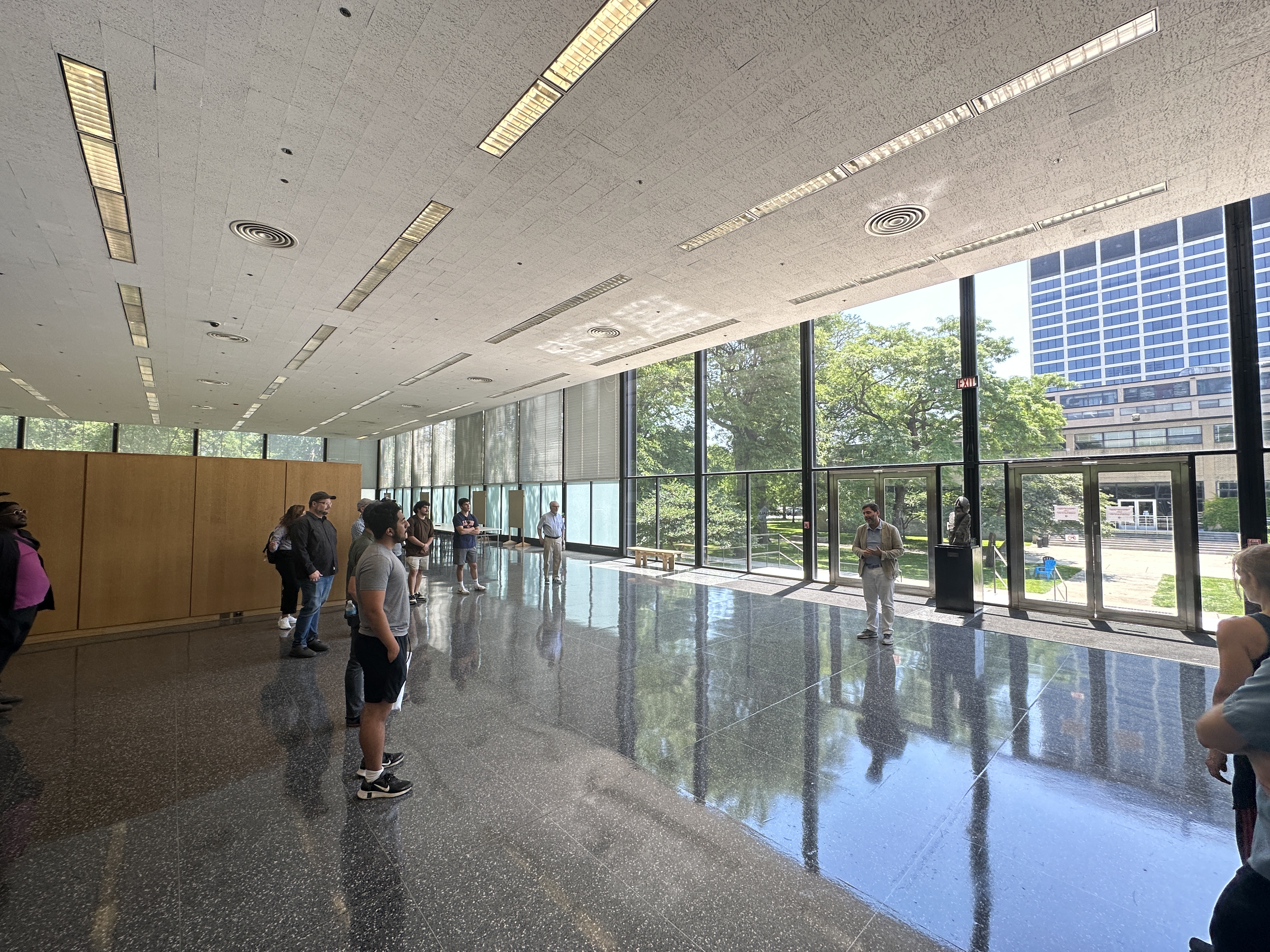
On Saturday we caught an early bus to Chicago to tour four preservation projects in the city, focusing on the South Side, sponsored and led by Wiss, Janney, Elstner and Central Building and Preservation. Pullman, the site of the Spencer Solon Beman-designed factory and company town, was an introduction to the city’s labor and industrial history–a remarkable site of both preservation and transformation. The ruins of Louis Sullivan’s Kehilath Anshe Ma’arav Synagogue–later Pilgrim Baptist Church, the “birthplace of Gospel Music”–was both haunting and promising, as there are hopes that the surviving walls can be incorporated into a new Gospel museum. Michelangelo Sabatino gave us an overview of IIT’s iconic Crown Hall, restored and re-glazed in 2007. Finally, WJE and Central got us up on the sidewalk canopy at the Old Republic Building on N. Michigan Avenue to see their work to restore that building’s terra cotta facade up close and personal.
This year’s conference was an argument and a challenge to the discipline. CHSA has always met in alternate years, but we felt that there was enough good work and enough enthusiasm to meet that we could pull off an annual event. Next year will be the Eighth International Congress on Construction History, to be held in Zurich, so we’ll defer to that. But we’re hoping that CHSA can fill in the intervening years between the ICCHs. This year’s event is convincing evidence that Construction HIstory as a field of study continues to grow and to attract scholars, practitioners, and enthusiasts from a range of backgrounds–preservation, engineering, architecture, history, etc. Selfishly, I’m looking forward to gathering with folks from across this spectrum every year. The number of submissions to CHSA8–and the high quality of work throughout–suggests that we’ll be able to.
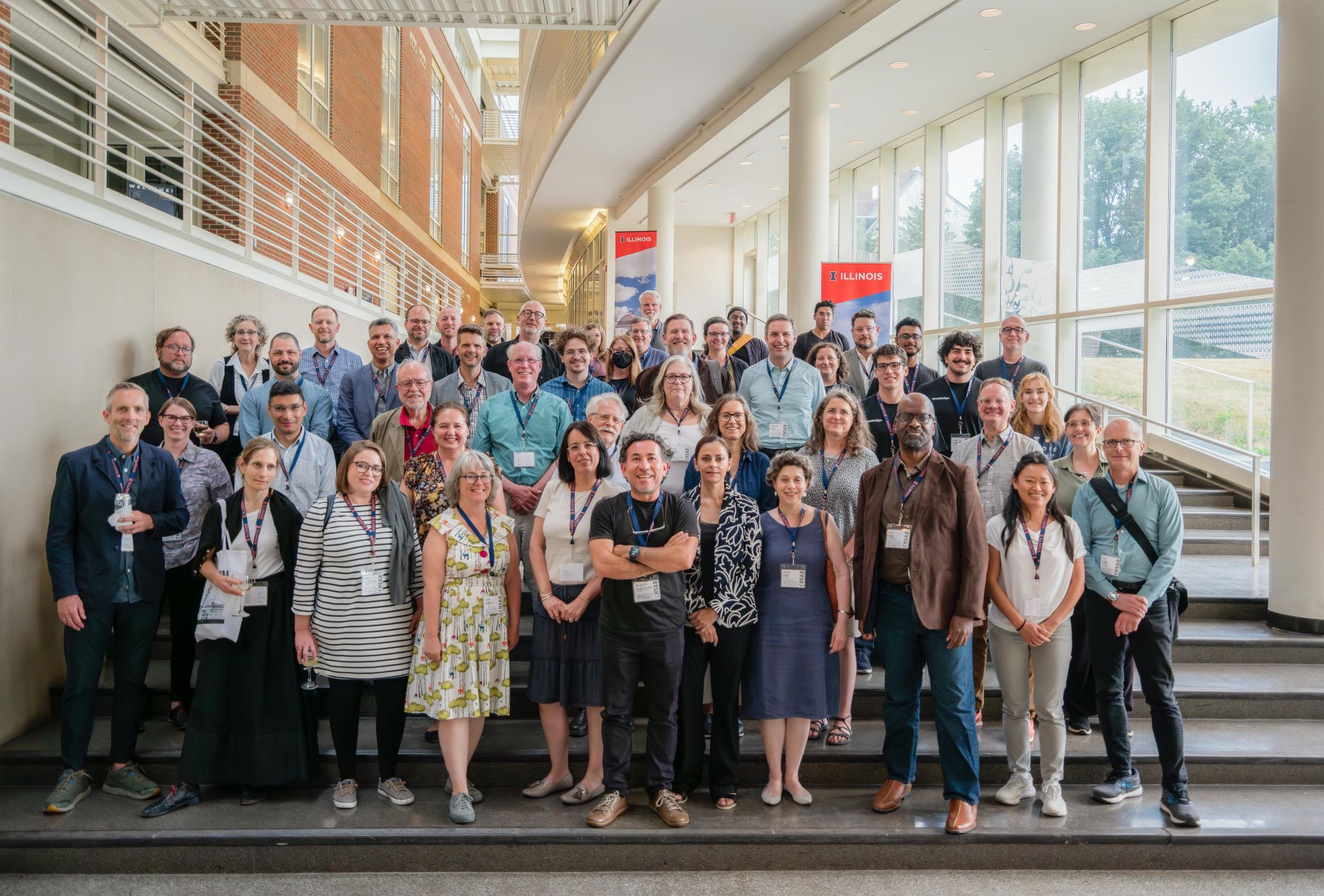
Thanks to all who made the event happen–especially the staff and administration of the College of FIne and Applied Arts and the Illinois School of Architecture, our sponsors, WJE, Central, and Vertical Access, the half-dozen student volunteers who made sure the meeting went smoothly, and everyone who made the trip to Central Illinois to join in.
 architecturefarm