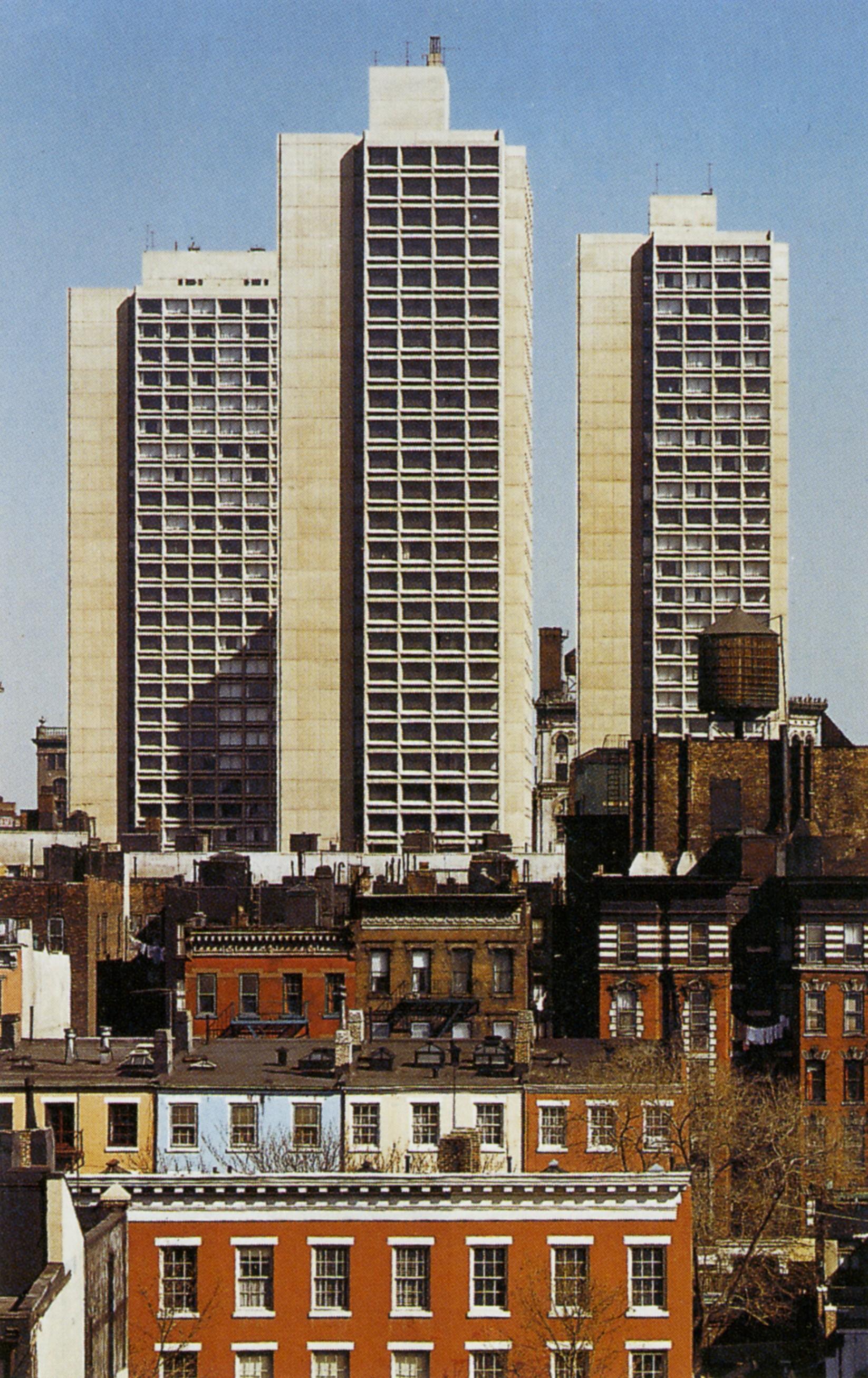
Happy to announce that after a couple of years of great conversations, deep dives into obscure 1920s issues of Cement Age, and ace model-making by a student team here, The Modern Concrete Skyscraper is opening this week at the Skyscraper Museum in New York. Carol Willis, the Museum’s Director and Founder, approached me about helping to curate an exhibition that would be a ‘gentle corrective’ to the idea that the skyscraper’s evolution was primarily a steel story. “”Steel is a chapter, but it’s not the whole story” is the consistent theme throughout. What we’ve heard from engineers, architects, historians, and what we’ve seen in the historical record presents a much more nuanced and interesting story, where the two materials often worked in concert, often in competition, as skyscraper heights rose throughout the 20th and 21st centuries.
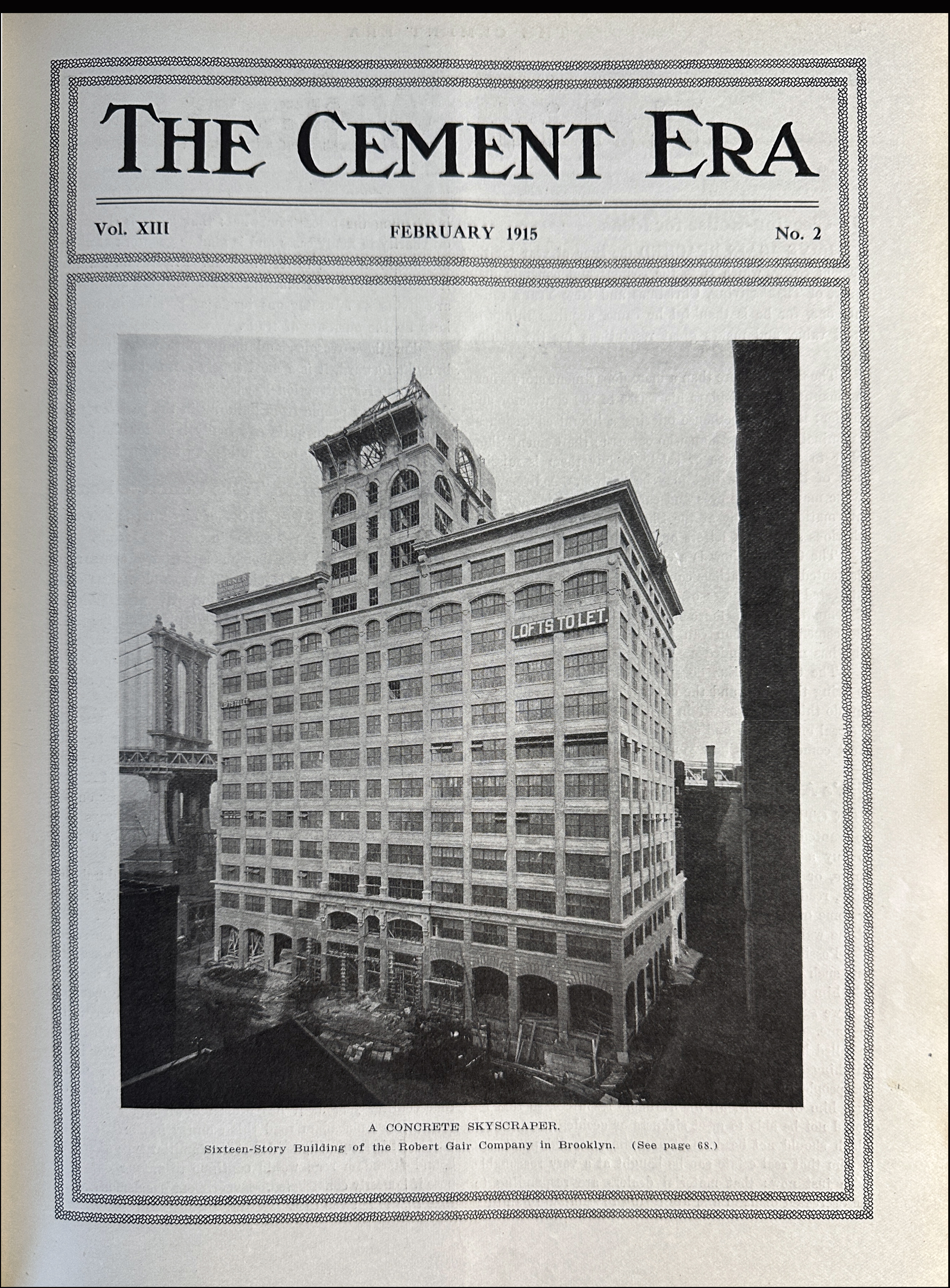
The exhibition looks at the history of concrete–one could argue that the first concrete ‘skyscrapers’ were the Roman insulae, apartment blocks that rose at least five and possibly as high as seven stories–and how the drive for greater height, safety, and efficiency led builders and designers to experiment with concrete as a more fireproof replacement for steel. Over time, research and development also made it competitive in terms of spatial efficiency and speed of construction. Today, the world’s tallest towers and construction sites are concrete, not steel, and the material’s emergence as the system of choice for supertalls is the result of a century of painstaking chemical, structural, and fabricational developments. “The rise of reinforced concrete skyscrapers evolved in several stages and from many influences,” Carol’s summary notes,
“…including architectural aspirations, engineering innovations, advances in the strength of materials and efficiencies in building construction, wind engineering, and computer-assisted design. While most of those changes were hidden from view behind sleek curtain walls or Postmodern ornament, the exhibition exposes the material concept and process in multiple structural models, construction views, and videos.”
However, this history hasn’t been adequately documented or presented previously. Carol asked questions throughout the project that seemed simple–how did flat plate construction become the global standard for residential construction as early as the 1920s, for instance, or why did composite construction–concrete cores with steel framing–become the norm for mid-sized office towers beginning in the late 1980s? The answers to these proved to be complicated but enlightening. Subsequent research uncovered some new stories, found some new heroes, and suggested a handful of buildings that should be in the skyscraper ‘canon’ but have so far been underappreciated by historians of construction and architecture alike.
The exhibition includes models of key buildings–some from the firms that designed them, others newly built by UIUC architecture students–as well as photographs, both new and historical, and diagrams that show the progression of height and technology from the 1905 Ingalls Building in Cincinnati at 16 stories and 210′–what I now think of as a steel framed tower re-imagined in concrete–to the 163-story, 2722′ tall Burj Khalifa, which SOM structural engineer emeritus Bill Baker, has described as a tower “cantilevered out from the crust of the earth.” “The strength and moldability of “liquid stone” into any form,” as the press release for the exhibit notes, “
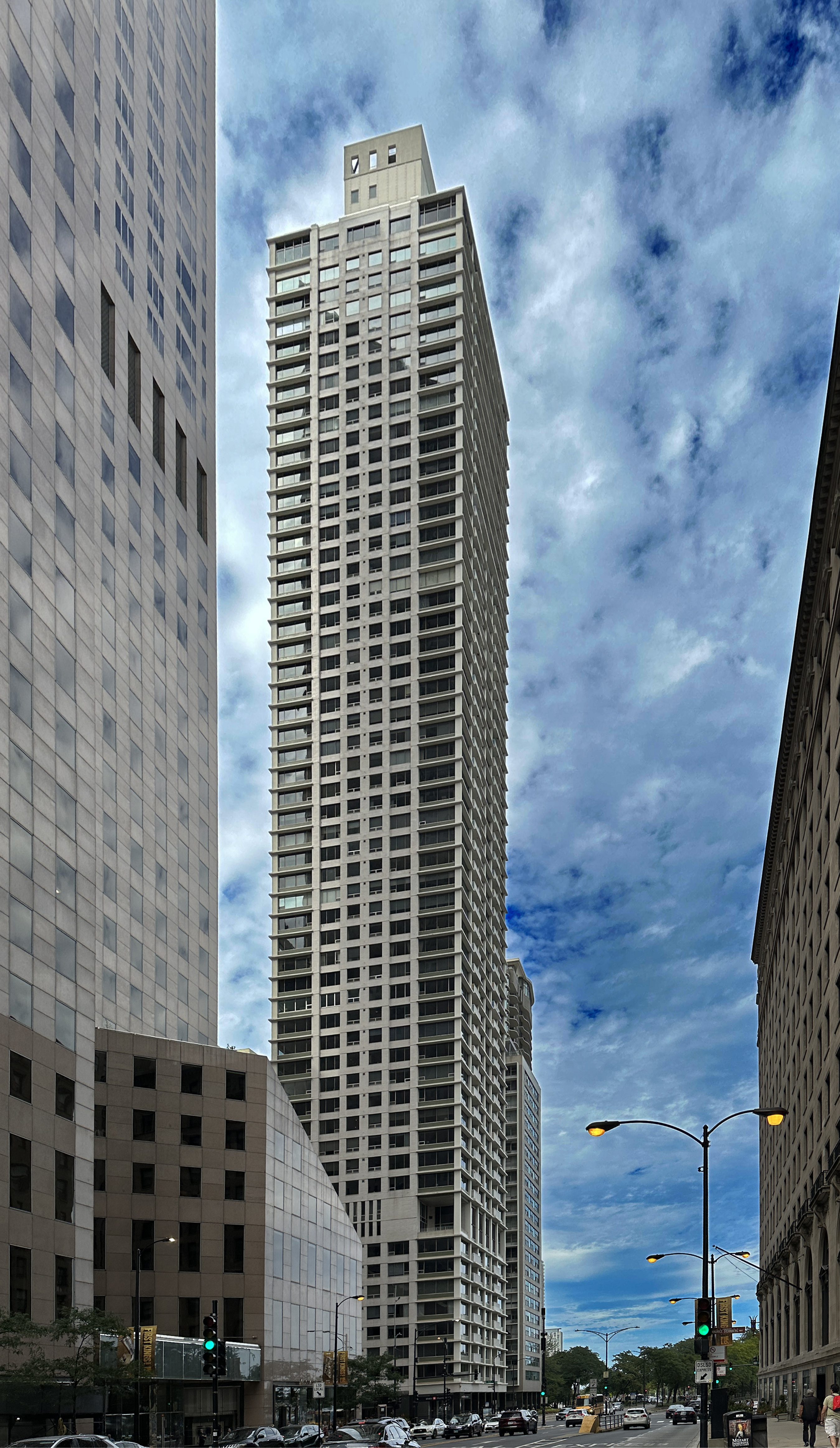
“…has enabled bold experiments in forms, inside and out, as can be seen in the dramatic voids of the atriums of the architecture of John Portman, the open core of SOM’s Jin Mao tower in Shanghai, or Zaha Hadid’s 1000 Museum in Miami. Another advantage of high-strength concrete is the stiffness it affords for extremely slender buildings such as the “pencil towers” of Manhattan’s Billionaires’ Row, including 432 Park Avenue, a model of which is featured in the show.”
All of this is supplemented by eleven online lectures that have taken place throughout the exhibition’s conception and creation with engineers, architects, critics, and historians who have helped shape the narrative–these are all available online here. They form an outstanding companion to the show now open at the Skyscraper Museum in Battery Park City.
The Skyscraper Museum General Information
Location: 39 Battery Place, Battery Park City, New York, 10280
Hours: Wednesday – Saturday, 12 – 6pm
Admission is FREE, but timed tickets are recommended
Guided gallery tours are available for groups by appointment booking on Tuesday from 10:15am-5pm and on Wednesday-Friday from 10:15am-12pm.
For directions and more information, visit skyscraper.org. For questions, email info@skyscraper.org or call 212-945-6324.
For image inquiries, please contact Daniel J Borrero at Borrero@skyscraper.org or call 212-945-6324. For exhibition & press inquiries, please contact Carol Willis at Caw3@columbia.edu.
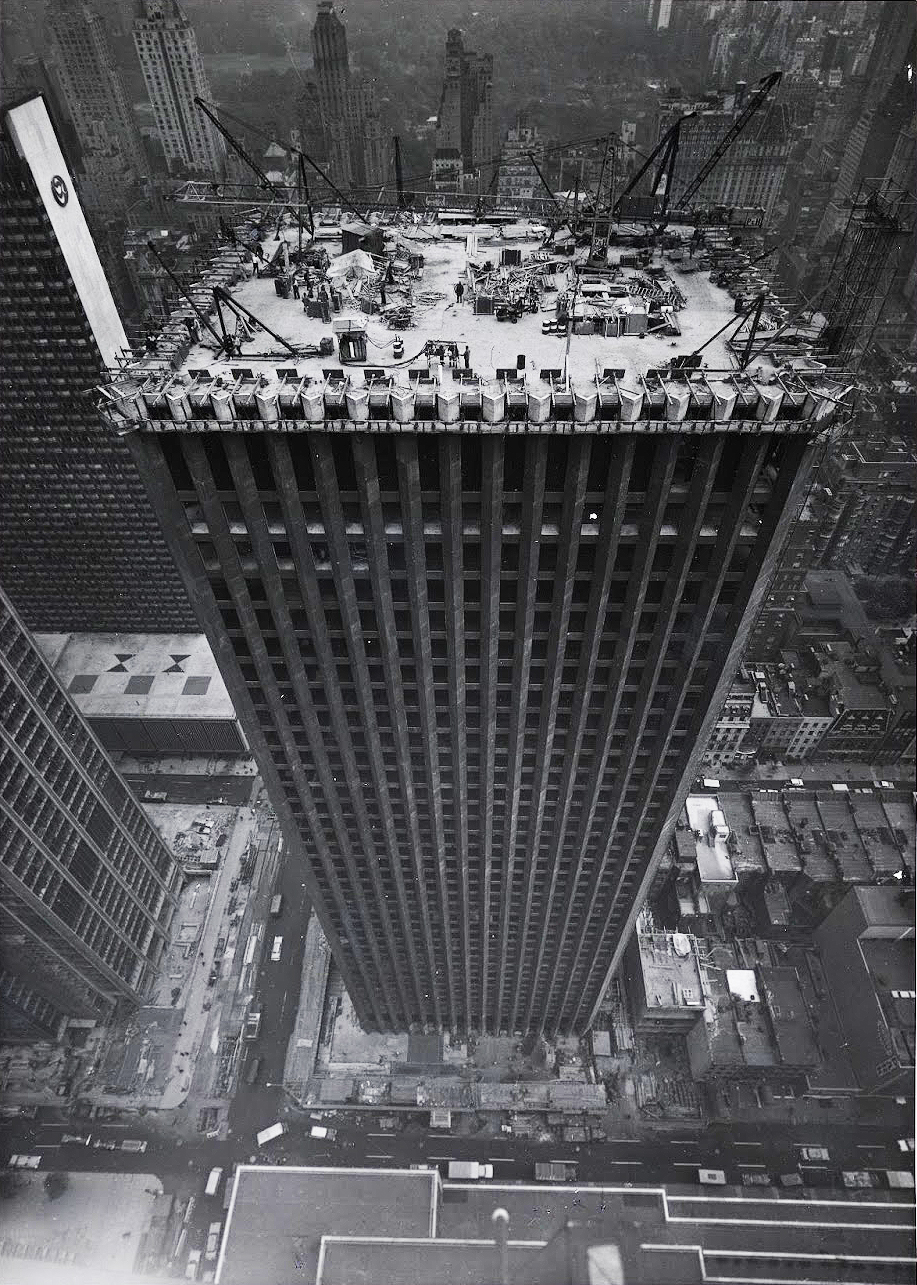
CBS Tower, NYC. Eero Saarinen/Paul Weidlinger, 1965. (Image courtesy Eero Saarinen Collection (MS 593). Manuscripts and Archives, Yale University Library).
 architecturefarm
Thanks Tom,
Over the weekend, my son’s girlfriend’s father – who I just met – shared a story that his father was job superintendent for Marina City. Knowing your love of first person accounts, I did my best to suss out a few details from the son who was 5 or 6 at the time. Sadly he’s no longer alive but when he was interviewed and hired by McHugh, they made him work for a time as a laborer to the win co-workers respect and learn the requirements from the ground up as it were. Later when the first tower topped out and they turned on the water main riser for the first time, it blew out and flooded the building.
It was a St Patty’s party so not ideal for recollections or recitals. I’ll share more as I can find out.
Are you attending the opening in NYC? I assume you are – enjoy!
Kenneth De Muth
AIA Partner
Pappageorge Haymes Partners
640 North Lasalle Suite 400 Chicago Illinois 60654 312 316 5216 cell 312 650 7316 office kdemuth@pappageorgehaymes.com kdemuth@pappageorgehaymes.com http://www.pappageorgehaymes.com http://www.pappageorgehaymes.com/
Chicago | Austin
>
LikeLiked by 1 person
Wow! That sounds like quite a tale! Will definitely want to hear more if you can find a non-St. Pat’s venue!!
LikeLike