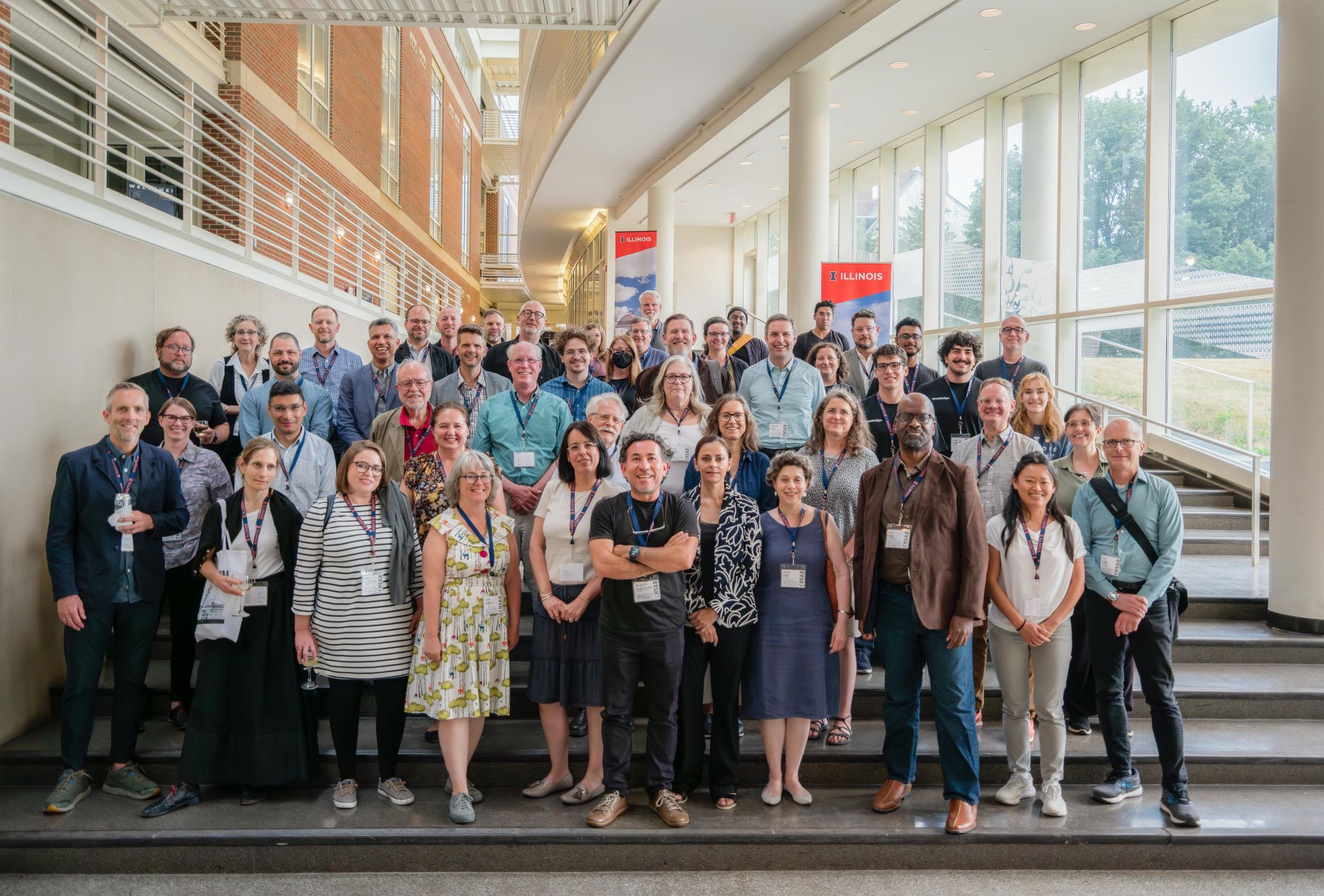
Pleased to report that the eighth meeting of the Construction History Society of America is in the books. My UIUC colleague, Marci S. Uihlein, and I volunteered last year to co-chair and host it–somewhat selfishly, as this is always a favorite moment on the calendar and a good chance to catch up with a few dozen close friends and collaborators. We had twelve paper sessions, with topics ranging from thin-shell concrete construction to the evolution of masonry ties in historic facades, and settings throughout the Americas–Oaxaca, Chicago, Guatemala, and Seattle were just a few of the locations covered by presenters.
We also had four outstanding keynote lectures. Prof. Uihlein introduced the discipline to N. Clifford Ricker, the first architectural graduate in the U.S. who went on to teach at his alma mater (Illinois since you asked!) and to write an early (but unpublished) textbook on construction and structures that is among the best examples of the state of the art ca. 1890 that I’ve seen. Marci has been leading the effort to publish Ricker’s text, along with a handful of framing essays, and this was the perfect venue to publicize the project. Deborah Slaton, from WJE, gave an overview of Chicago’s history of concrete construction, and UIUC landscape architecture professor Stephen Sears talked about Illinois as a site–both poetically and as a region transformed by industrial agriculture. Finally, our closing keynote by Chicago Sun-Times architecture critic Lee Bey was an insightful look into four major preservation projects that Chicago’s new mayor could–should–take on as the city transforms itself once again.
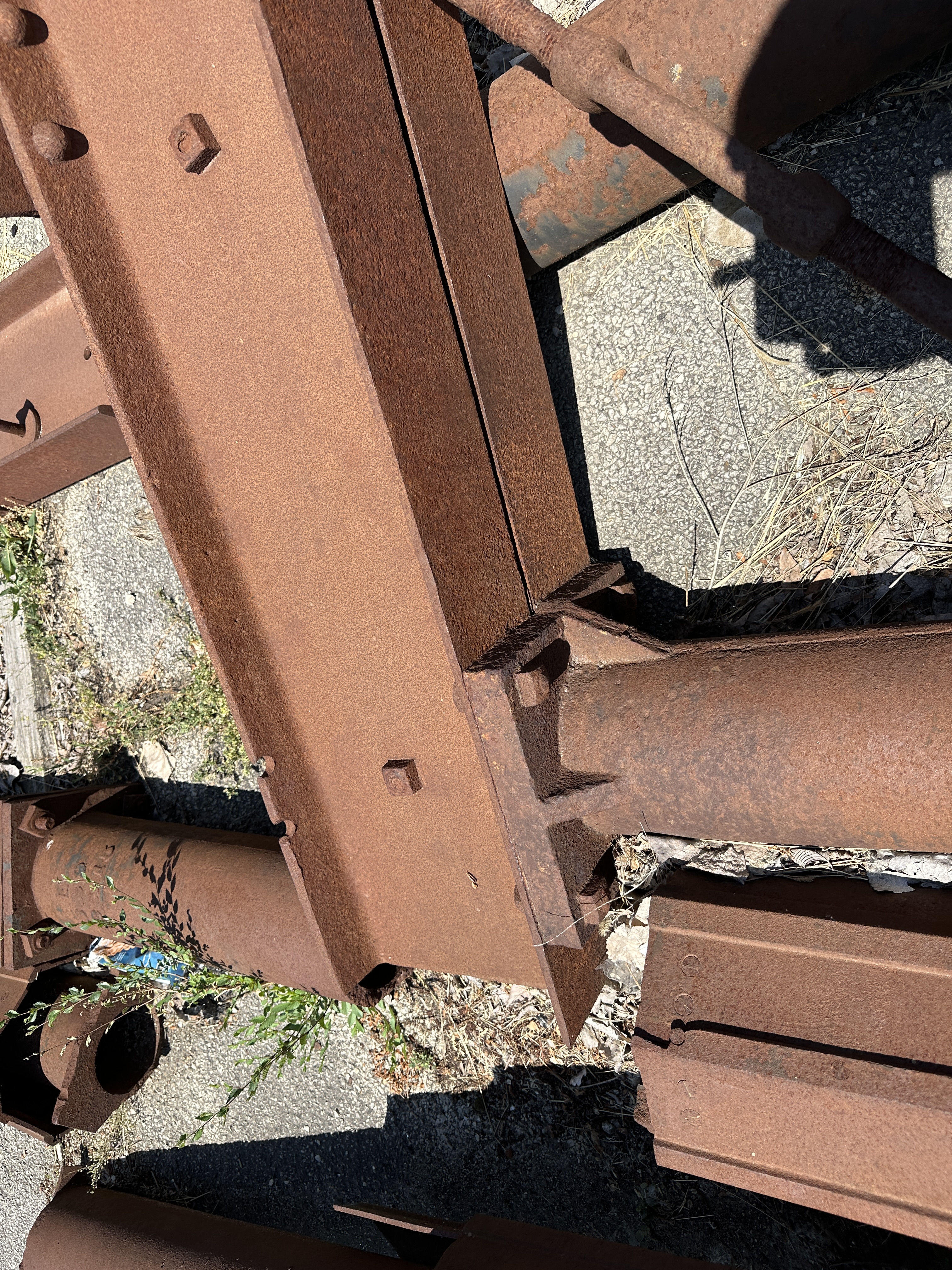
Actual Adler and Sullivan cast/wrought iron elements. It would be happier to see these in situ, but still fascinating to see in the job site yard at Pilgrim Baptist.
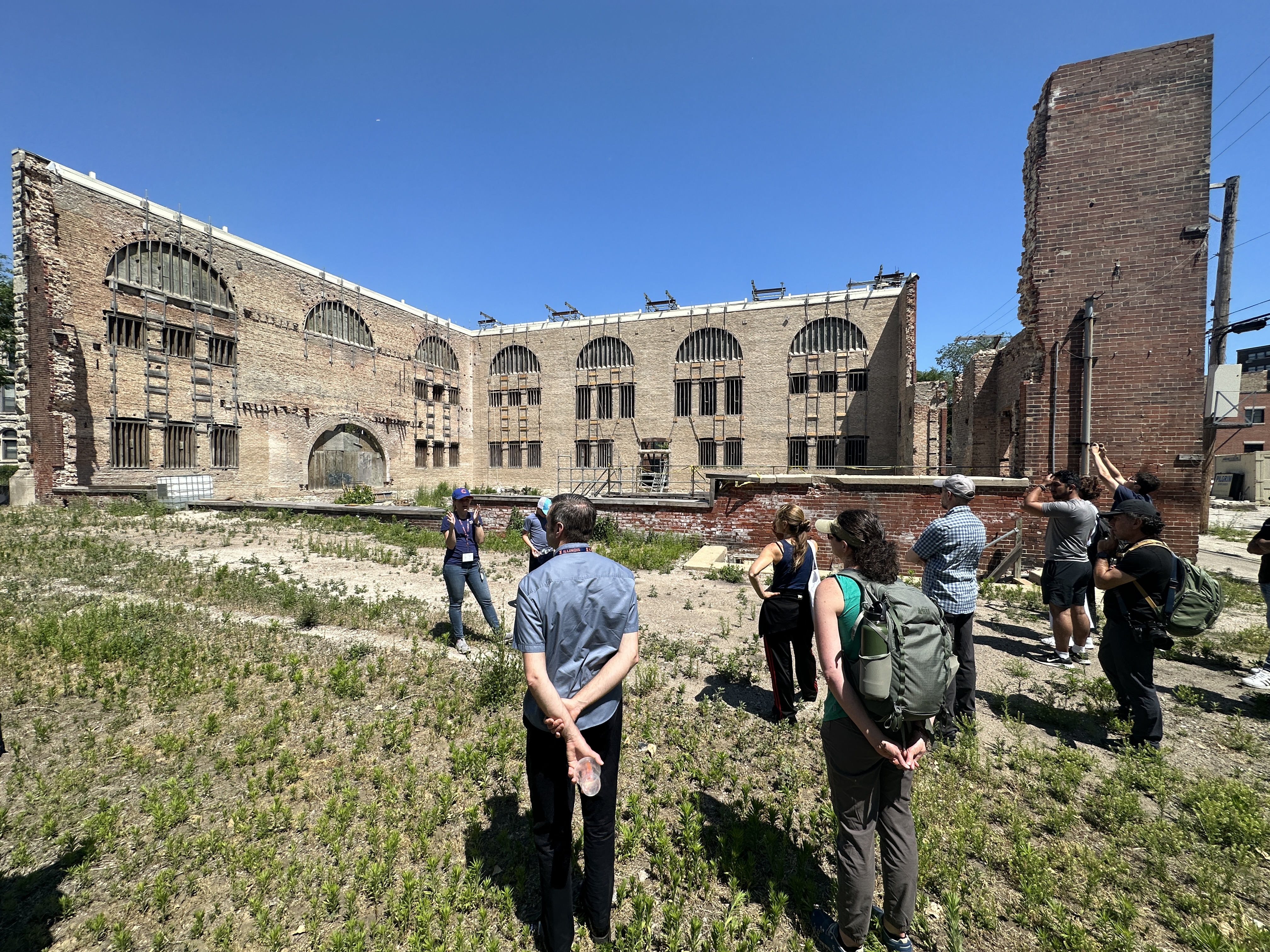
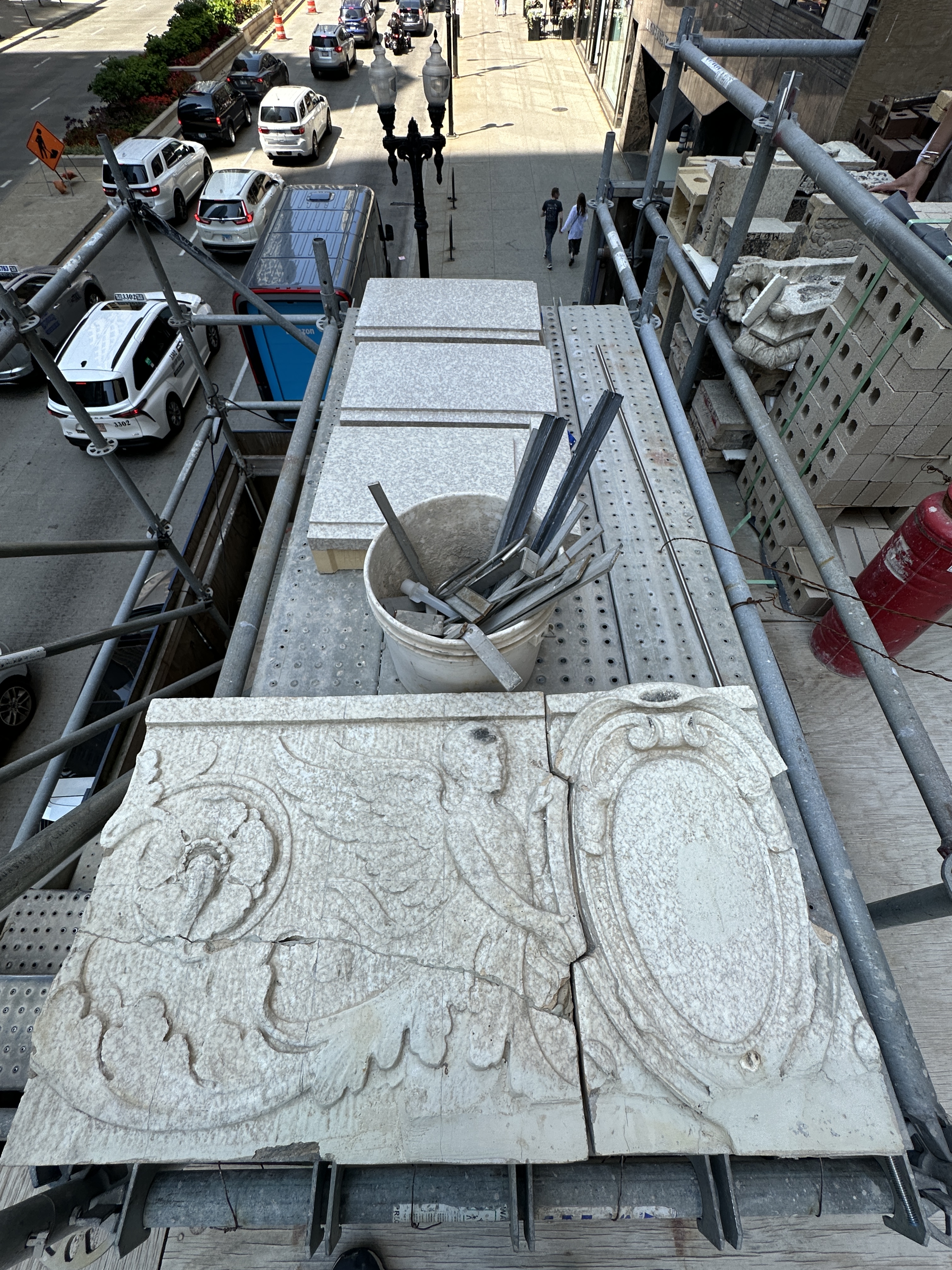
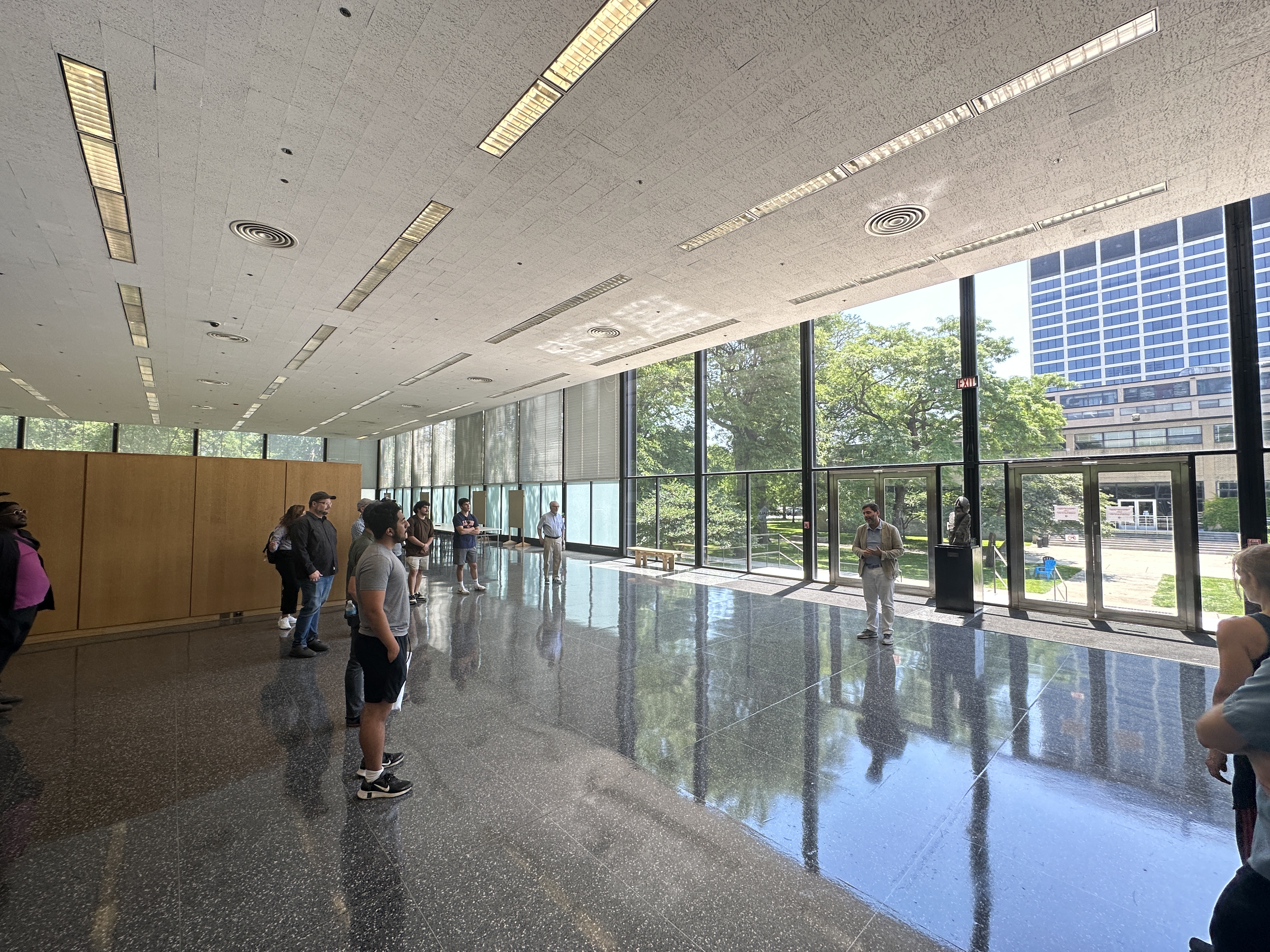
On Saturday we caught an early bus to Chicago to tour four preservation projects in the city, focusing on the South Side, sponsored and led by Wiss, Janney, Elstner and Central Building and Preservation. Pullman, the site of the Spencer Solon Beman-designed factory and company town, was an introduction to the city’s labor and industrial history–a remarkable site of both preservation and transformation. The ruins of Louis Sullivan’s Kehilath Anshe Ma’arav Synagogue–later Pilgrim Baptist Church, the “birthplace of Gospel Music”–was both haunting and promising, as there are hopes that the surviving walls can be incorporated into a new Gospel museum. Michelangelo Sabatino gave us an overview of IIT’s iconic Crown Hall, restored and re-glazed in 2007. Finally, WJE and Central got us up on the sidewalk canopy at the Old Republic Building on N. Michigan Avenue to see their work to restore that building’s terra cotta facade up close and personal.
This year’s conference was an argument and a challenge to the discipline. CHSA has always met in alternate years, but we felt that there was enough good work and enough enthusiasm to meet that we could pull off an annual event. Next year will be the Eighth International Congress on Construction History, to be held in Zurich, so we’ll defer to that. But we’re hoping that CHSA can fill in the intervening years between the ICCHs. This year’s event is convincing evidence that Construction HIstory as a field of study continues to grow and to attract scholars, practitioners, and enthusiasts from a range of backgrounds–preservation, engineering, architecture, history, etc. Selfishly, I’m looking forward to gathering with folks from across this spectrum every year. The number of submissions to CHSA8–and the high quality of work throughout–suggests that we’ll be able to.
Photograph courtesy Benjamin Ibarra-Sevilla/CHSA
Thanks to all who made the event happen–especially the staff and administration of the College of FIne and Applied Arts and the Illinois School of Architecture, our sponsors, WJE, Central, and Vertical Access, the half-dozen student volunteers who made sure the meeting went smoothly, and everyone who made the trip to Central Illinois to join in.
Happily amid the Construction History Society of America’s Eighth annual meeting, which I’m co-hosting with Illinois School of Architecture colleague Marci Uihlein. In addition to spotlighting her research on N. Clifford Ricker–U of Illinois’ patron saint of all things architectural and construction–the conference has its usual outstanding range of papers, from concrete pontoon bridges to straw bale houses and almost everything in between. Tonight at 5:00, we’ll have our closing keynote lecture from Chicago Sun-Times columnist and architecture critic Lee Bey, who will be speaking about how architecture and historic preservation can play a role in Mayor Johnson’s agenda for the city. Lee’s lecture is open to the public, in 120 Architecture, if you’re in town.
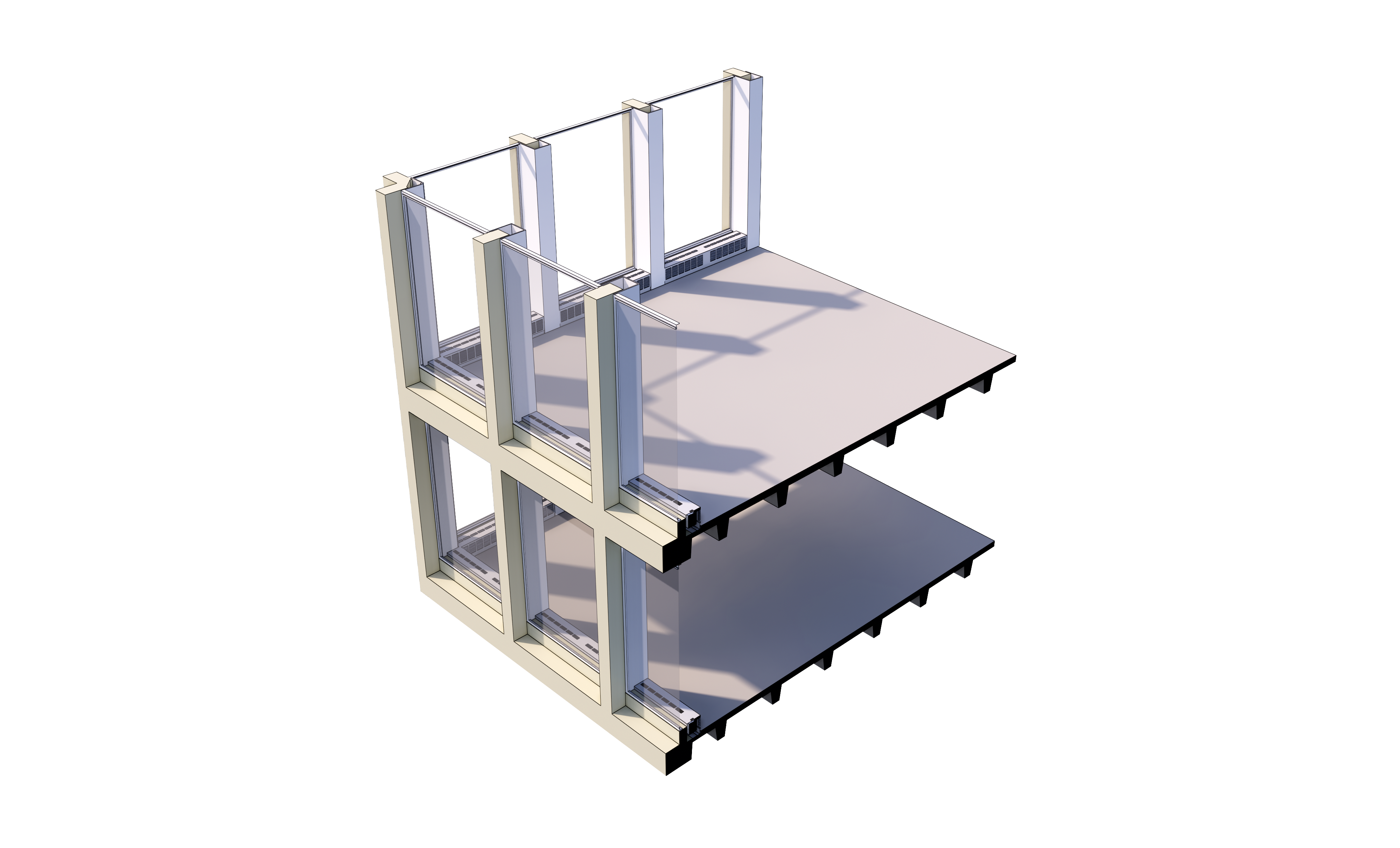
Brunswick Building, Chicago. SOM, 1961-65. Digital model by Jack Strait, from Chicago Skyscrapers, 1934-1986.
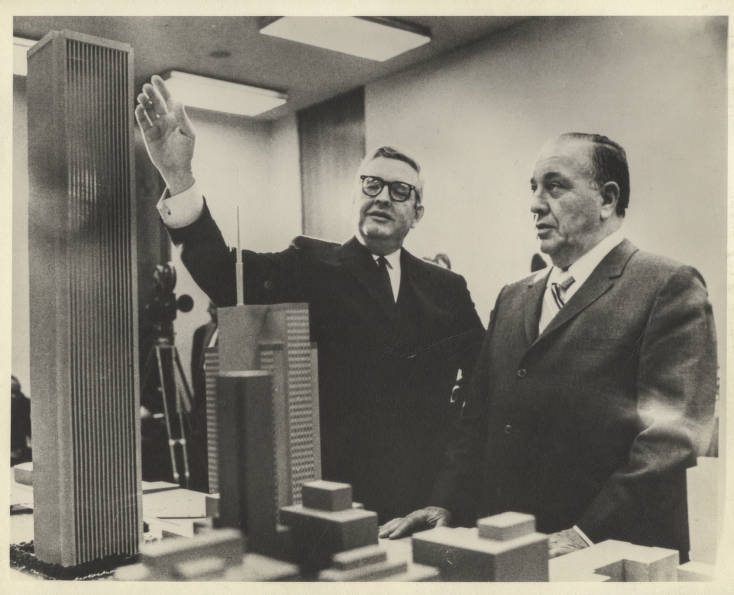
This coming Tuesday the Skyscraper Museum will host the second of its In Situ webinars, which look at the history of concrete high-rises in anticipation of this Fall’s exhibition. Bill Baker, Emeritus Partner at SOM, and I will talk about the evolution of the concrete tube structure, in particular looking at two Chicago examples by SOM from the early 1960s–the Brunswick Building and the Chestnut-DeWitt apartments. Free admission, but registration is required. More details and registration here.
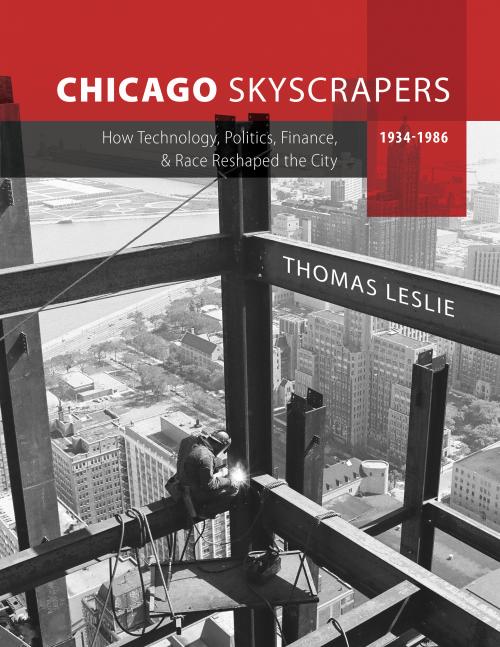
Very glad to have Ted Fishman’s review of Chicago Skyscrapers, 1934-1986 appear in the June issue of Chicago’s NewCity magazine. It’s a thorough, thoughtful overview of the book and its predecessor–any review that cites work by William Cronon, Carl Condit, and Lee Bey as comparisons is a welcome one…
[Chicago Skyscrapers, 1934-1986, published by University of Illinois Press, is out now–available on Bookshop.org and Amazon.com, among other outlets.
Standard Oil (Edward Durrell Stone/Perkins & Will, 1968-1973).
Standard Oil of Indiana began as an offshoot of John Rockefeller’s Standard Oil trust after it was broken up in 1911. From its inception, it had occupied a 13-story Marshall and Fox-designed building at 910 South Michigan, but postwar growth had forced it, like Sears, to lease offices throughout the city. Standard revealed plans in September 1968 to build over the Illinois Central rail yards east of the Prudential Building. Negotiations took place throughout 1969 to develop the railroads’ air rights into what would become Illinois Center, but Standard proceeded independently, ignoring that project’s zoning and size recommendations.[i] In March 1969, the company announced that it would build 2 million square feet of office space on its site, to be designed by two architectural firms: Chicago-based Perkins & Will, and New York-based Edward Durrell Stone.[ii]
This pairing was notable for being well outside the city’s Miesian architectural culture. Perkins & Will’s partnership with C.F. Murphy on First National Bank had been a stylistic anomaly—its commercial reputation still rested with the diamond-planned U.S. Gypsum Building, and it was working on 230 Monroe Street at the time, a 28-story steel-framed building rendered in black aluminum and bronze glazing with angled column covers that recalled Saarinen’s CBS Building in New York.[iii] Stone, meanwhile, was enjoying the high point of his long, varied career. An Arkansas native, he had been an early proponent of the International Style, associating with Phillip Goodwin on the Museum of Modern Art and designing modernist houses in New York and suburban Boston. His postwar work, however, had been eclectic. After worldwide acclaim for the ornate screens and gold-tinged columns of his temple-like American Embassy in New Delhi, Stone’s designs combined formal planning with material opulence. His greatest cultural commission, the Kennedy Center in Washington, and his first skyscraper, the marble-shafted General Motors Building at the southwest corner of Central Park in Manhattan, were popular with the public—and lambasted by critics—for their ersatz formalism and decorative elements. Ada Louise Huxtable, writing about General Motors’ acres of marble cladding and finishes, assailed its “pretentiously ordinary…Throwback Classicism” as “Furniture Store Posh.” Its sturdy-looking marble columns were, she pointed out, a “seven-eighths inch…veneer” concealing the actual structure to “disguise and diminish one of the great art forms of our day,” with “overlays of low-level corn and pseudo-grandeur.”[iv] Stone relished his iconoclastic reputation, though, telling the press that Standard Oil would not defer to Chicago’s traditions. “The glass box design for office buildings has run its course,” he prophesied, promising a “permanent look” for Standard Oil.[v]
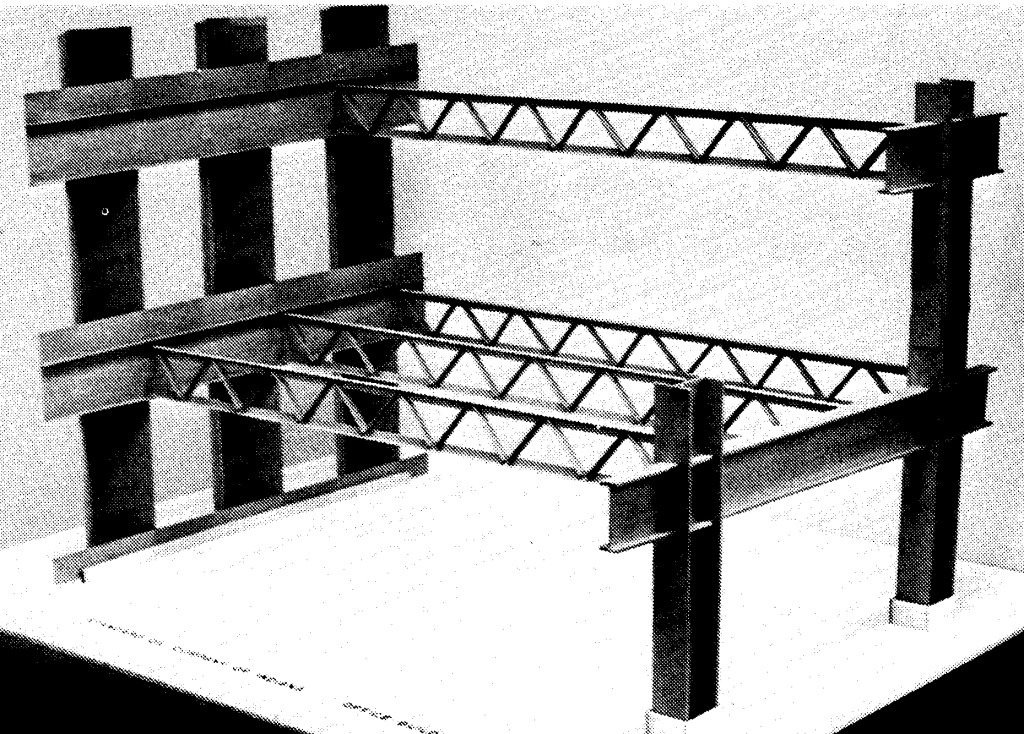
Al Picardi’s structural scheme for Standard Oil in model form. From E. Alfred Picardi, “Structural System—Standard Oil of Indiana Building.” Journal of the Structural Division, ASCE. Vol. 99, no. ST4. Apr., 1973. 42-51.
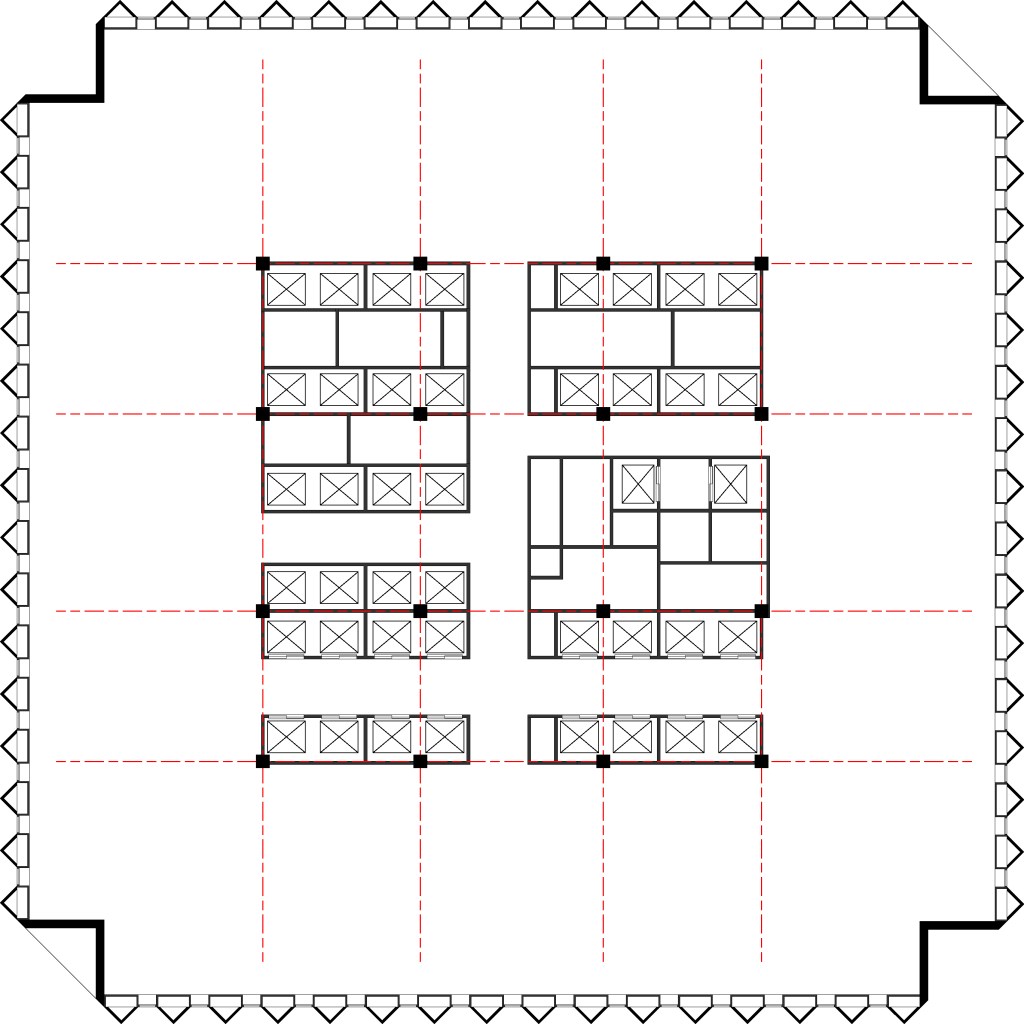
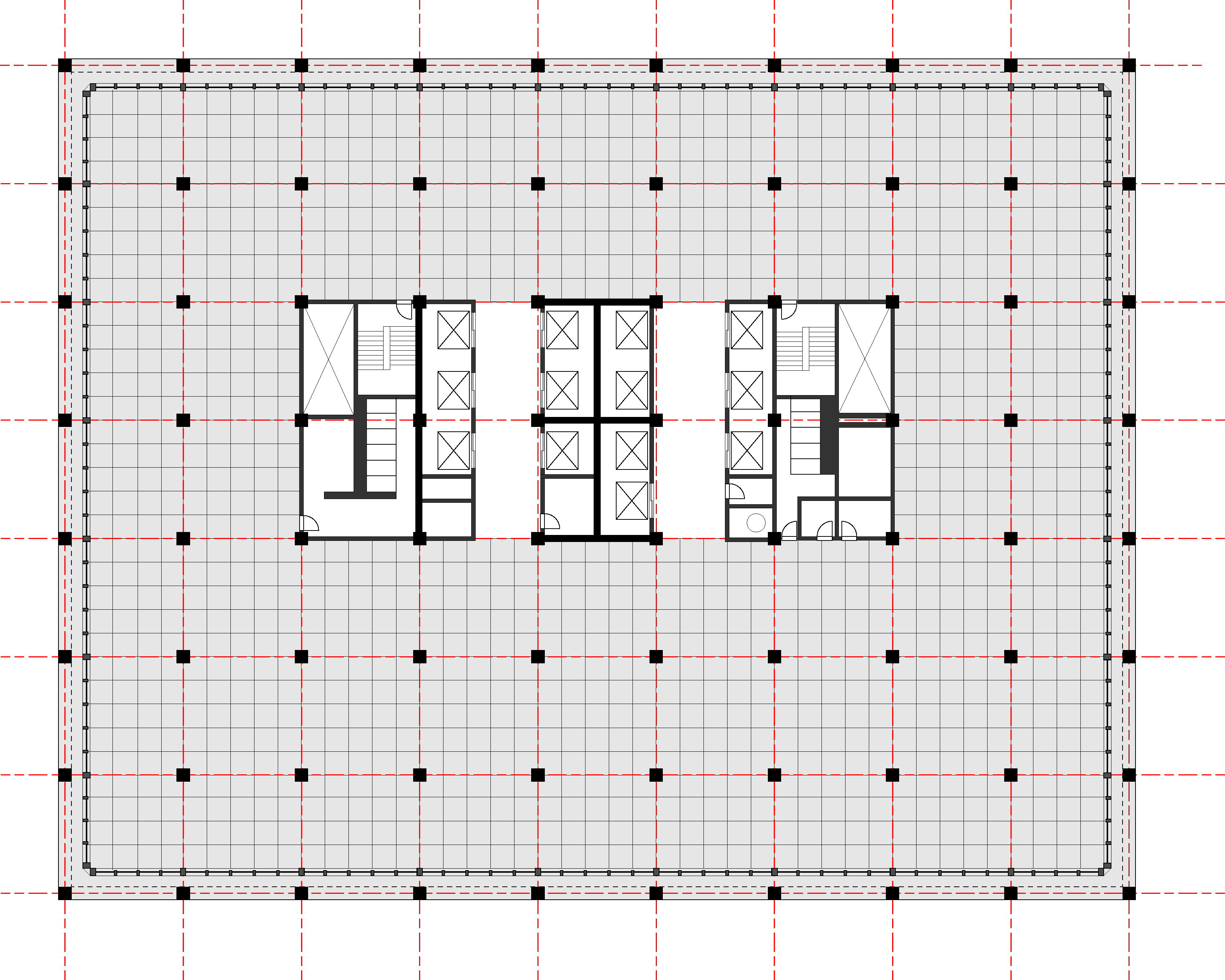
The two firms worked through 1969 to adapt Stone’s formula to Standard Oil’s program as it grew to 3,200,000 gross square feet of corporate and tenant space. Stone proposed spreading this over 80 floor plates of 40,000 square feet each. The project benefitted from SOM’s former head of structural design, Al Picardi, who joined Perkins + Will in 1967. Picardi had overseen Khan’s tube structures and he applied that experience here. As impressive a structural system as the Hancock was, he wondered whether “it would be possible to develop a structural system with efficient tube action, yet simplify the fabrication and erection problems?” A “natural concept to consider,” he concluded, would treat the exterior frame as “steel plate walls with openings only large enough to accommodate architecturally acceptable vision panels.” The result would distribute material evenly around the building’s perimeter, instead of concentrating it in discrete, heavy columns– a scheme more like the perimeter structures being designed in concrete by Dubin, Dubin, Black, and Moutoussamy or Leslie Robertson’s tightly spaced steel columns at the World Trade Center. Picardi designed a tube of 64 broad, triangular folded plates, 10 feet on center, each wrapping a vertical shaft accommodating ducts or pipes, with 5’-0” windows and induction units between them. These plates were shop-welded in three-story lengths and field-bolted to 5’-6” deep spandrel beams, forming a planar wall of deeply corrugated steel on each of the building’s four sides. Within, a grid of sixteen columns formed a 95’ square core and 45’-0” bays, spanned with 38-inch open web steel joists large enough to accommodate ductwork services. The building’s corners consisted of rigid steel plates forming nine-foot-deep re-entrant angles, making the tower into a stiff-edged box.[vi] Picardi claimed nearly the same material efficiency as the Hancock but with significant fabricational savings due to its simpler geometry. Standard Oil has just one basic floor shape, multiplied over the building’s full height, with none of the Hancock’s sloping walls, making it “simpler in design, less expensive to fabricate, and easier to erect than conventional or previous tube systems.”[vii] Stone and Perkins & Will planned a simple cladding scheme for the building, replicating the white marble columns and dark spandrels and glass that had wrapped U.S. Gypsum and General Motors.[viii]
Standard Oil Building. Typical Floor Plan.
Turner Construction won the contract to build this simple but massive structure, breaking ground on April 1970 as a helicopter hovered at the tower’s planned 1,136 foot height.[ix] Ten caissons on each face and 16 under the core were tied together with an eggcrate of girders similar to the Hancock’s, while a slurry wall similar to Sears’ formed the building’s basements.[x] Steelwork began fabrication while foundations were being completed. Once steel assembly began, in May 1971, Turner had a continuous feed of pre-welded column panels, spandrel girders, and trusses. One piece arrived every seven minutes, ready to be hoisted into place by one of four climbing derricks. As the building’s 53,000 tons of steelwork rose, cladding followed. Stone selected Italian Carrara marble to cover the building’s columns—more than 18 acres of it, in 1-1/4” thick slabs.[xi] While the job suffered through the same strikes that delayed Sears, Standard Oil also had to contend with Italian labor unrest that delayed marble deliveries. As Standard moved into the tower’s lower floors in March and April 1973, the upper seven stories remained uncovered until July. Tenants began moving into those floors in October, and the plaza’s “dazzling” pattern of marble and granite was completed soon afterwards, though it only received its signature acoustic sculpture by Harry Bertoia in 1975.[xii] The building’s final days of construction were marked by a dramatic, ominous accident. In December 1973, scaffolding on the 82nd floor broke loose in high winds, tearing a 350-pound piece of marble from the building and sending it plunging through the Prudential’s roof. No one was injured, but emergency inspections delayed the project’s completion.[xiii]
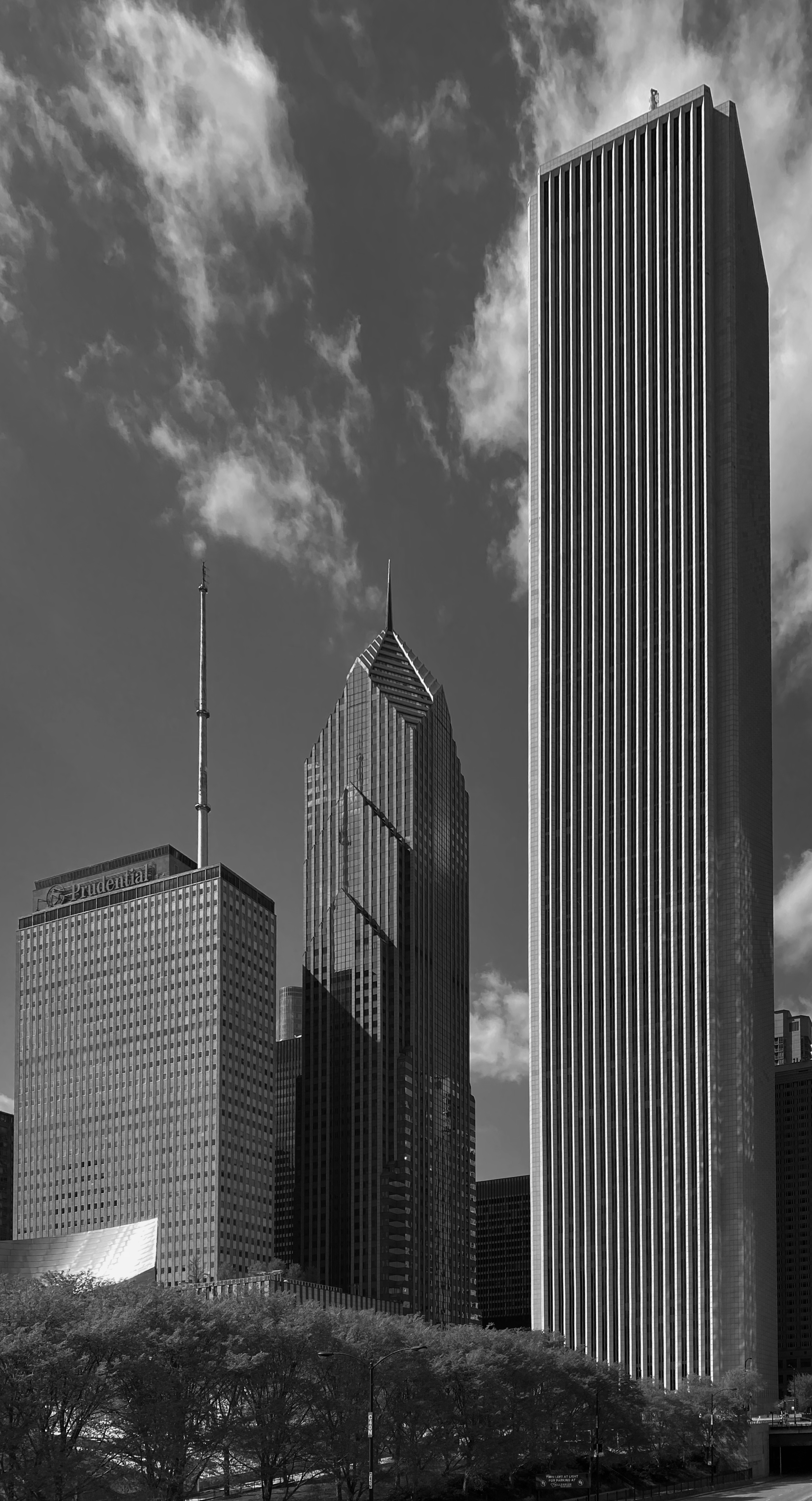
Standard Oil with One and Two Prudential Plaza. (Author).
Standard Oil’s opening occurred amidst the same uncertainty about the Loop’s commercial market that had worried Sears’ backers. Unlike Sears, though, less than a third of Standard Oil’s upper floors were under contract at its opening.[xiv] Its leasing agent, Frank Whiston, kept rents high, hoping that the building would attract tenants based on prestige, but the 1973 energy crisis put Standard’s future in doubt, too. The AIA honored the tower for its engineering, but architectural critics were scathing. A local AIA committee auditing the Illinois Center project critiqued it for nearly doubling the city’s floor area ratio development guidelines for Illinois Center of 14:1.[xv] Stone himself gave the building a luke-warm reaction, remarking only that “it’s good looking” on seeing the project firsthand. The Tribune’s Paul Gapp, on the other hand,was furious. “The Standard Oil Building,” he wrote, “is perhaps the worst thing that has happened to Chicago’s skyline in the last 30 years.” The Prudential’s “headstone by the Lake” was now matched, in Gapp’s view, by Stone’s scale-less, “unbroken verticality.” Its blazing contrast between brilliant white marble and the narrow, dark recesses hid any sense of floor-to-floor rhythm or Picardi’s ingenious structural fabric behind facile elevational stripes. “If you stare at the building from a short distance for more than 15 seconds,” Gapp complained, “it is almost disorienting.”[xvi]
Standard Oil’s thin veneer of Carrara marble became infamous. After the 1973 accident, maintenance engineers noticed that winter freeze-thaw cycles were already causing panels to warp and buckle. In 1988, the company (renamed Amoco) installed stainless steel straps to prevent cracked panels from falling off. The next year they announced that all 43,000 panels would be replaced with hardier, Carolina granite at a cost of $80 million. Forensic engineers blamed bolt details that hadn’t allowed adequate expansion and contraction, but the fragility of the marble—the very delicacy that Stone and Perkins & Will had championed—was cited as a contributing factor.[xvii]
[i] “Indiana Standard Picks Chicago Site.” The New York Times, Sept. 8, 1968. F17.
[ii] “Standard Oil (Ind.) Selects 2 Architects.” Chicago Tribune, Mar. 14, 1969. 1-c11.
[iii] See “Anticipating Inflation Results in High Quality at Reasonable Costs.” Chicago Tribune, Sept. 13, 1970. 1-e1 and “City Keeps Growing.” Chicago Tribune, Aug 10, 1969. 1-d1for coverage of 230 W. Monroe.
[iv] Ada Louise Huxtable, “The Newest Skyscraper in Manhattan: G.M. Building Draws Crowds, But Gets Mixed Reviews.” New York Times, Oct. 1, 1968. 57.
[v] Edward D. Stone and Alvin Nagelberg. “Architect Throws Verbal Barbs At New Buildings Made Of Glass.” Chicago Tribune, Jan 11, 1970. 1-e9.
[vi] E. Alfred Picardi, “Structural System—Standard Oil of Indiana Building.” Journal of the Structural Division, ASCE. Vol. 99, no. ST4. Apr., 1973. 42-51.
[vii] Alvin Nagelberg, “Simplicity is Key to Standard Tower: Design is a Big Step Forward.” Chicago Tribune, Feb 08, 1970. 1-e1.
[viii] “Double-Deck Elevators Set for Building.” Chicago Tribune, June 11, 1970. E9.
[ix] “Standard Oil Turns Ground Here Monday.” Chicago Tribune, Apr. 4, 1970. A9.
[x] “Ready Steel Work for 80-Story Tower.” Chicago Tribune, May 2, 1971. D1.
[xi] Genevieve Flavin, “80 Stories of Mighty Stan.” Chicago Tribune, July 16, 1972. H28.
[xii] “Marble-less Big Stan Can Now Finish Coat.” Chicago Tribune, July 13, 1973. C9 and Alan G. Artner, “Sounding Out the World of Sculpture’s Bertoia.” Chicago Tribune, Feb. 16, 1975. E17.
[xiii] “Huge Slab Falls Off Big Stan.” Chicago Tribune, Dec 26, 1973. 1.
[xiv] Alvin Nagelberg, “Downtown ‘Giants’ Vying for Office Space Tenants.” Chicago Tribune, Apr. 8, 1973. W_A1.
[xv] Stan Ziemba, “Cite Poor Plan: Experts Rap I.C. Project.” Chicago Tribune, Aug. 4, 1972. A3.
[xvi] Paul Gapp, “Ambiguous Statement Snarls Center Debate.” Chicago Tribune, June 30, 1974. 1-e3.
[xvii] Michael Arndt, “Amoco Chucks all the Marble on its Tower.” Chicago Tribune, Mar. 7, 1989. 2.
Chicago Skyscrapers, 1934-1986 is officially hitting the streets on June 20, but there have been sightings in the wild already. We’ll formally launch it next month–the Chicago Architecture Center is hosting an event on July 11 at 6:00pm that will involve a short lecture, a conversation with CAC Senior Director of Content and Interpretation Adam Rubin, and a book sale/signing. Tickets are $15 for the general public and just $7 for CAC members (which I’m sure most architecturefarm readers are!)
I couldn’t be happier to have this finally out there. It has been a fascinating, richly rewarding adventure, and the research has uncovered plenty of new history to go along with the well-known stories of the city’s postwar architecture. I’ve had a great team of graduate students working on new digital reconstructions that show how these buildings were put together. I’m grateful to archivists, librarians, and company PR departments (including a Kentucky bourbon distillery–I’ll just leave that hanging there) who have helped uncover new photographs and ephemera that help to flesh out their broader contexts. And editors and designers at the University of Illinois Press have done a spectacular job with the raw material we gave them.
Lots more people to thank for making this happen–I’m hoping to have the chance to do that in person with many of you at CAC next month…
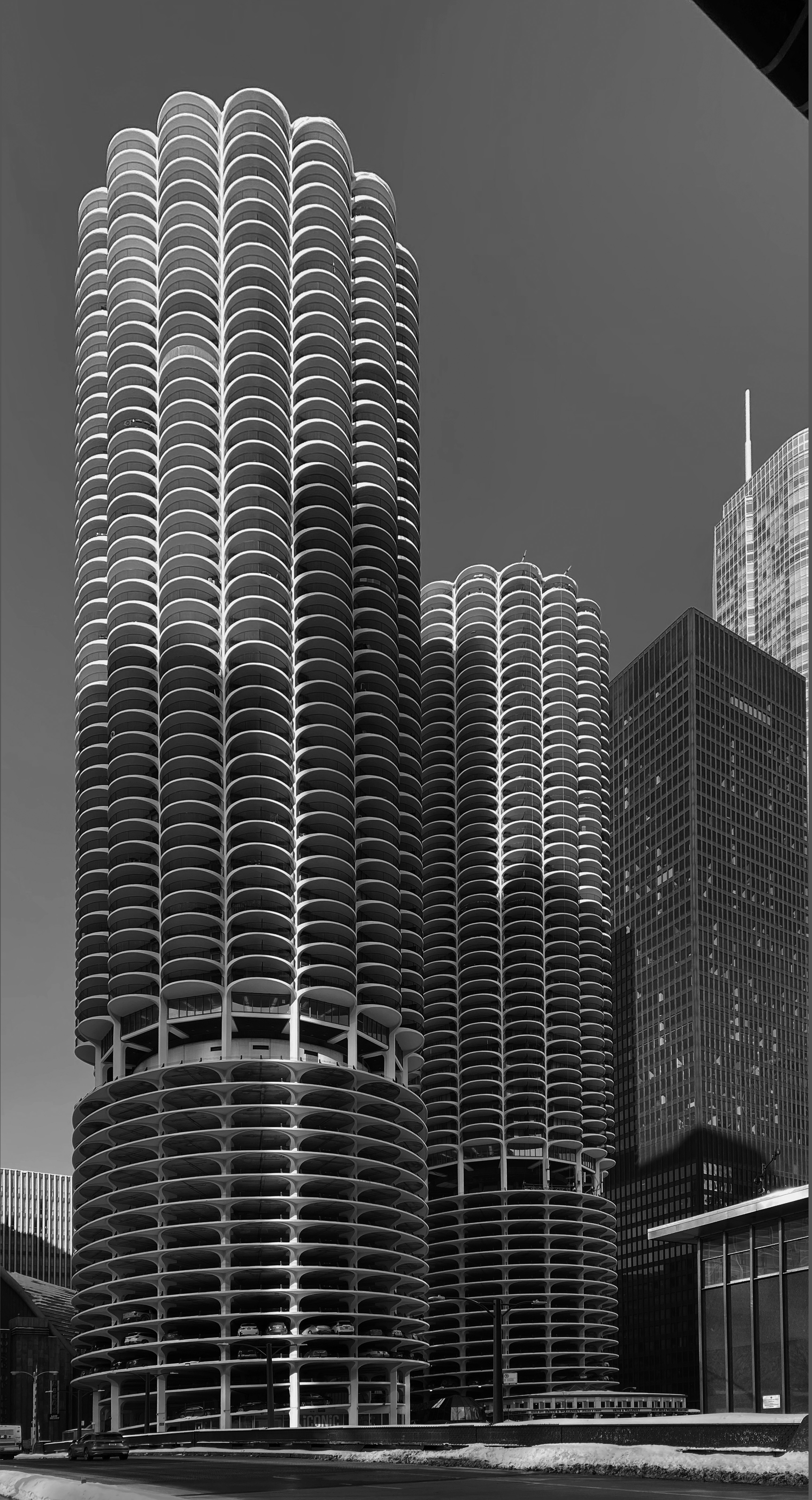
I’ll be moderating and co-hosting a lecture and discussion by Chicago architect Geoff Goldberg about the history of the city’s iconic twin towers–Marina City–on Tuesday, June 13, from 5-6 Central Time. It’s the first in a series of events put on by the Museum as part of a new exhibition that will open this fall on the history of the concrete skyscraper. “In Situ” will look at iconic towers that relied on concrete for their structure, building an alternate narrative to more traditional histories of steel construction. Marina City, needless to say, is a key player, and Geoff will talk about how its technical innovations took place within a rich mix of social, cultural, political, and financial concerns.
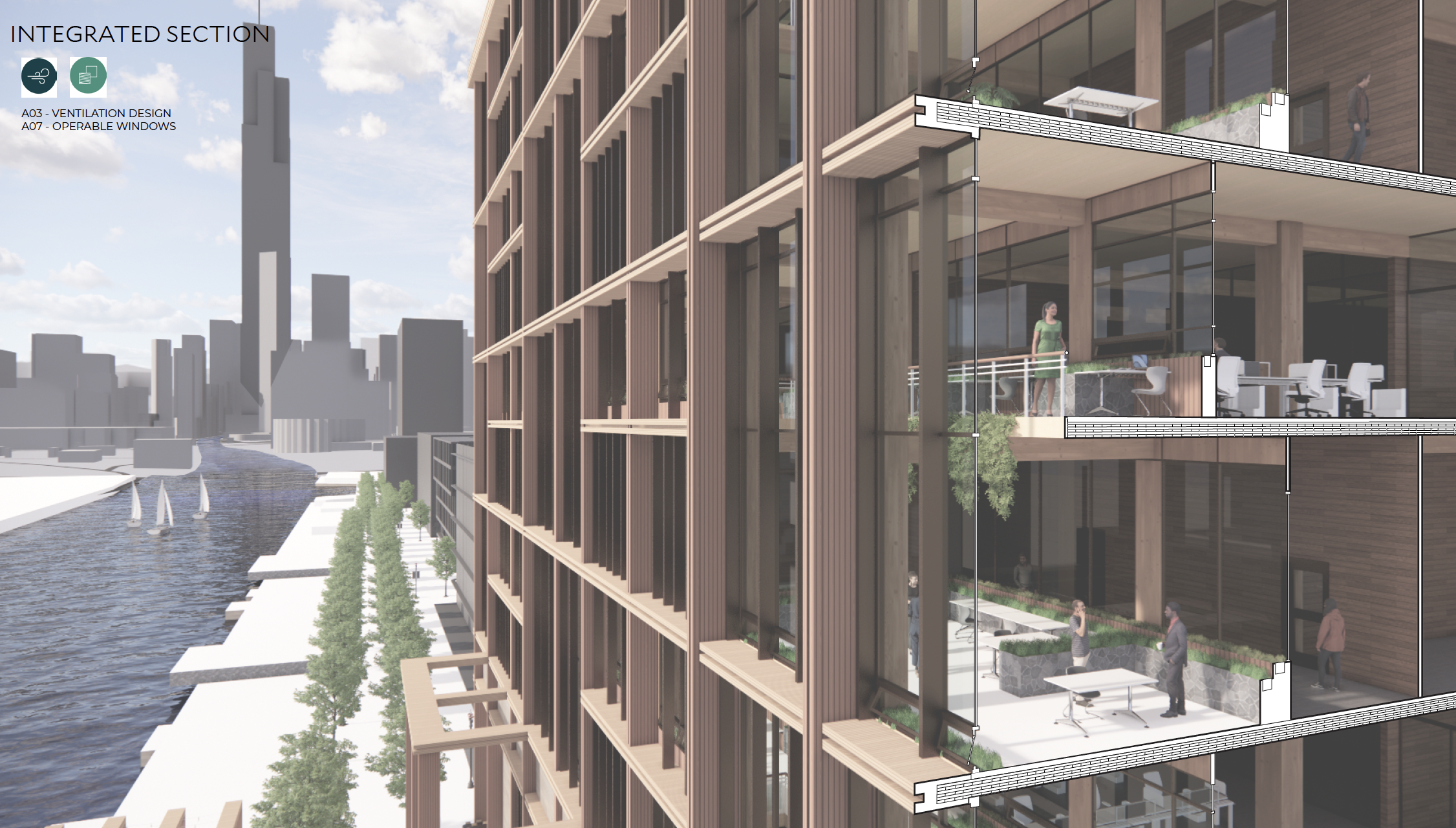
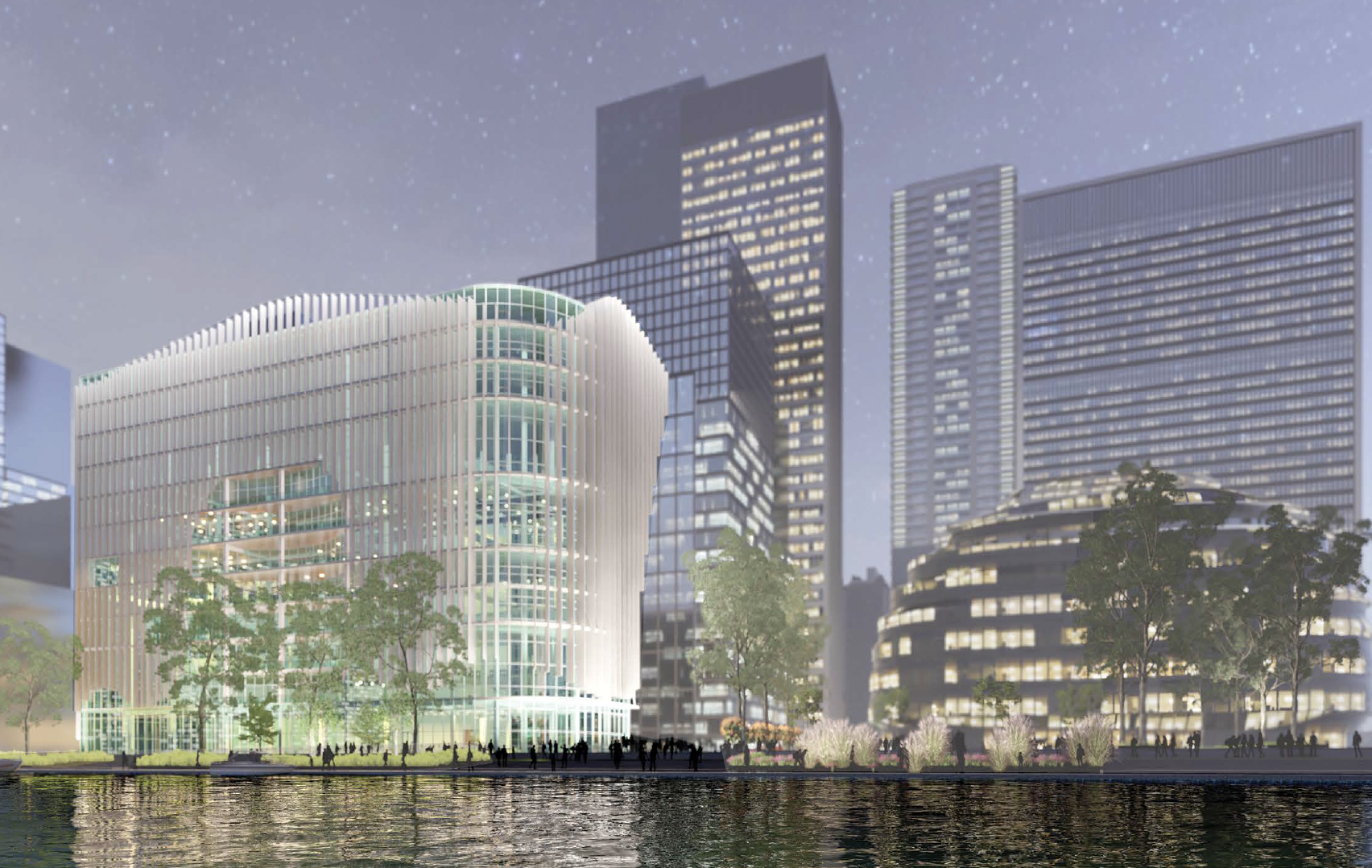
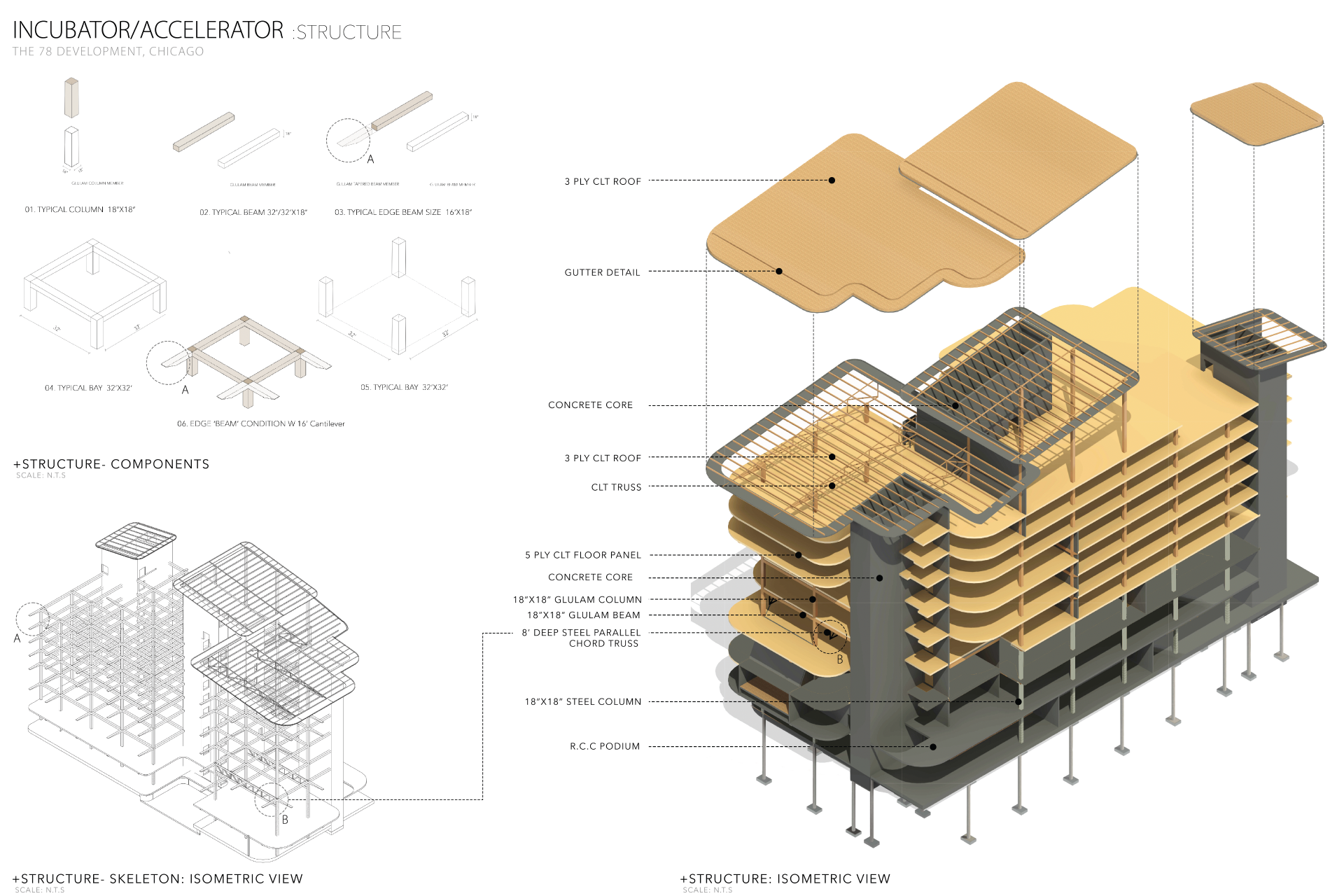
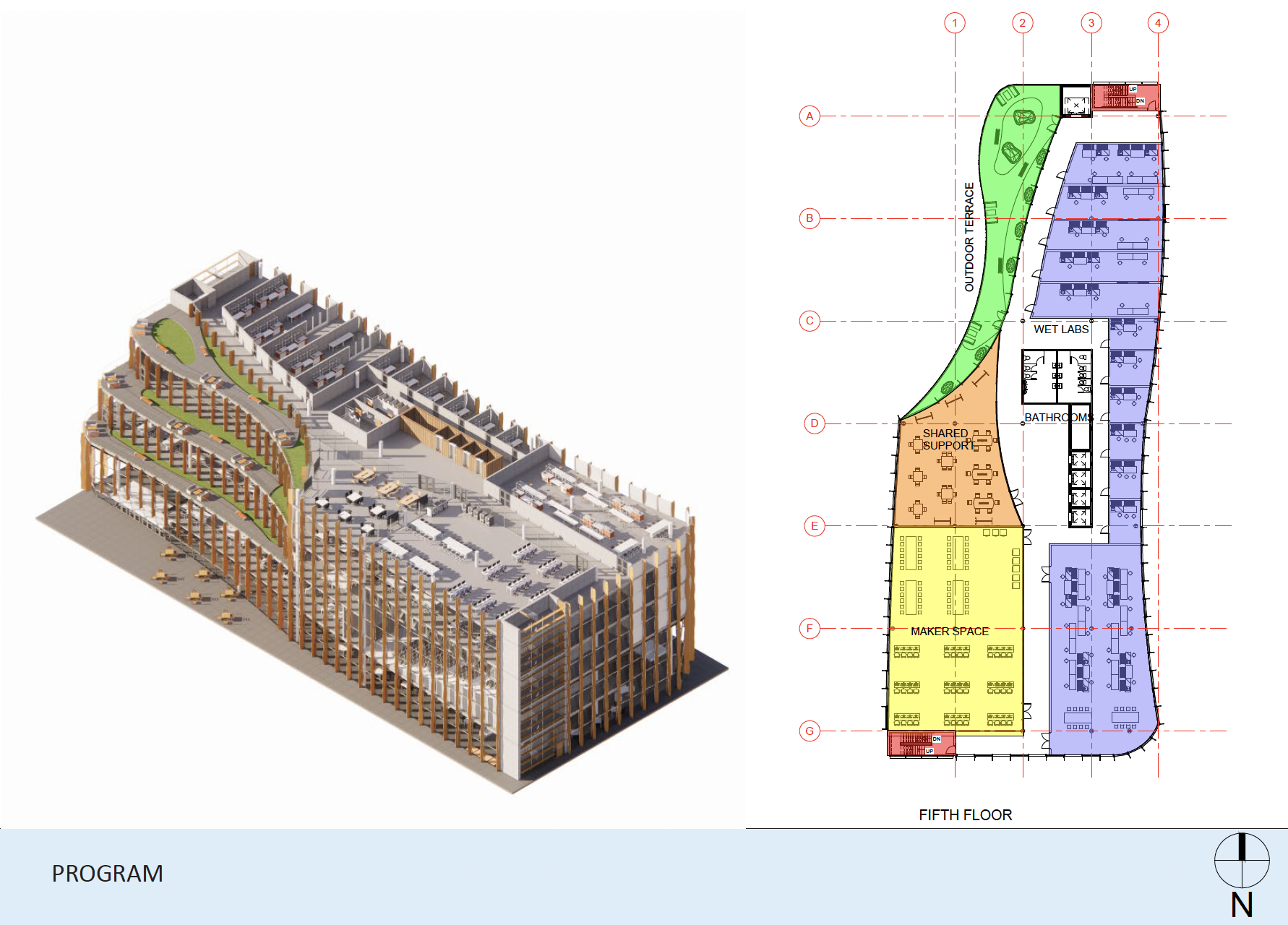
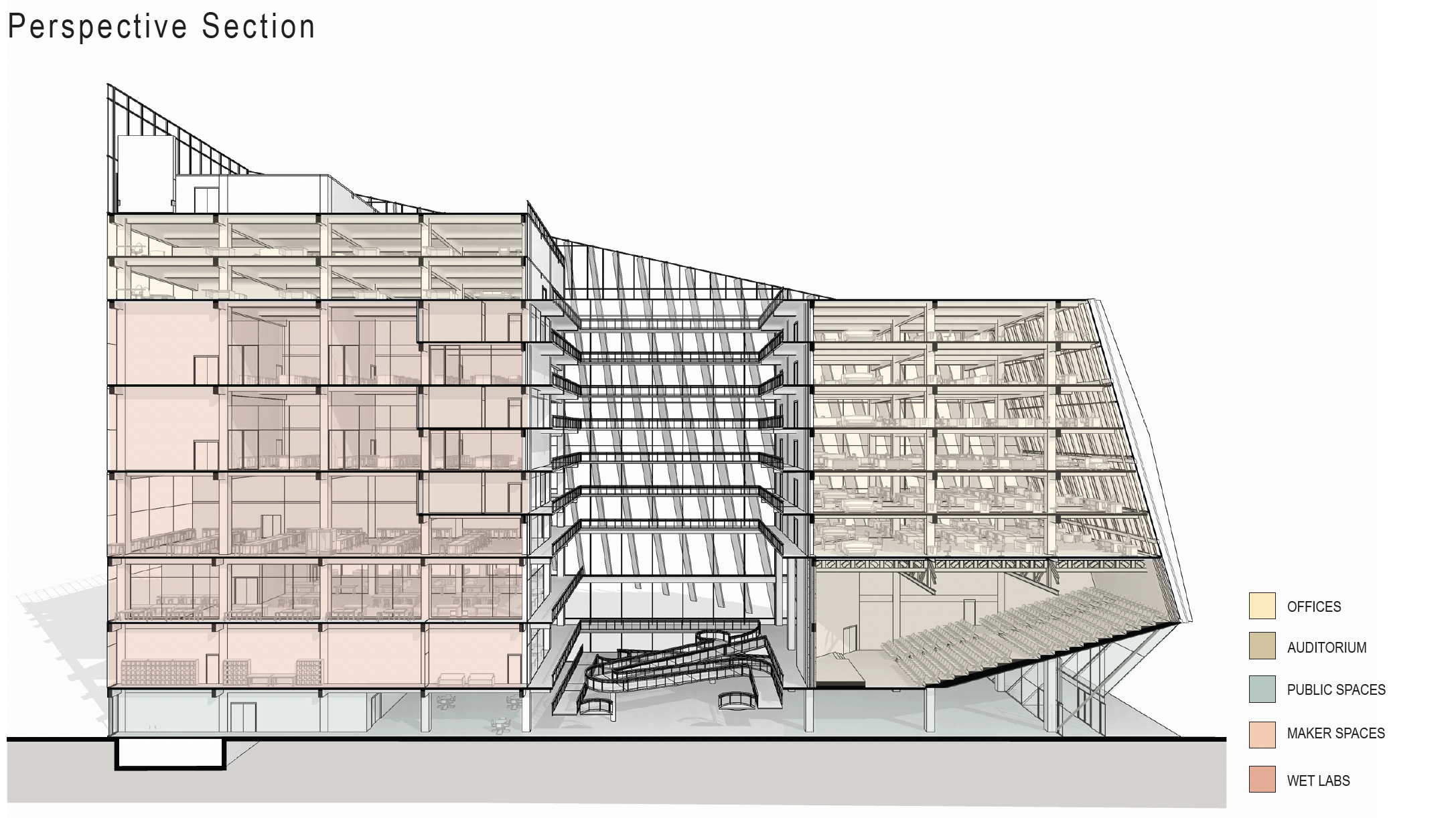
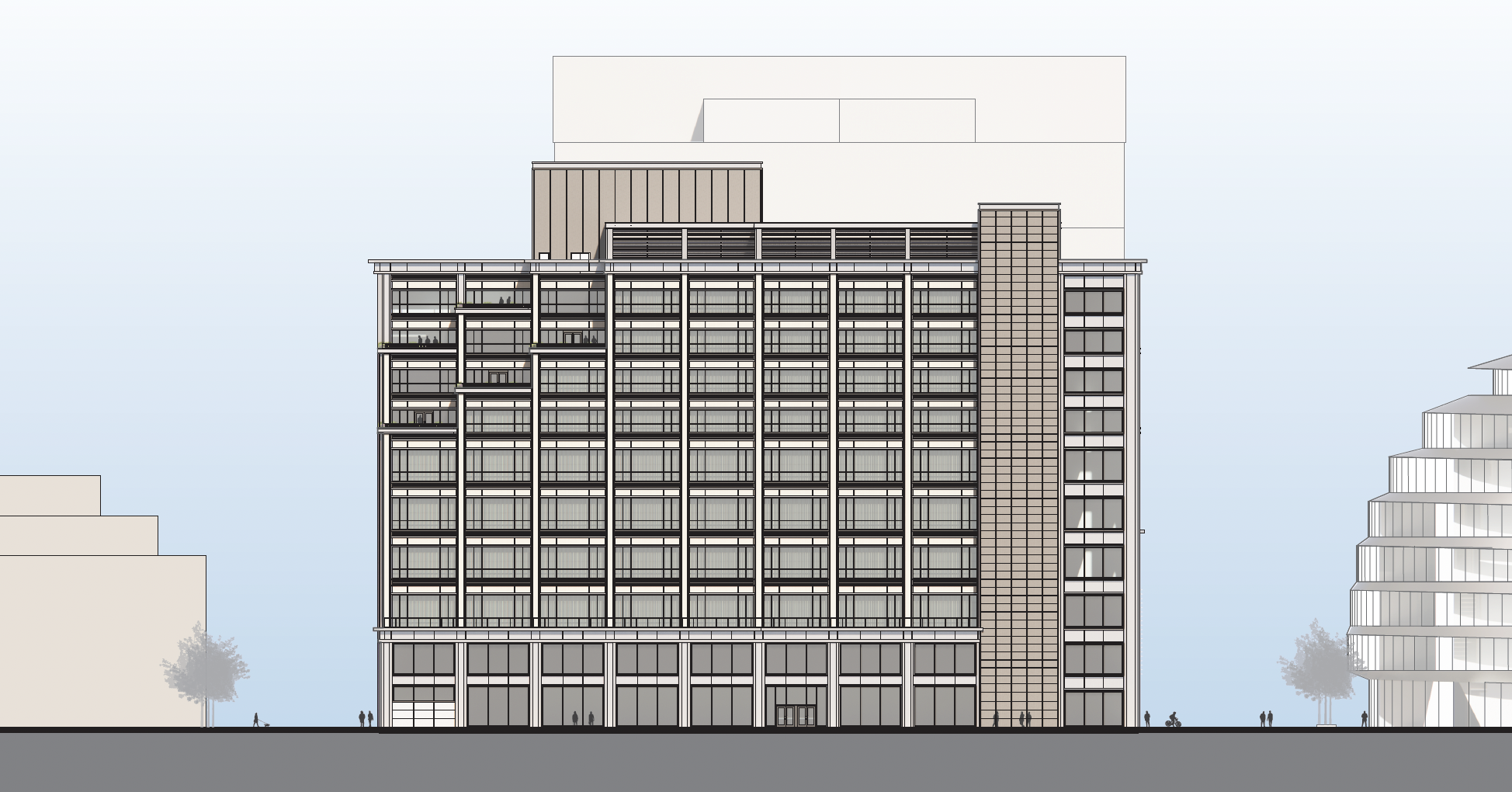
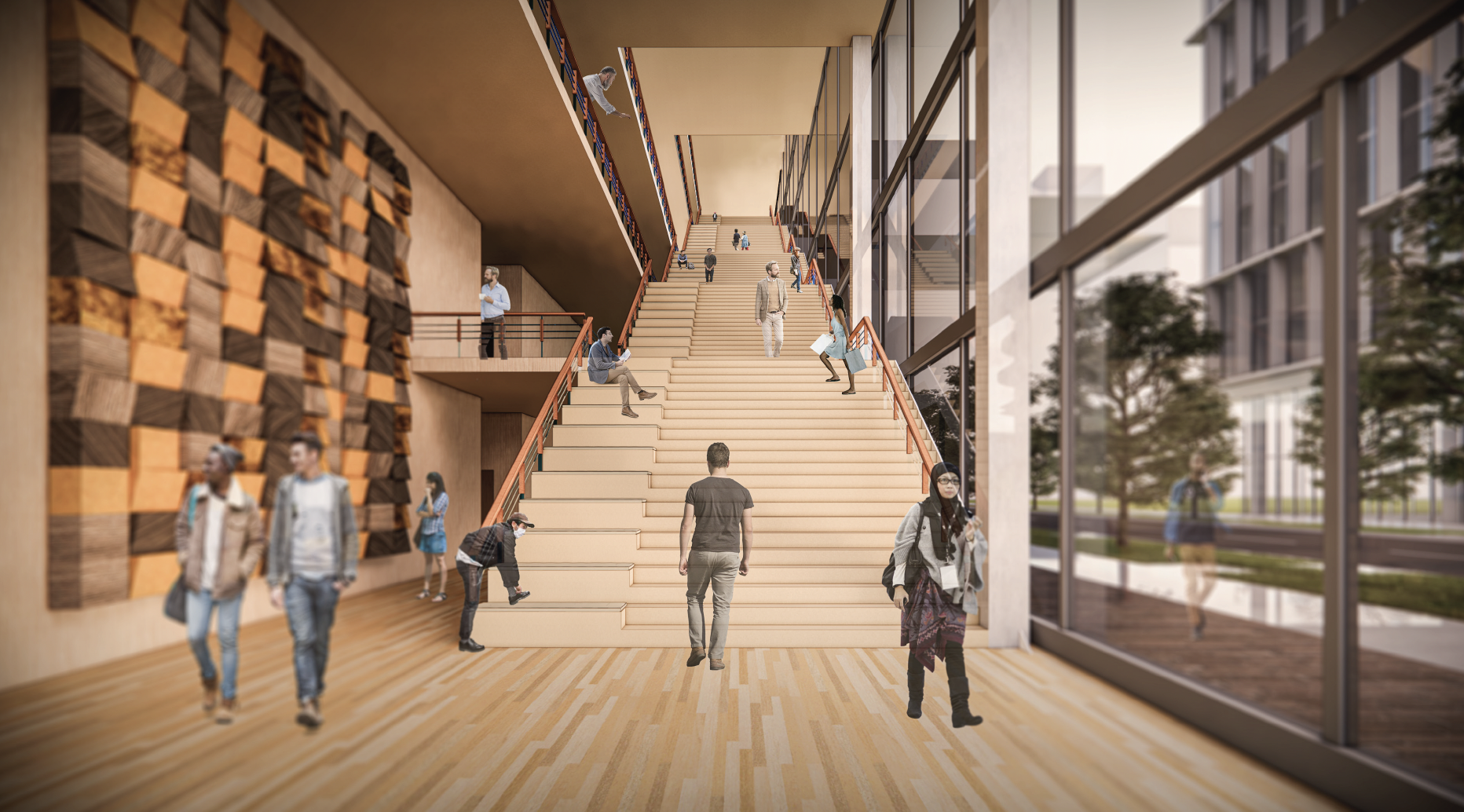
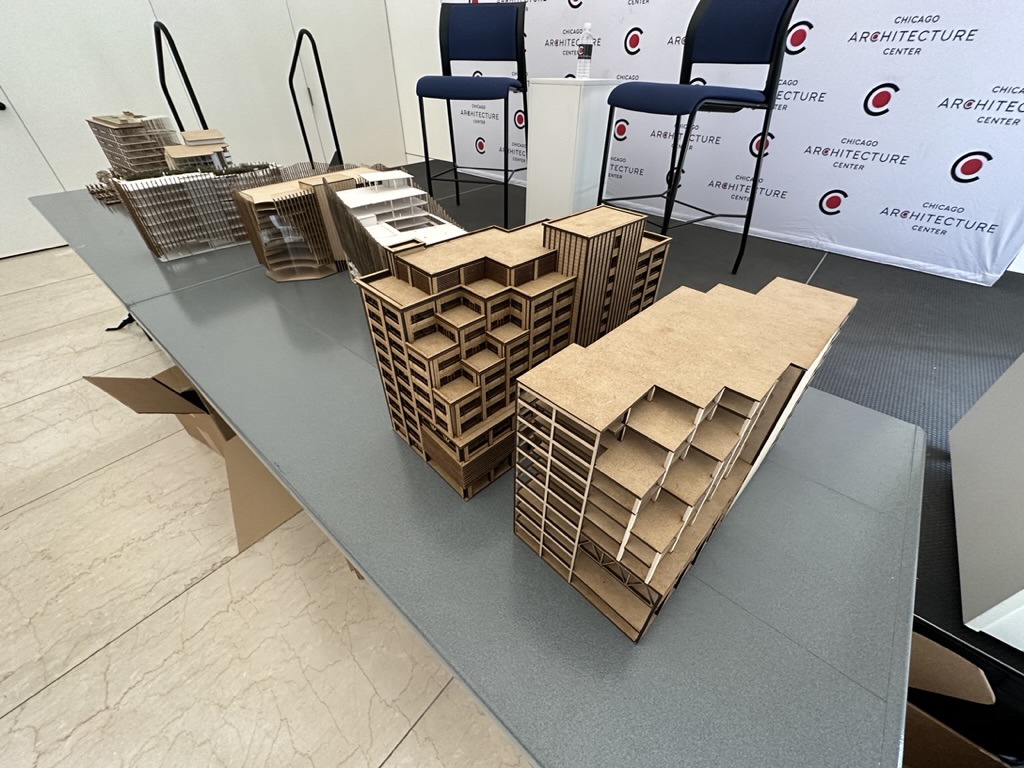
A strong studio semester in the books. Thanks to the Discovery Partners Institute, Related Midwest, OMA, and the Chicago Architecture Center, our spring studio looked at a spinoff to the new DPI building announced last year for The 78, Related’s new development along the Chicago River’s South Branch.
The premise is that researchers will need to take work done by DPI to commercial markets and that it makes sense for an Accelerator/Incubator to be convenient to the new DPI building as a ‘stair step’ for burgeoning companies. Our program looked at what such a building would look like and what it would need beyond the requirements of a simple office building. The mix of public spaces, presentation facilities, collaborative work areas, wet labs, and maker spaces proved inspiring and challenging. Teams dove into research on these elements, precedents, and the history and current demography of the site and neighborhood, and they extended a lot of the initial thinking by looking at mass timber, passive ventilation, and solar shading, among other aspects of sustainable design.
Teams presented to an all-star jury earlier this month in the CAC lecture hall. Highlights below–I’d say “hire these folks,” but (not surprisingly) most are already spoken for. A bunch of rock stars…
Kyle Bean and Simon BrinkoetterKinjal Bhojani and Joseph HarmonCristina Dekker and Sirisha Reddy Chittoor MuniJosh Domingo and Laura PressleyAishwarya Patwardhan and Samruddhi ShirdhankarMichelle Martinez and Pat DillonMike Rivera and Ray Wysocki
[Chicago Skyscrapers, 1934-1986, published by University of Illinois Press, is out now–available on Bookshop.org and Amazon.com, among other outlets.
Market Street’s transformation into the corporate boulevard of Wacker Drive received a boost when the Connecticut-based Hartford Fire Insurance Company purchased the riverfront block between Monroe and Adams in September 1958, joining Sinclair, Morton Salt, America Fore, and Mutual Trust in investing in the west Loop.[i] Unlike those companies, though, Hartford planned to take just 200,000 square feet of its planned 700,000 for regional offices, dedicating more than 70% of the structure to pure speculation—further “expression of confidence in the future of the central city,” according to the now omnipresent Mayor Daley at the project’s announcement.[ii] Hartford selected Skidmore, Owings, and Merrill as architects, giving them a new, existential challenge. Inland Steel and Harris Bank had both been headquarters buildings. Hartford, however, had to meet this more stringent, speculative budget. Bruce Graham recalled that New York developers—particularly Erwin Wolfson (see Gateway Center, below)—were eyeing Chicago. New York Contractors and architects like Morse Diesel and Emery Roth were used to tighter budgets and more efficient designs. Graham recognized them as potential threats from abroad and set out to prove that local architects could design “developer” buildings.[iii] Arthur Rubloff’s presence as Hartford’s local agent attested to the project’s commercial intentions.
(c) SOM
By 1958, Graham knew residential high-rise construction had proven flat slab concrete’s economic efficiency, particularly as contractors developed reusable formwork that could be ‘flown’ from one story to the next. Even with steel’s ability to integrate mechanical systems, Graham recognized that with simple, reusable formwork, concrete could compete with steel because of its lower material costs. SOM’s scheme, presented in August 1959, was essentially a concrete loft building, repeating a 21’-8” square structural bay over a 7 x 9 grid, with shallow haunches at column connections that provided stiff, moment-resisting connections for lateral resistance. Graham divided this structural bay into 4’-4” planning modules, arrayed around a central concrete core offset to one side. This created deep enough floors for open-plan offices on the south and more traditional executive and clerical suites on the north.
Architectural Record, Sept., 1961.
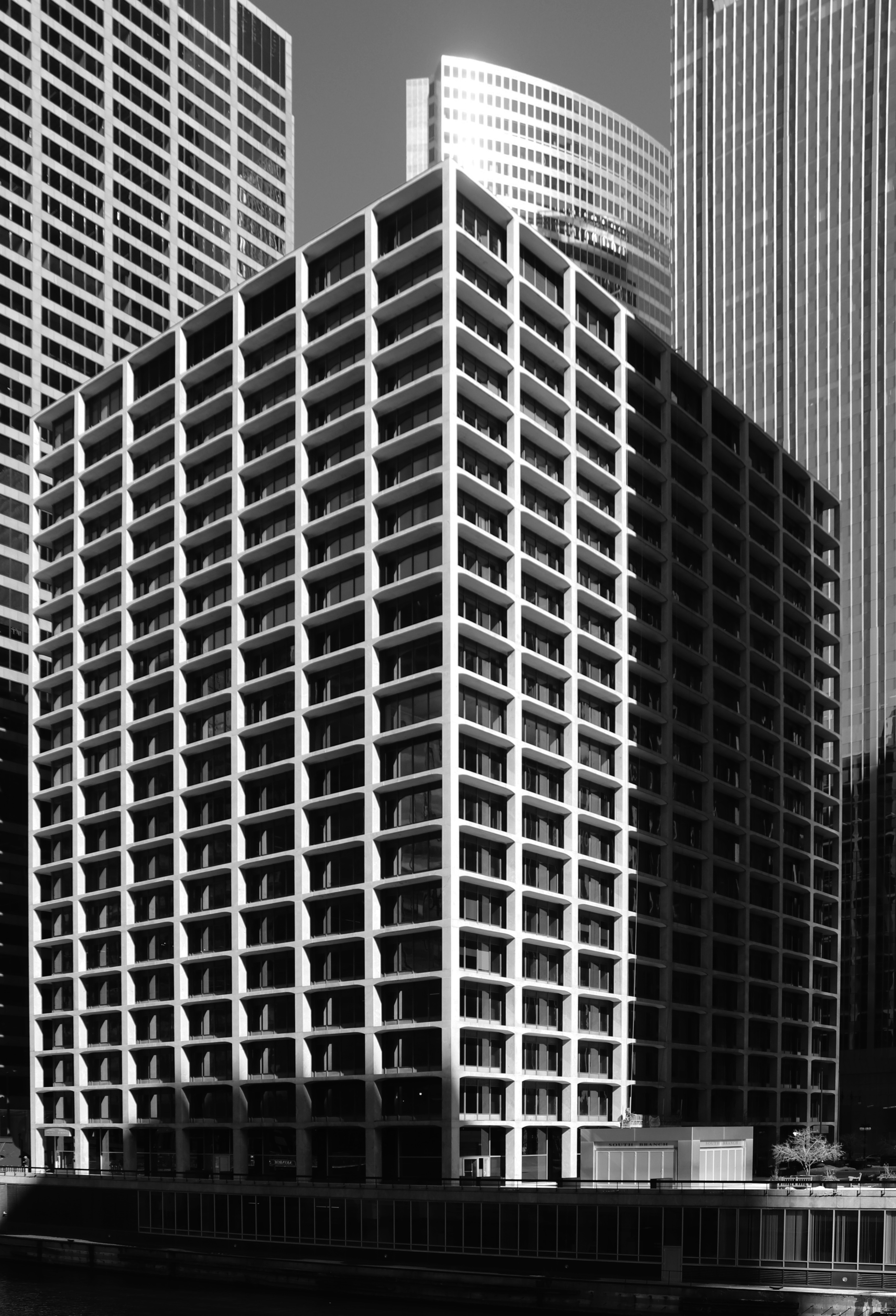
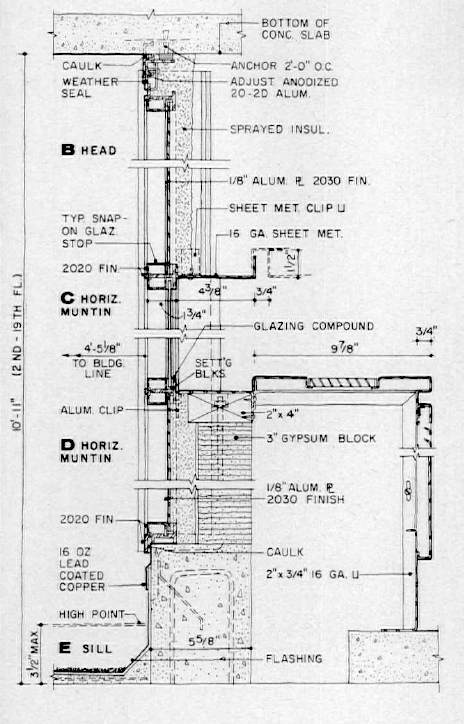
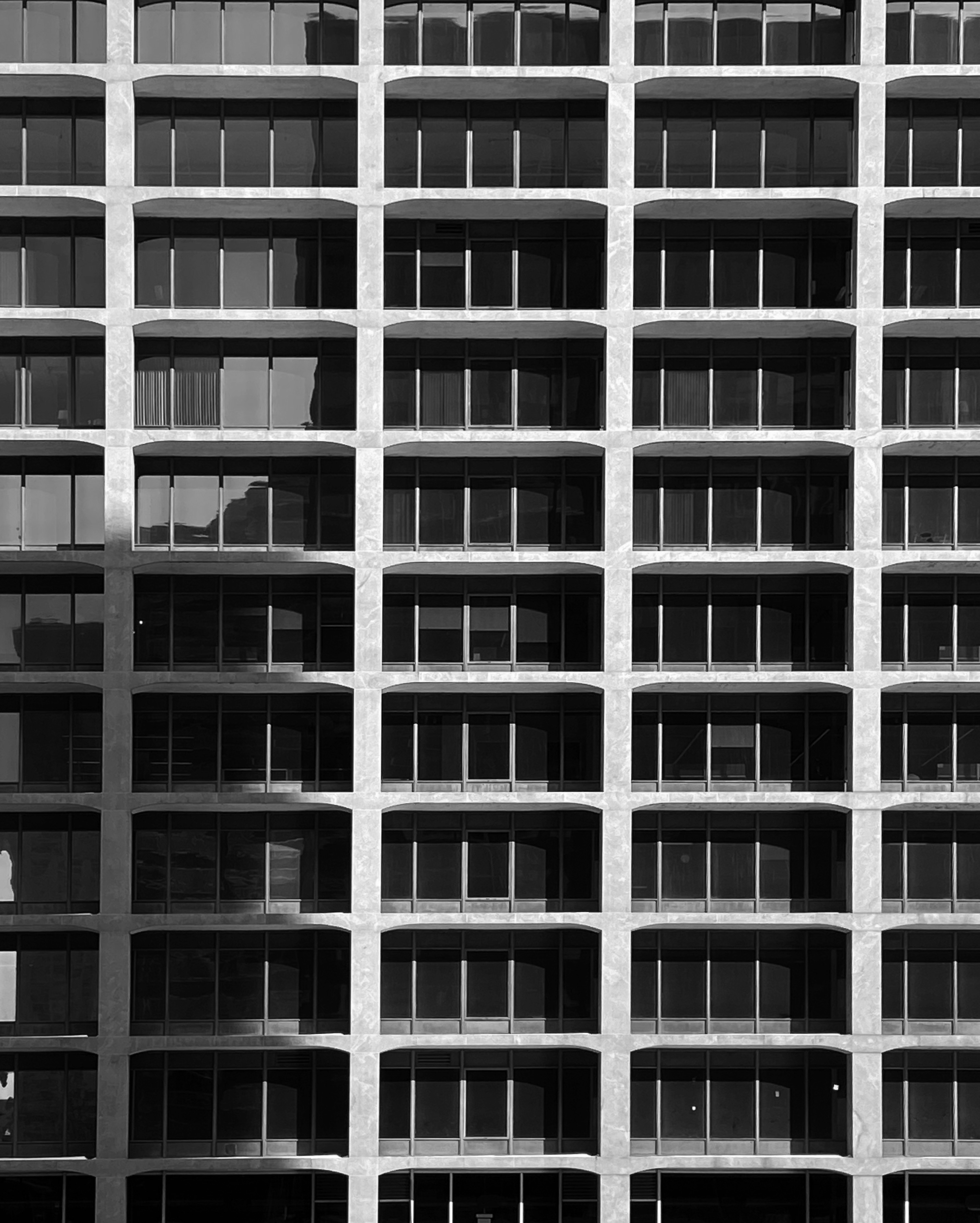
Hartford’s slabs were designed thick—up to 12”—but they did not require dropped beams, which allowed simple, flat formwork. Its mechanical systems were confined to an 18” zone beneath these, allowing 9’-0” floor-to-ceiling heights throughout within a floor-to-floor dimension of just 11’-6”—a tighter integration than Inland’s deep steel solution.[iv] Graham’s real innovation was to pull these structural slabs out beyond the building’s enclosure by a full 4’-4” module, making the concrete frame, rather than the curtain wall, the primary exterior element. This sacrificed a perimeter strip of floor space. Still, Graham argued that it gained solar shading and eliminated expensive window-washing equipment since cleaning crews could stand on the extended slabs. It also saved cladding costs since each story could be enclosed with floor-to-ceiling storefronts instead of a continuous curtain wall, making waterproofing simpler and allowing workers to assemble each panel from both sides during construction—without scaffolding.[v] Tinted glass and dark-bronze anodized sill panels and mullions assured that the concrete frame, dressed in 2” slabs of Minnesota granite, would stand out. Graham matched its visibility with subtle attention to detail. Hartford’s columns diminish as they rise, though, unlike the visible steps in Mies’ concrete structures, they step back gradually every two to four floors. Corner columns taper from their interior faces, leaving their exterior lines vertical, and slabs conceal offsets throughout, giving the illusion that each column narrows continuously from base to top, a visual refinement Graham would repeat in his later concrete work.[vi]
At 20 stories, Hartford was the tallest of the new buildings on Wacker, rivaling structures in the center of the Loop for height and adding, as Daley put it, “another gem to the crown of new Wacker Drive.”[vii] It did prove that Chicago architects could design “strictly speculative buildings” while maintaining their trademark “bold and graceful expression of structure.”[viii] Concrete here proved itself as a commercial alternative to steel, capable of more immediate formal expression and greater monolithic behavior presenting a “sense of ultimate structural integrity,” according to Carl Condit. Compared to Inland Steel’s “celebration of technique,” the haunched concrete slabs here represented “technique itself”—a subtle allusion to Montgomery Schuyler’s praise for the Monadnock as “the thing in itself”—If one could look past the granite sheathing,[ix]
Opened in April 1961, Hartford attracted prestige lessees, including paper companies Weyerhaeuser and St. Regis, along with IBM, Armour & Co., Western Electric, and State Mutual Life Insurance. In 1966, Hartford commissioned a second building from SOM on the southern half of its block. Planned for 26 stories, demand pushed it to 33 stories by the time it broke ground in late 1968.[x] Also of reinforced concrete, this building was clad in a more conventional curtain wall that concealed and contained its structure. The swell of this structure’s dark stone cladding around its lower columns alluded to the first building’s subtle expression, distinguishing between vertical elements that are pure cladding, which sit flat on the building’s skin, and those that are bearing, which meet the ground with entasis-like tapers that express the increasing loads, and thus greater required cross-sections, of the columns within.
[i] “4th Insurance Firm to Build on Wacker Dr.” Chicago Daily Tribune, Sept. 17, 1958. 19.
[ii] James Gavin, “Future $20,000,000 Hartford Fire Building.” Chicago Daily Tribune, Aug. 5, 1959. B7.
[iii] Betty J. Blum, Oral History of Bruce John Graham. (Chicago: Art Institute of Chicago, 1998), 103-106 and Betty Blum, Oral History of William Hartmann (rev. ed., Chicago: Art Institute of Chicago, 2003), 115-116.
[iv] “New Pattern for a Tall Building [Hartford].” Architectural Record, Vol. 130, no. 3. September, 1961. 121-126.
[v] Betty J. Blum, Oral History of Bruce John Graham. (Chicago: Art Institute of Chicago, 1998), 103-106. See, too, Ernst Danz, SOM: Architecture of Skidmore, Owings & Merrill, 1950-1962. (New York: Praeger, 1963). 170-173.
[vi] Betty J. Blum, Oral History of Srinivasa (Hal) Iyengar. (Chicago: Art Institute of Chicago, 2008). 19-20.
[vii] James Gavin, “Future $20,000,000 Hartford Fire Building.” Chicago Daily Tribune, Aug. 5, 1959. B7.
[viii] “New Pattern for a Tall Building [Hartford].” Architectural Record, Vol. 130, no. 3. September, 1961. 122.
[ix] Carl W. Condit, “The New Architecture of Chicago.” Chicago Review, 17:2/3, special issue on New Chicago Writing and Art. 1964. 111, 114 and Carl W. Condit, “The Rise of the New Chicago.” Chicago Tribune. Mar. 27, 1966. N34.
[x] “Hartford to Build.” Chicago Tribune, Oct 03, 1967. 1-c7 and “Hartford Going Up.” Chicago Tribune, Nov. 17, 1968. D1.
A real thrill last night to be interviewed by Chicago radio legend John Landecker about the new skyscraper book…full link here. Easy to talk when the subject matter is right outside the window…

 architecturefarm