“Concrete City” Part 1 (of 3)

As part of our research for the Skyscraper Museum’s Modern Concrete Skyscraper exhibition, Carol Willis and I worked to understand how and why Chicago became the acknowledged center of high-strength and high-rise concrete design for much of the last half of the 20th century. What follows has relied on perspectives and input from conversations and virtual lectures held with, among others, Bill Baker, Paul James, Kim Clawson, Ken DeMuth, Geoffrey Goldberg, Matthys Levy, Joseph Colaco, and, especially, the late Charlie Thornton. Many of those conversations are available in video form on the Skyscraper Museum’s website.

Early Concrete in Chicago

Even as the city’s earliest iron frames emerged in structures like the Home Insurance and Rookery, Chicago’s builders experimented with 19th-century versions of concrete—mainly as a replacement for natural stone.  Like the history of terra cotta fireproofing businesses in Chicago, the 1871 fire inspired entrepreneurs and inventors to join the massive rebuilding effort.  Portland cement, a mixture of crushed limestone and calcium silicates, was first patented in England in 1824 and gradually improved over the following decades, forming a crucial ingredient in producing strong “artificial stone” that won favor for its resistance to fire and manufacturing processes that limited labor costs.  By 1876, there were more than 100 buildings with artificial stone fronts or structural elements in Chicago and five manufacturers, among them Ransome and Smith, an enterprise of concrete pioneer Ernest Ransome.[i]  Ransome himself relocated to the city from 1890 to 1895 before settling in New York City in 1896.  Ransome and others patented systems for fireproof concrete floors, reinforced with twisted or shaped steel bars, in the late 1890s that became the basis for more comprehensive building systems.[ii]  Ransome’s patented system was used for the first reinforced concrete skyscraper, the Ingalls Building in Cincinnati, in 1903-5. Builders in Chicago and elsewhere quickly saw the advantages of the hybrid material’s durability and strength.  Montgomery Ward’s 2,000,000 square foot Catalogue House, designed by Schmidt, Garden, and Martin, deployed a concrete frame over a winding, six-acre site along the Chicago River in 1908, and Studebaker built a seven-story building at Michigan and 21st Street in 1909 that used paneled slabs to span 24’ x 24’ column bays.[iii]  Henry Ericsson, the city’s Commissioner of Buildings, was fascinated by the new material’s fire resistance but concerned about its structural performance and durability.  After commissioning laboratory experiments from Arthur Talbot at the University of Illinois and W.K. Hatt at Purdue University in 1911, he drafted one of the first building codes in the United States to address flat-slab construction, which had vexed engineers because of its hyperstatic performance.  “Owing to the complication of methods used in designing reinforced concrete flat slab or girderless floor systems,” Cement Age noted,

“…there is little agreement among designers of this type of construction in determining the thickness and reinforcement of flat lab floors.  Therefore, the ruling drawn up by the Chicago Building Department should prove both rational and simple, since it is the result of nearly four years’ study and testing.”[iv]  
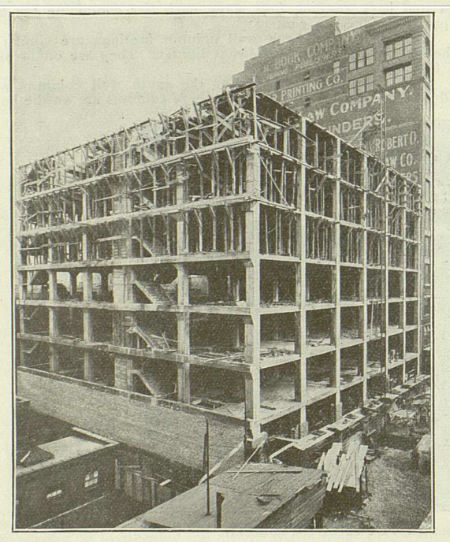
Typical early-20th-century concrete construction in Chicago: the Moser Paper Co. Bldg., Plymouth Ct.  The Construction News, Nov. 27, 1909.

While reliant on rules of thumb instead of mathematical analysis, the code gave builders and engineers confidence in the material; 1911-12 saw half a dozen major warehouse, manufacturing, and office structures built concrete in Chicago.  “Never before in the city’s history,” reported the journal Concrete, “have cement and crushed stone played so prominent a part in building construction.”  Among these were the Sharples Cream Separator Building, designed for 225 psf loads, the Rand-McNally Building, which reached a height of ten stories, and the Dwight Paper Co., another ten-story structure that rose at a record rate of one floor per week.[v]  Laboratory research at Purdue and Illinois was supplemented by extraordinary static and dynamic testing supervised by Talbot and others on the Western Newspaper Union Building. This 1910 nine-story concrete structure was demolished in 1917 as part of the city’s Union Station project, and it served as a test bed for developing theories and rules of thumb for concrete engineering.  The structure’s floor slabs withstood over 900 psf loads, suggesting that the city’s codes and engineering practices were overly conservative.[vi]
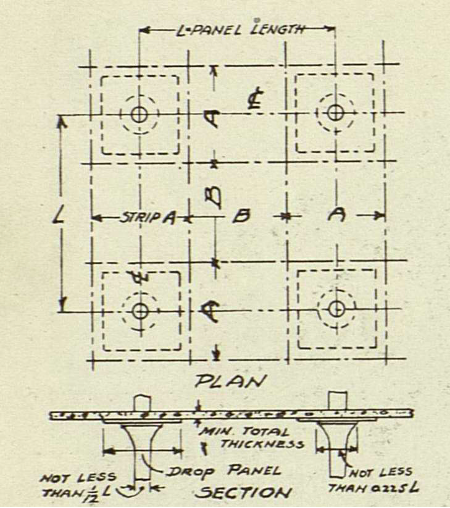
Chicago’s 1911 Code illustrated.  Concrete-Cement Age, Nov. 1, 1914.

Flat slab construction saw a natural market in residential high rises in the 1910s and 1920s as advances in reinforcement allowed thinner structural depths than steel construction, maximizing the number of floors possible within a given height.  The original Edgewater Beach Hotel, built to designs by Marshall and Fox in 1917, used dense reinforcement mats to resist punching shear, eliminating the mushroom capitals and drop panels of typical industrial construction.[vii]  Similar reinforcing was used in the all-concrete Bournique Apartments on Goethe St. in 1916.[viii]  Concrete became standard for Chicago’s high-rise residential construction, such as the 22-story Powhatan and Narragansett Apartments (both 1929) as its malleability allowed designers to take advantage of the city’s post-1922 setback code while providing reliable fire separation between floors.  Its durable, inexpensive construction made it ideal for the city’s public housing projects, beginning with the low-rise Ida B. Wells Homes in 1939 and extending upward into the Chicago Housing Authority’s early high-rise projects, in particular, the Dearborn Homes (1949-50) and Loomis and Ogden Courts (1951, 1953).  Mies van der Rohe’s Promontory Apartments (with PACE and Holsman, Holsman, Kleklamp, and Taylor, 1949) featured exposed concrete columns and slabs, suggesting that the material had aesthetic possibilities alongside its affordability and fire resistance.
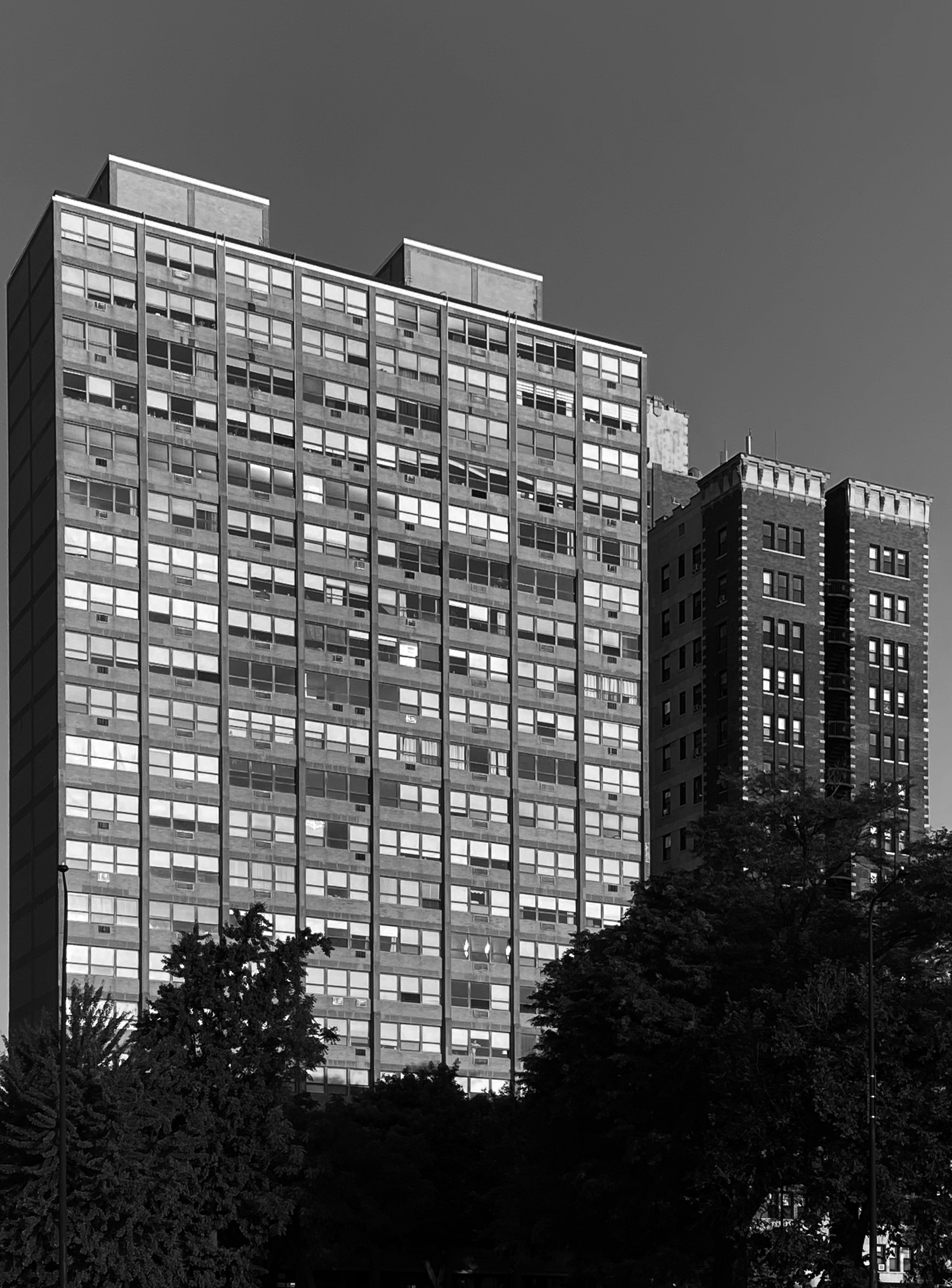
Promontory Apartments, Hyde Park. Mies van der Rohe; Holsman, Holsman, Klekamp, and Taylor, and PACE Associates, 1949.

Marina City

Engineer Henry Miller and architect Milton Schwartz set a record for tall concrete construction with the 40-story Executive House Hotel on Wacker Drive in 1958.  Executive House relied on two-foot-thick shear walls of heavily reinforced concrete around its elevator core for stability, but these were hidden behind a slick, stainless steel and glass exterior.  More dramatic structural performance and architectural expression came with the 60-story, 588’ tall twin towers of Marina City, built across the River from the Executive House beginning in 1959.  Designed by visionary Chicago architect Bertrand Goldberg, Marina City catalyzed advanced concrete construction in Chicago even as it set new urban development and architectural design standards.  Goldberg’s design called for cylindrical shafts of apartments that would open outward toward views of the city and the Chicago River with curving, cantilevered balconies.  The structure, based on stiff central cores surrounded by rings of columns, all connected with moment-framed girders, was engineered by a team including Frank Kornacker, Bertold Weinberg, and Fred Severud from New York City.   Goldberg’s relentlessly circular geometry expanded into three dimensions and produced doubly-curved forms that would have required extensive skilled carpentry.  Further issues arose with scheduling; traditional concrete construction would have pushed the schedule out to three or more years, while financing requirements made it necessary to begin renting in 1962. 
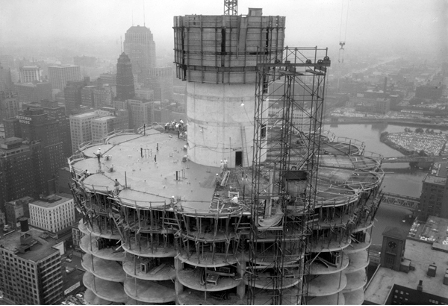
Marina City under construction, showing fiberglass formwork and slip-form core construction. (Chicago History Museum).

McHugh Construction, a local firm founded by bricklayer James McHugh at the turn of the century, had developed concrete expertise through winning bids on Chicago Housing Authority projects throughout the 1950s.  By 1960, they had established a reputation for reliable concrete work that supported their successful bid on Marina City.  McHugh developed innovative solutions to form Goldberg’s complex, curving shapes and meet the aggressive construction schedule, developing fiberglass formwork that could be mass-produced and used up to 60 times apiece.[ix]  They also proposed using the cores as the bases for self-climbing Linden cranes, which could rotate 360° and hoist up to 8,000 pounds—about two cubic yards of concrete—from ground locations up to 90’ distant.  McHugh matched the speed of the Linden equipment with an extraordinary coordination of concrete delivery and placement.  Ironworkers assembled reinforcement panels on the ground, relying on the Linden’s capacity to lift them, fully assembled, into place.  The fiberglass forms were staged to allow them to ‘jump’ three stories above as concrete came to strength.  With these advances, McHugh averaged a new floor every two days.[x]  Concrete surfaces were left as-struck and painted; the smooth finish imparted by the fiberglass required no additional work, and exposed concrete became a signature element in the building’s space-age aesthetic.[xi]  McHugh would go on to use fiberglass formwork in sculpturally rich concrete apartment towers such as 2020 Lincoln Park West (1971) and in “rib-cage” high-rises including Eugenie Square in Lincoln Park (1972); rigid concrete tubes of closely-spaced concrete mullion-columns formed by steel jump forms that matched Marina City’s record for floor construction.
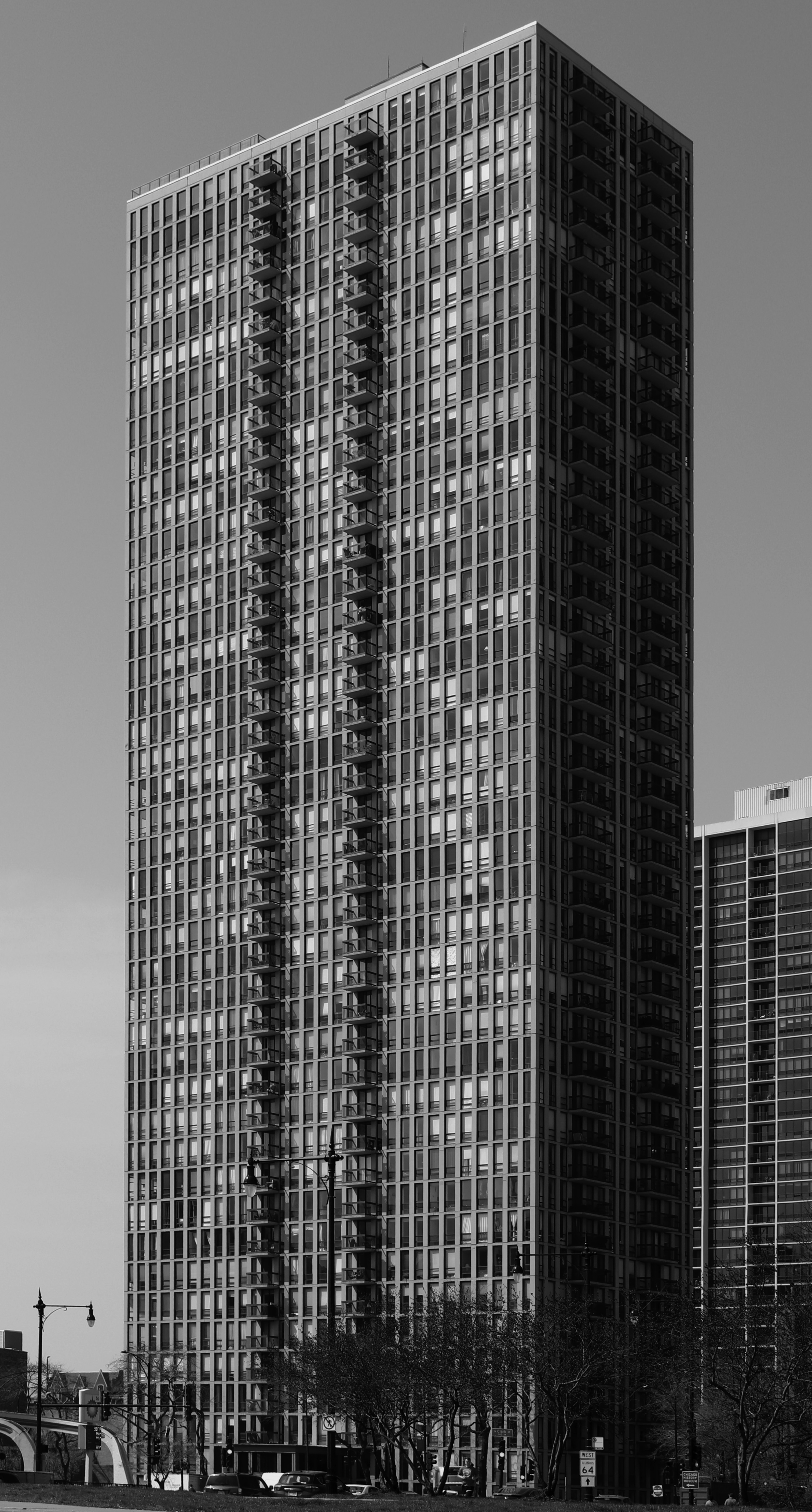
Eugenie Square, Lincoln Park. Dubin, Dubin, Black, and Moutoussamy, 1972.

[i] “Building: Concrete and Artificial Stone in Chicago.” Chicago Daily Tribune, Aug. 6, 1876. 10 and “Chicago Manufactures.” The Lumberman’s Gazette, vol. 3, no. 5, 1873, pp. 145.

[ii] Ernest L. Ransome and Alexis Saurbrey. Reinforced Concrete Buildings.  (New York [etc.]: McGraw-Hill Book Company, 1912).  Chapter 1, “Personal Reminiscences,” 1-18.

[iii] “Two Model Business Structures Now Being Erected in Chicago.”  Chicago Daily Tribune, July 18, 1909.  I18.

[iv]Concrete – Cement Age, Vol. 5, no. 5.  Nov. 1, 1914. 185, 194.

[v] “Many New Chicago Buildings of Concrete.” Concrete; Feb 1, 1912; vol. 12, no. 2. 27..

[vi] “Unusual Test of Flat-Slab Floor.” The American Architect, Nov. 28, 1917.  Vol. 112, no. 2188. 393.

[vii] “The Edgewater Beach Hotel, Chicago, Il.”  The American Architect, Sept. 26, 1917.  Vol. 112, no. 2179.. 233.

[viii] “New Wrinkle in Building: Radical Departure From Usual Construction Methods Contemplated in Bournique Apartments.” Chicago Daily Tribune, Nov. 19, 1916. 19.

[ix] Richard J. Kirby, “Fiberglas Forms—A Progress Report.” Concrete Construction, July 1, 1962.

[x] “Huge Project Overlooks Chicago River: Compared to Sunflower Climbing Cranes Used.” The Christian Science Monitor, Feb. 2, 1962. 10.

[xi] James M. Liston, “Amazing Marina City.”  Popular Science Monthly, Vol. 182, no. 4.  April, 1963.  82-85, 194.
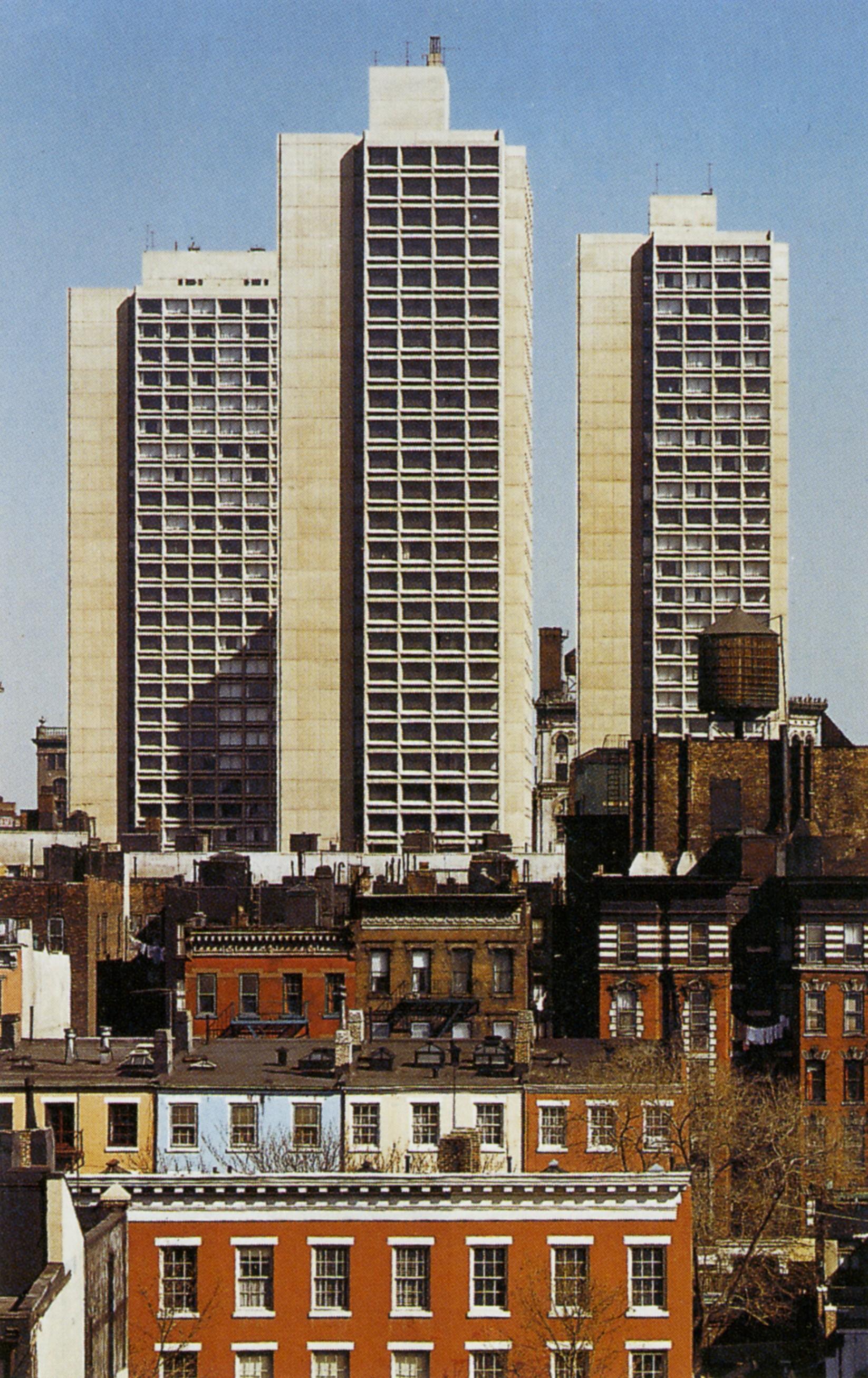
“the modern concrete skyscraper” at the skyscraper museum

University Towers, NYC. I.M. Pei. 1966-1967. JSTOR

Happy to announce that after a couple of years of great conversations, deep dives into obscure 1920s issues of Cement Age, and ace model-making by a student team here, The Modern Concrete Skyscraper is opening this week at the Skyscraper Museum in New York. Carol Willis, the Museum’s Director and Founder, approached me about helping to curate an exhibition that would be a ‘gentle corrective’ to the idea that the skyscraper’s evolution was primarily a steel story. “”Steel is a chapter, but it’s not the whole story” is the consistent theme throughout. What we’ve heard from engineers, architects, historians, and what we’ve seen in the historical record presents a much more nuanced and interesting story, where the two materials often worked in concert, often in competition, as skyscraper heights rose throughout the 20th and 21st centuries.

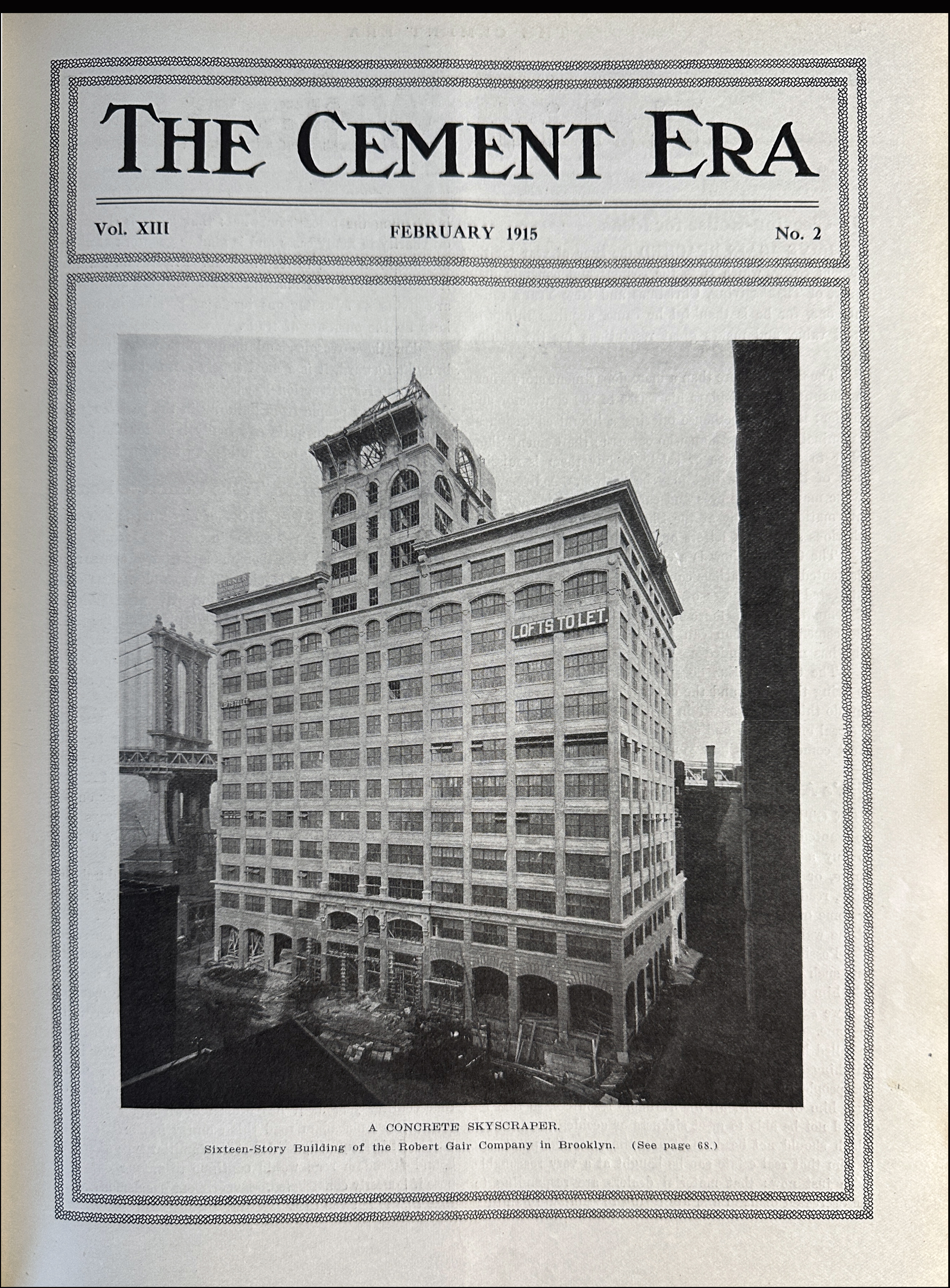
Gair Factory #7, Brooklyn, NYC. Wiliam Higginson/Turner Construction, 1914. Cement Era.

The exhibition looks at the history of concrete–one could argue that the first concrete ‘skyscrapers’ were the Roman insulae, apartment blocks that rose at least five and possibly as high as seven stories–and how the drive for greater height, safety, and efficiency led builders and designers to experiment with concrete as a more fireproof replacement for steel. Over time, research and development also made it competitive in terms of spatial efficiency and speed of construction. Today, the world’s tallest towers and construction sites are concrete, not steel, and the material’s emergence as the system of choice for supertalls is the result of a century of painstaking chemical, structural, and fabricational developments. “The rise of reinforced concrete skyscrapers evolved in several stages and from many influences,” Carol’s summary notes,

“…including architectural aspirations, engineering innovations, advances in the strength of materials and efficiencies in building construction, wind engineering, and computer-assisted design. While most of those changes were hidden from view behind sleek curtain walls or Postmodern ornament, the exhibition exposes the material concept and process in multiple structural models, construction views, and videos.”

However, this history hasn’t been adequately documented or presented previously. Carol asked questions throughout the project that seemed simple–how did flat plate construction become the global standard for residential construction as early as the 1920s, for instance, or why did composite construction–concrete cores with steel framing–become the norm for mid-sized office towers beginning in the late 1980s? The answers to these proved to be complicated but enlightening. Subsequent research uncovered some new stories, found some new heroes, and suggested a handful of buildings that should be in the skyscraper ‘canon’ but have so far been underappreciated by historians of construction and architecture alike.

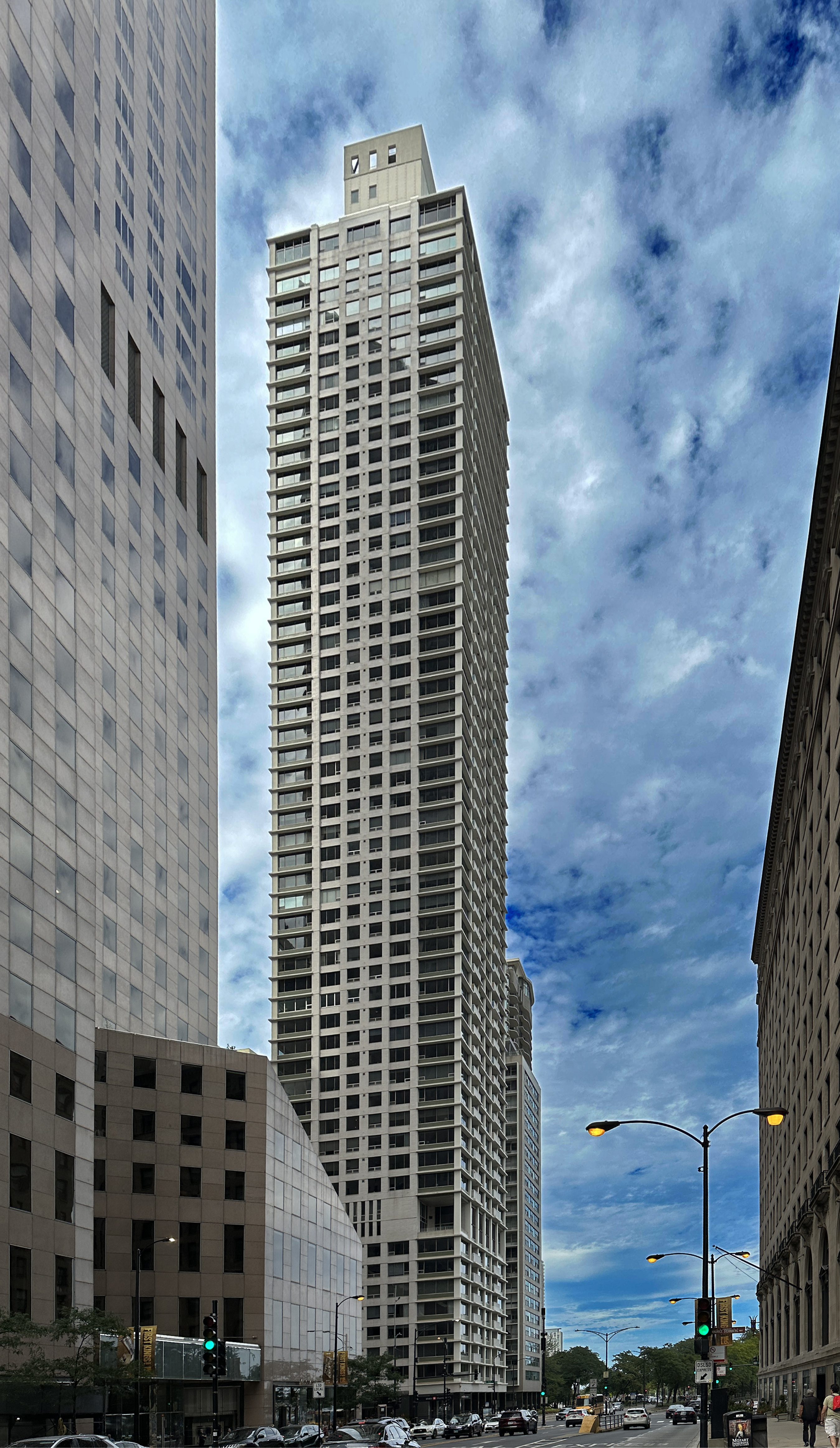
1000 Lake Shore Plaza, Chicago, IL. Sidney Morris/William Schmidt, 1963-1965).

The exhibition includes models of key buildings–some from the firms that designed them, others newly built by UIUC architecture students–as well as photographs, both new and historical, and diagrams that show the progression of height and technology from the 1905 Ingalls Building in Cincinnati at 16 stories and 210′–what I now think of as a steel framed tower re-imagined in concrete–to the 163-story, 2722′ tall Burj Khalifa, which SOM structural engineer emeritus Bill Baker, has described as a tower “cantilevered out from the crust of the earth.” “The strength and moldability of “liquid stone” into any form,” as the press release for the exhibit notes, “

“…has enabled bold experiments in forms, inside and out, as can be seen in the dramatic voids of the atriums of the architecture of John Portman, the open core of SOM’s Jin Mao tower in Shanghai, or Zaha Hadid’s 1000 Museum in Miami. Another advantage of high-strength concrete is the stiffness it affords for extremely slender buildings such as the “pencil towers” of Manhattan’s Billionaires’ Row, including 432 Park Avenue, a model of which is featured in the show.”

All of this is supplemented by eleven online lectures that have taken place throughout the exhibition’s conception and creation with engineers, architects, critics, and historians who have helped shape the narrative–these are all available online here. They form an outstanding companion to the show now open at the Skyscraper Museum in Battery Park City.

The Skyscraper Museum General Information

Location: 39 Battery Place, Battery Park City, New York, 10280

Hours: Wednesday – Saturday, 12 – 6pm

Admission is FREE, but timed tickets are recommended

Guided gallery tours are available for groups by appointment booking on Tuesday from 10:15am-5pm and on Wednesday-Friday from 10:15am-12pm.

For directions and more information, visit skyscraper.org. For questions, email info@skyscraper.org or call 212-945-6324.

For image inquiries, please contact Daniel J Borrero at Borrero@skyscraper.org or call 212-945-6324. For exhibition & press inquiries, please contact Carol Willis at Caw3@columbia.edu.

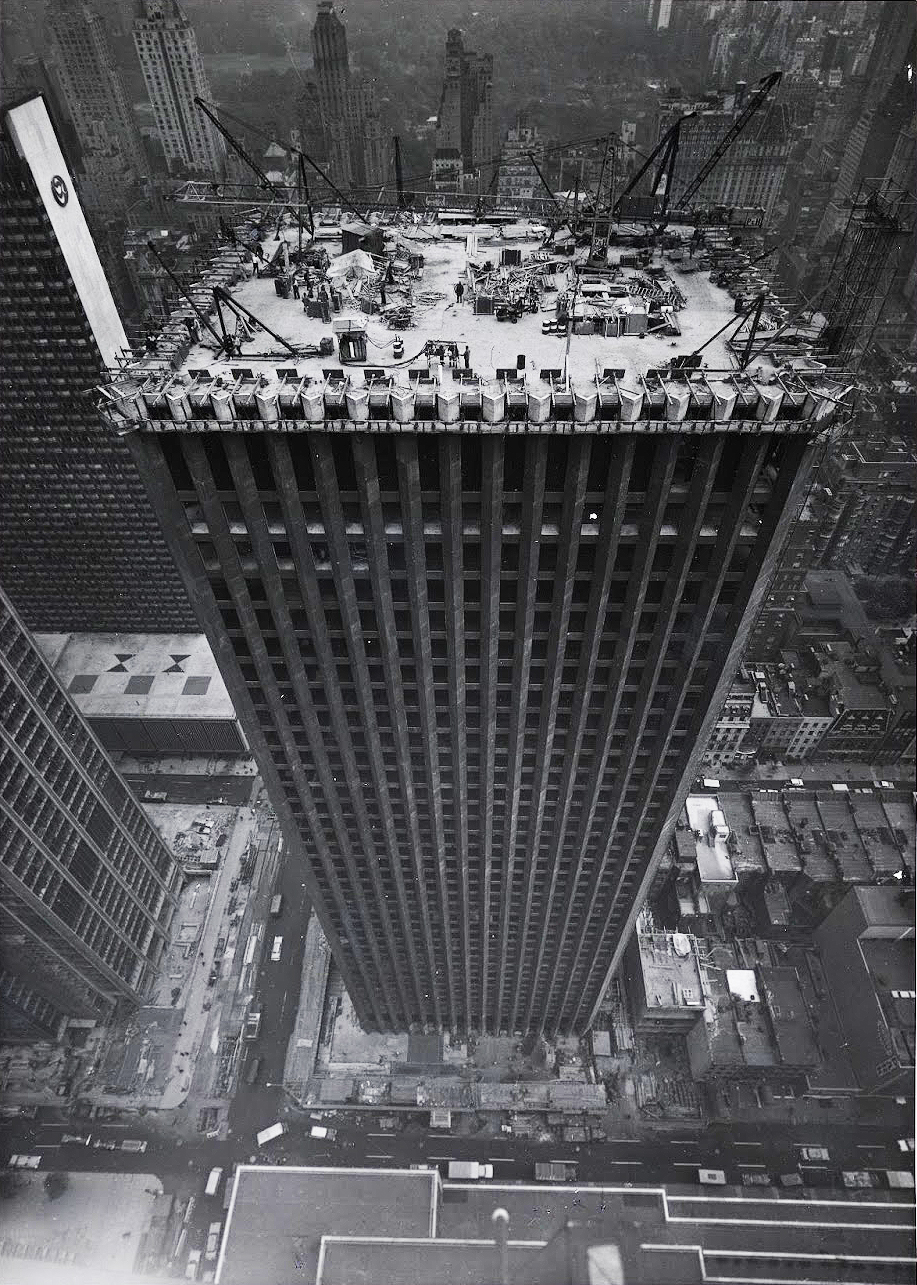
CBS Tower, NYC. Eero Saarinen/Paul Weidlinger, 1965. (Image courtesy Eero Saarinen Collection (MS 593). Manuscripts and Archives, Yale University Library).

third studebaker building to be converted…

IMG_0199In the “I don’t think you know what you have” category, word from ChicagoRealEstateDaily.com today that 2036 S. Michigan Ave. has been purchsed by Marc Realty and is slated for conversion into apartments.  The article notes that the building was “once home to a Studebaker showroom…”

Well, and how.  This was actually the third downtown building occupied by Studebaker–the first, designed by S. S. Beman and finished in 1885 was converted in the early 20th century into what’s now the Fine Arts Building.  And the Second Studebaker Building, also by Beman and finished in 1896, is now part of Columbia College.  Both of these were designed as showrooms, offices, and repair facilities, and they show pretty clearly the difference between loft-style buildings built in the 1880s (lots of stone, relatively small windows), and those built during the glass glut of the 1890s (windows and, um, not much else…in this case some fairly narrow cast iron spandrels and mullions).

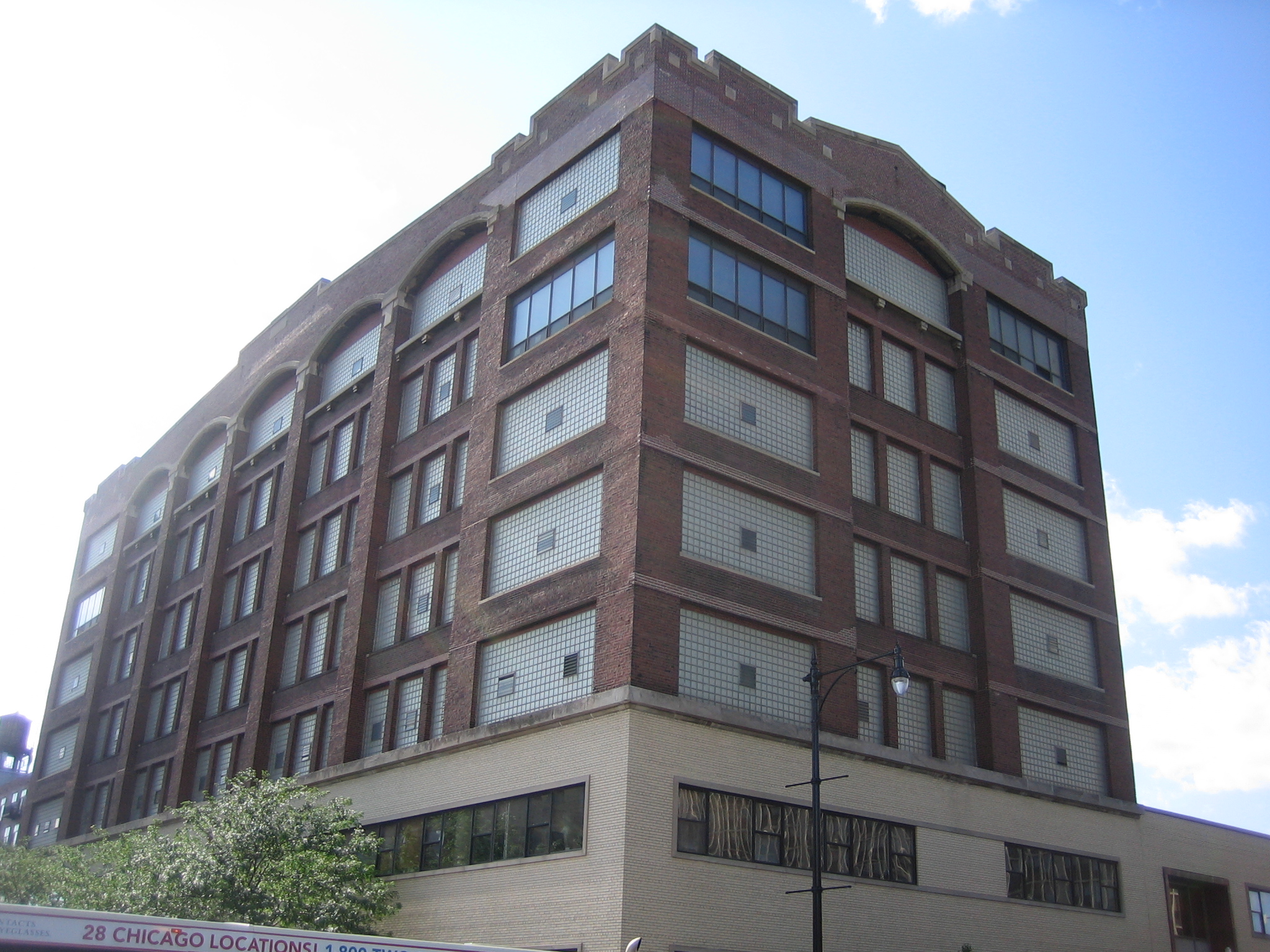
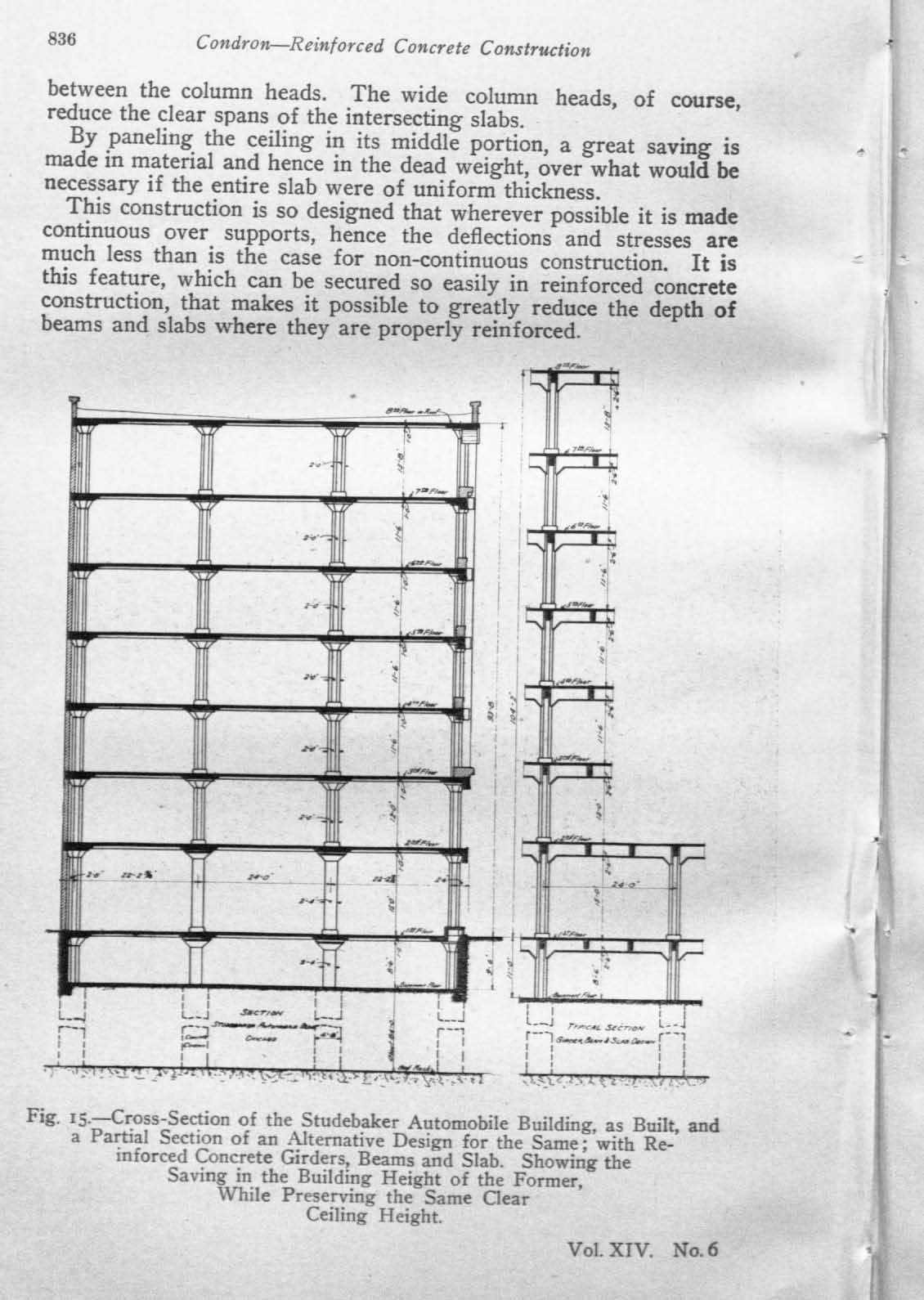
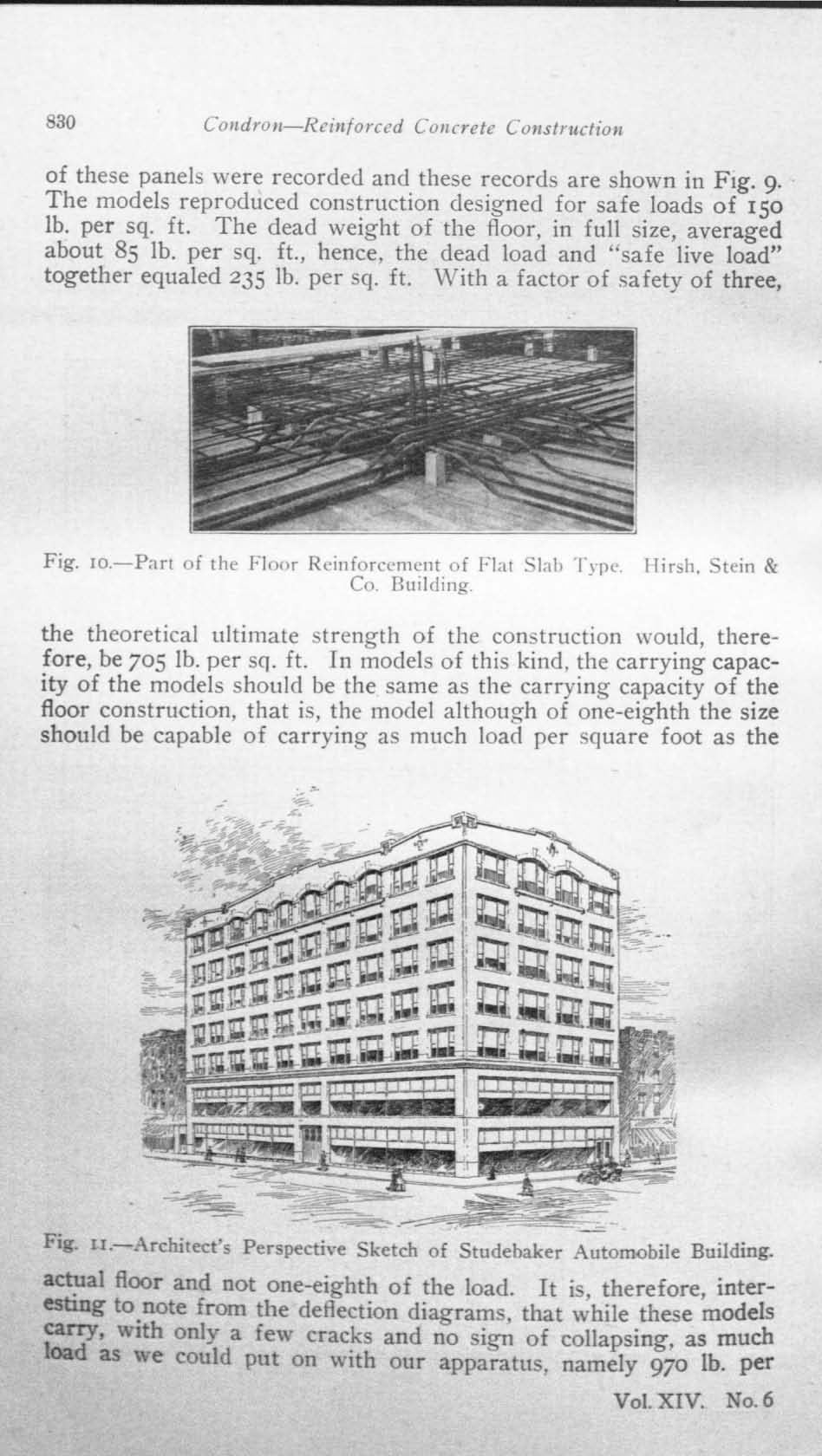
The history books all know both of these, but it was this third Studebaker building, completed in 1910 and designed by William Walker, that may have represented the most radical construction of the three.  Concrete construction had infiltrated Chicago by this point, but it had mostly been used in column-and-girder construction that really mimicked steel framing.  Here, engineer Theodore Condron expanded the idea of a “paneled slab,” or a flat slab with shallow drop panels along girder lines and mushroom caps that transferred loads to hybrid columns of steel and concrete below.  This had been explored in a fertilizer plant in Hammond, Indiana, but at seven stories the Third Studebaker represented the tallest experiment in such construction to date.

studebaker III 1909_Page_12Flat slab construction implies a significant problem in transferring the dead weight of very heavy concrete slabs into relatively thin columns; while the column’s cross section itself may be enough to bear such a load, there is always a tendency for the column to punch through the thin slab above it.  This shear condition was addressed in early construction with very large mushroom caps, or with concrete girders that effectively spread the shear load out throughout a deeper section.  Both of these took up space and were difficult to form, however.  Robert Maillart developed early advances in flat plate construction in Switzerland that relied on reinforcing and more tightly defined mushroom caps around 1910-1912–the third Studebaker represents a slightly cruder, but more immediately soluble approach that sought instead to minimize the depth of bearing girders with extra reinforcing.  Not, in the eyes of modernist historians, the major leap toward the Corbusian dom-ino slab, perhaps, but an approach that eased the minds of building authorities in Chicago, at any rate.

Perhaps even more interesting, however, is the fact that the shallow girders in these panelized slabs were conceived not as individual girders spanning from column to column, but as continuous elements that spanned over each column.  This made their actual loading, as well as that of the columns below, far more difficult to calculate, but it contributed to the overall stiffness of the frame, an advantage that eventually made concrete a viable alternative to steel in tall construction.  While steel elements had been detailed with moment connections at the columns, the inability to splice beam flanges to one another across columns meant that they still behaved, in part, as simply supported elements.  With continuous steel reinforcing over the top of columns, however, the paneled slab system was less prone to deflection, and more naturally resisted lateral loading.

Writing in 1907 as the design was being completed, Condron noted that there were several advantages to the “paneled slab,” advantages that would prove important in the coming decades:

“The advantages gained by this paneled slab design are:

1) An improved form of construction whereby great strength and carrying capacity are attained with an economical expenditure for material and labor.

2)  A construction in which the stresses due to dead weight and all applied loads can be accurately determined.

3) A minimum depth of floor and a consequent reduction in the height of the building.

4) An improvement of the illumination of the rooms by the elimination of dark ceiling shadows; and

5)  A reduction in the expense of installing a sprinkler system.”

These last three were particularly important in the wholesale adoption of flat plate (with occasional drop panel) construction in high-rise residential construction.  Concrete dominated the burst of apartment building in the 1920s for precisely these reasons–with minimal ducted services, ceilings could tightly hug the floor slabs above in apartments, and this gain in sectional efficiency promised extra daylight and shorter floor-to-floor heights.

Condron also explained the system as basically a deep slab construction with a layer of concrete in the middle removed, where it would do the least work structurally.  Thinking of it this way, he estimated that the Third Studebaker design saved roughly 3.5 million pounds of material–a straight cost savings, but also a reduction that allowed smaller columns and caissons.

studebaker III 1909_Page_08The planned conversion into residential units makes sense in terms of the city’s material history–one hopes that it might also provide a means to restore the original showroom at the base, at least on the facade…

Quotes and illustrations from Theodore L. Condron, M.W.S.E.  “A Unique Type of Reinforced Concrete Construction.”  Journal of the Western Society of Engineers.  Vol. XIV, no. 6.  Dec., 1909.  824-864.

Corso Francia

20120610-161043.jpg

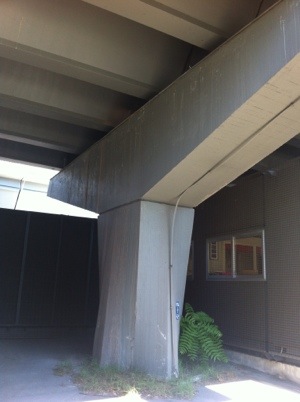
Running behind the 1960 Olympic sites is a fairly modest highway overpass that connects the Via Flaminia to arterial roads north and east. It was part of the planning for the Games, and also part of Nervi’s commission. While it’s hardly as eye-catching as the Palazetto, it’s worth a look on its own.

The supports are made of in situ concrete. They’re wide at the base, and narrow at the top, as you’d expect in a viaduct that required some ductility. But it’s how they’re that shape that’s impressive. A constant theme in Nervi’s later work involves concrete supports that change section gradually along their length, in this case a very subtle transition from a broad diamond shape at their base to a square at the top. The resulting form is easy to define with a series of straight ruling lines–connect the corners of the top shape with the midpoints of the base, midpoints of the top to corners of the base, then divide the resulting line segments into equal parts, connect those with straight lines, and you have a series of curves surfaces defined by straight lines.

These shapes were useful to Nervi because they allowed rotational freedom in one direction at the top, and in the opposite direction at the bottom. Here, I suspect they were designed to allow the overpass deck to rotate slightly under differential loading while maintaining a robust, fixed connection to the foundations (happy to be corrected by the commentariat, here…)

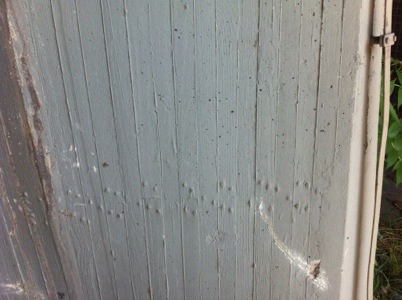
Building for work to make these shapes, of course, was something of a trick. But looking closely at the concrete itself provides a clue:

20120610-161925.jpg

What you’re seeing there are the impressions left by nail heads sticking out of board-formed concrete–a leftover that would have been eliminated by higher standards in more architectural concrete. Here, in a highway overpass, they were apparently acceptable. Each support has three or four of these lines of nail heads, and I think these show that the form work consisted of narrow, thin boards, each of which was slightly twisted between nailing strips to achieve the gently curving surface. The edges of the boards, being straight, followed the ruling lines of the geometric shape, and the nailers were designed to force each board into a very slight twist, one that made up the difference between one ruling line and the next.

To me, this is a perfect example of Nervi’s clever form work detailing–he was consistently able to achieve stunningly complex forms with relatively crude methods. This was in part due to his insistence on maintaining a full concrete laboratory and yard on the outskirts of Rome, where he and his office could experiment with techniques and materials before they went on site. In this case, it would have been important to get the thicknesses of the boards exactly right, for instance–too thin and the hydrostatic pressure of the concrete would have warped the boards between nailers, too thick and the boards would have been too difficult to twist,

There are other, more impressive examples of these sectionally-transforming supports–the Palazzo dello Sport in Rome, also done for the Olympics, and the Palazzo del Lavoro in Turin, done about the same time, have quite different takes on the idea. I have tentative appointments to see both in the next couple of weeks, and. I’m curious to see whether the tell-the-tale nailer details are evident or not…

Stadio Flaminio

20120608-174353.jpg

The low-hanging fruit on the Nervi reconnaissance are the Olympic sites from 1960. The small arena (the Palazetto Della Sport), the Corsa Francia overpass, and the Stadio Flaminio are all within a stone’s throw of one another along the Via Flaminia, north of the city center.

All of them are more or less accessible–you can drive on the Corso, of course, but as an American tourist you’re more likely to walk under it to get to Renzo Piano’s concert halls. The Palazetto is home to Rome’s professional basketball team (yep, you read that correctly) but it’s also more or less wide open during the daytime, and I wasn’t the only architectural sightseer there yesterday.

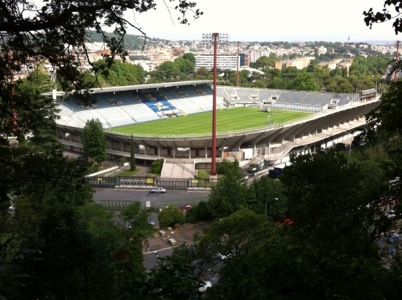
Stadio Flaminio is less accessible, and a somewhat sadder tale. Designed as a setting for the field sports in 1960, it was intentionally intimate, with only 32,000 seats spread out along the entire perimeter. Nervi designed a main grandstand with a cantilevered roof that echoed his first major work, the football grounds in Florence, but with a more refined sense of materials and structural form–at the Flaminio, the roof’s long span is formed of folded precast plates, and supported by steel pipes instead of concrete arms. The remainder of the stadium is brilliantly engineered with a repeating structural frame whose shape changes at every interval to accommodate the constantly shifting section. This let Nervi tune the end zones and secondary grandstand to provide more seats in better viewing areas, and the result is a subtly curving, sensuous form that.

Unfortunately, it’s intimate scale has done it no favors recently. For a decade it served as the home for Italy’s national Rugby team, but plans to hold international championships there more recently fell apart as funding for renovation and expansion never materialized. Italy’s team now plays in the larger–though far less graceful–Stadio Olimpico across the Tiber, and even Rome’s local team has abandoned Nervi’s structure.

20120608-175910.jpg

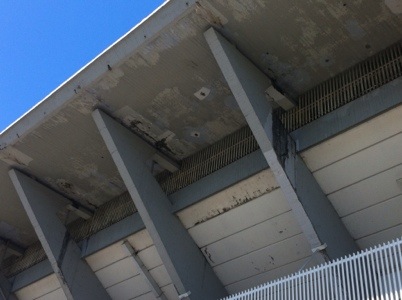
And the structure has suffered from this desertion. There’s a lot of visible spalling, and plants have begun to take root in the concrete–early signs of gravely compromised material. There was a grounds crew working on the immaculately trimmed field, but there is a lot of work that needs to be done to rescue this one. Part of the goal with this research is to call attention to the disintegrating works of Nervi that are perhaps a bit more obscure–water towers, warehouses and the like that belie their humble functions with poetic expressions of static and constructive logic. Stadio Flaminio, however, is arguably one of his most visible works, and it’s more than slightly shocking to see it in obvious distress.